On a quiet November night, amid the hum of analog machinery and mountains of printed data, a graduate student peered into the cosmos and saw something strange — a regular, ticking whisper from the stars. The static wasn’t random noise, but a subtle heartbeat in the void. That night, she didn’t just discover a signal — she opened a new window on the universe.
The student was Jocelyn Bell Burnell, then a young astronomy graduate at University of Cambridge. In 1967, as part of the team building a new radio telescope at the Mullard Radio Astronomy Observatory, she spent long hours manually scanning paper readouts of radio-wave data. It was monotonous work — hundreds of feet of chart every week. Yet among those inky peaks, she spotted a recurring oddity: a faint “bit of scruff” that reappeared in the same patch of sky.
She pulled historical recordings, aligned them carefully — and found the same signal. Puzzled, she alerted her adviser, Antony Hewish. Together they dubbed the mysterious blip “LGM-1,” joking that maybe — just maybe — it stood for “Little Green Men.”
Then on November 28, 1967, Bell Burnell recorded a string of pulses spaced nearly exactly 1.3 seconds apart. A cosmic metronome, regular beyond any known natural radio source at the time. Over the weeks that followed, she and her colleagues identified several more such signals from different spots in the sky. Gradually, the team ruled out terrestrial interference, and the idea of “aliens” — settling instead on a bold hypothesis: these signals came not from intelligent life, but from something far stranger and vastly more powerful: a type of dead star spinning rapidly, sweeping beams of radio waves across the cosmos like a lighthouse beacon.
Thus was born the first known “pulsar” — a rapidly rotating neutron star, the collapsed core of a massive star that exploded in a supernova. The discovery rocked astronomy. What once seemed like static noise revealed a whole new class of stellar objects, transforming our understanding of the life cycles of stars, extreme physics, and the workings of the universe.
When the discovery was formally published, Bell Burnell was listed as second author on the paper (with Hewish first). In 1974, the Nobel Prize in Physics was awarded to Antony Hewish and Martin Ryle — in recognition of their radio-astronomy contributions and the discovery of pulsars. Bell Burnell, despite being the first to spot the signal, was not included.
The omission has since drawn criticism and debate. Many point out that Bell Burnell’s careful, patient work — quietly scanning miles of data by hand — was critical to the discovery. Yet Bell Burnell herself responded with grace: she argued that awarding a Nobel to a student might undercut the prestige of the prize, and accepted the decision without rancor.
Over the following decades, Bell Burnell continued her career in astrophysics, not chasing fame but exploring new questions, mentoring others, and advocating for diversity in science. In 2018 she was awarded the Breakthrough Prize in Fundamental Physics, in part “in recognition of her detection of radio signals from rapidly spinning, super-dense neutron stars.”
Her story remains a powerful reminder that discovery is often quiet, unglamorous work — and that the line between oversight and recognition can be surprisingly thin.
In the stillness of that data-filled night, a faint echo from a distant star announced: the universe has more secrets waiting. And sometimes, it takes a watchful eye and quiet persistence to hear them.
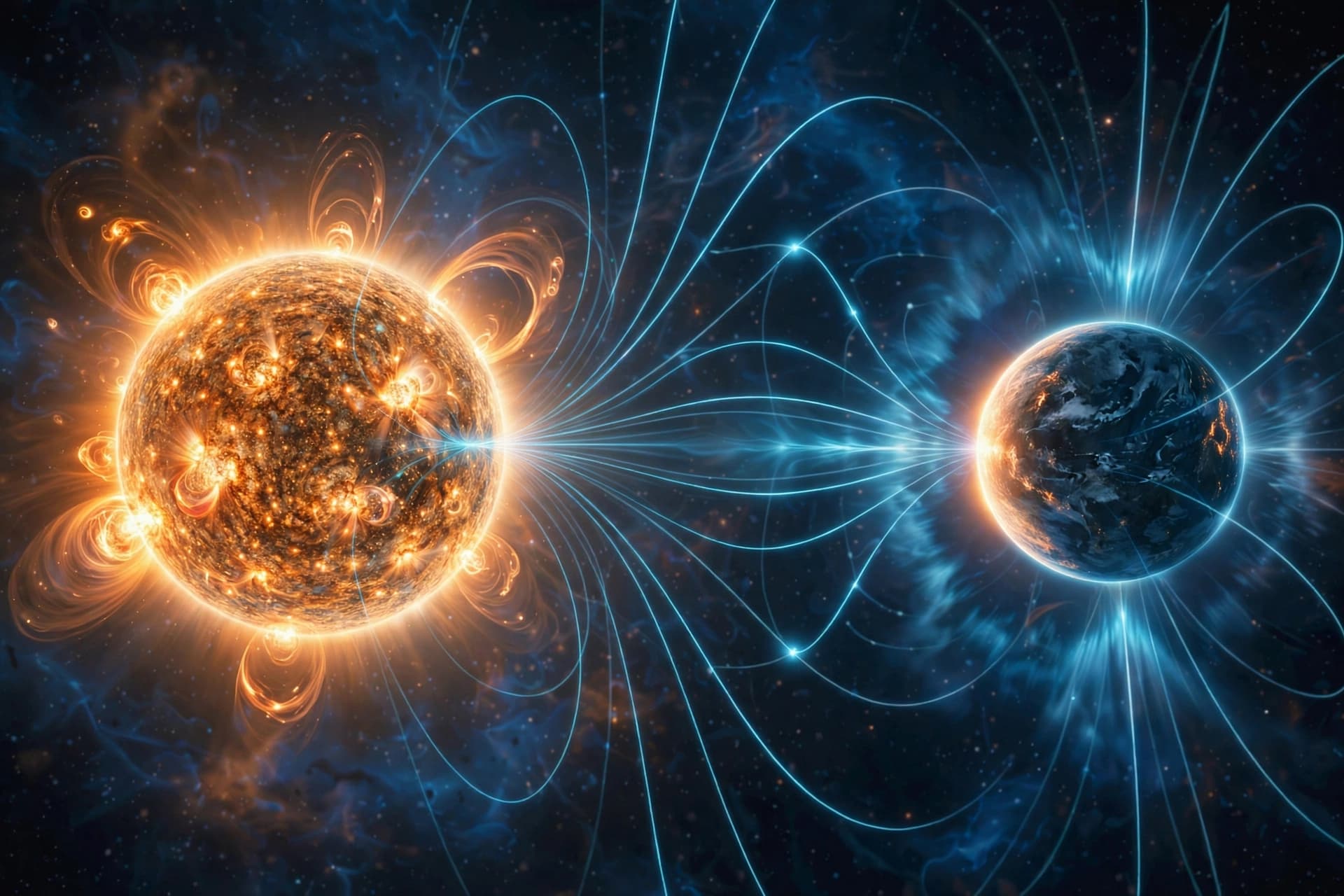
Illustrations are AI-generated and intended as conceptual depictions, not real photographs.
Sources: LiveScience, National Geographic, Britannica, The Guardian, Cornell Chronicle
Published by Banx Network. This article is part of the Banx decentralized media programme, powered by the BXE token on the XRP Ledger.