In the silent, scorching vicinity of the sun, the planet Mercury has long been known as a world of extremes. Yet, new research reveals that this small, rocky world is undergoing a transformation far more dramatic than previously understood. Scientists have found that Mercury has shrunk significantly over its history, contracting by up to 14.5 miles in radius, a process likened to a balloon left out in the cold. This discovery reshapes our understanding of the planet’s geological evolution and thermal history.
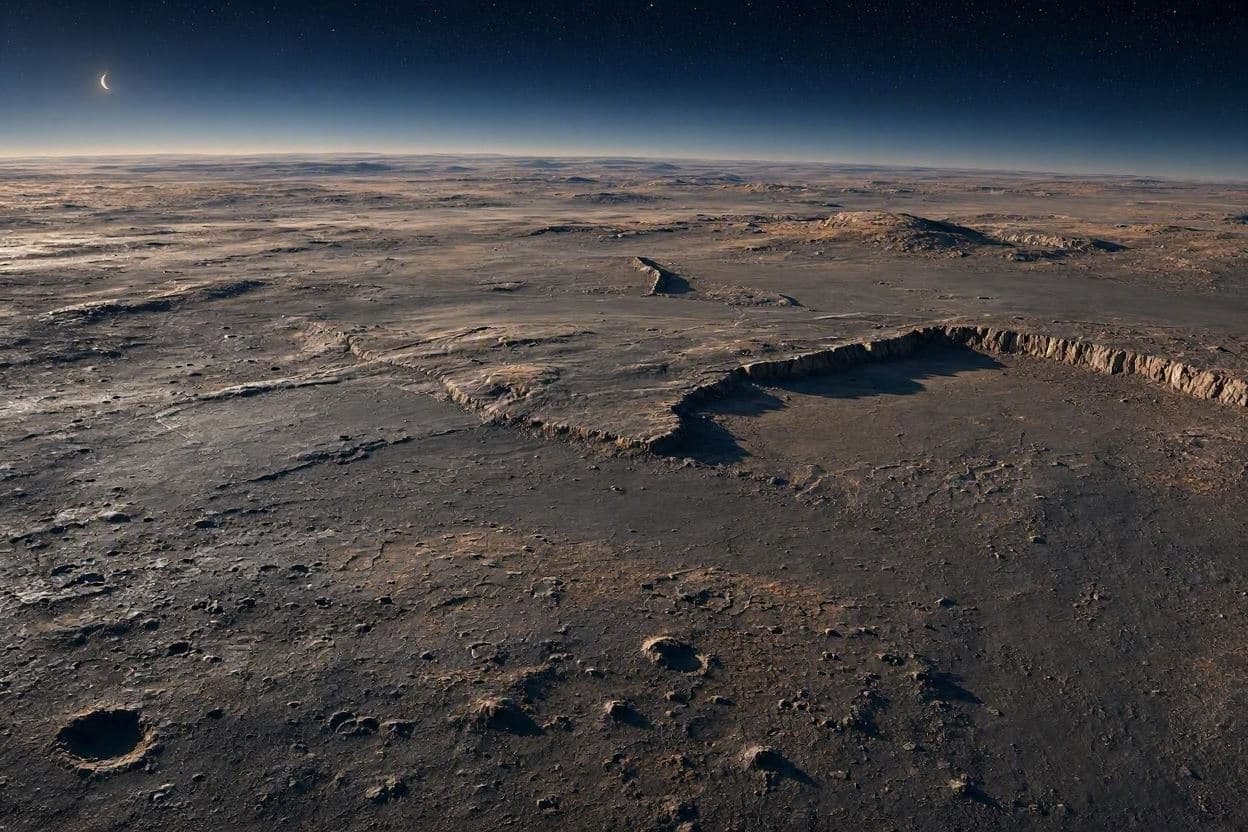
For decades, astronomers have observed "lobate scarps" and wrinkle ridges on Mercury’s surface, evidence of its cooling interior. As the planet’s core cooled, it contracted, causing the crust to buckle and fold. However, previous estimates suggested a modest reduction in size. The new analysis, utilizing high-resolution data from NASA’s MESSENGER mission, indicates that the contraction was much more extensive, possibly up to 30 percent greater than earlier models predicted.
The comparison to a deflating balloon captures the essence of this thermal contraction. Just as air escapes a balloon in cold weather, heat has escaped Mercury’s interior over billions of years, causing its volume to decrease. This process is not unique to Mercury; all planets cool and contract over time. But because Mercury lacks plate tectonics to recycle its crust, the effects of this shrinkage are preserved on its surface in stark detail.
The implications for planetary science are profound. A more drastic contraction suggests that Mercury’s interior cooled faster or was initially hotter than thought. This challenges existing models of planetary formation and thermal evolution. It also provides clues about the composition of Mercury’s large iron core, which makes up a significant portion of the planet’s mass. Understanding this cooling process helps scientists refine their theories about how rocky planets form and age.
Furthermore, the study highlights the dynamic nature of what might seem like a dead world. While Mercury has no atmosphere or active volcanism today, its surface tells a story of vigorous geological activity in the past. The wrinkles and faults are not just scars but records of a planet adjusting to its changing internal state. Each ridge is a testament to the immense forces at work beneath the crust.
This finding also has broader relevance for exoplanet research. Many rocky planets discovered around other stars may undergo similar processes. By studying Mercury, we gain a template for understanding the lifecycle of terrestrial worlds elsewhere in the galaxy. It reminds us that even the smallest planets have complex histories written in their geology.
As we continue to explore our solar system, Mercury stands as a reminder of the power of thermal evolution. Its shrinking form, captured in the wrinkles of its surface, offers a window into the deep past. In the end, the planet’s contraction is not a sign of decay, but of a natural, ongoing process that shapes the very fabric of our cosmic neighborhood.
AI Image Disclaimer: The visual representations in this article are AI-generated illustrations designed to convey the concepts of planetary contraction and geological features.
Sources: The New York Times, USA Today, AGU News
Published by Banx Network. This article is part of the Banx decentralized media programme, powered by the BXE token on the XRP Ledger.