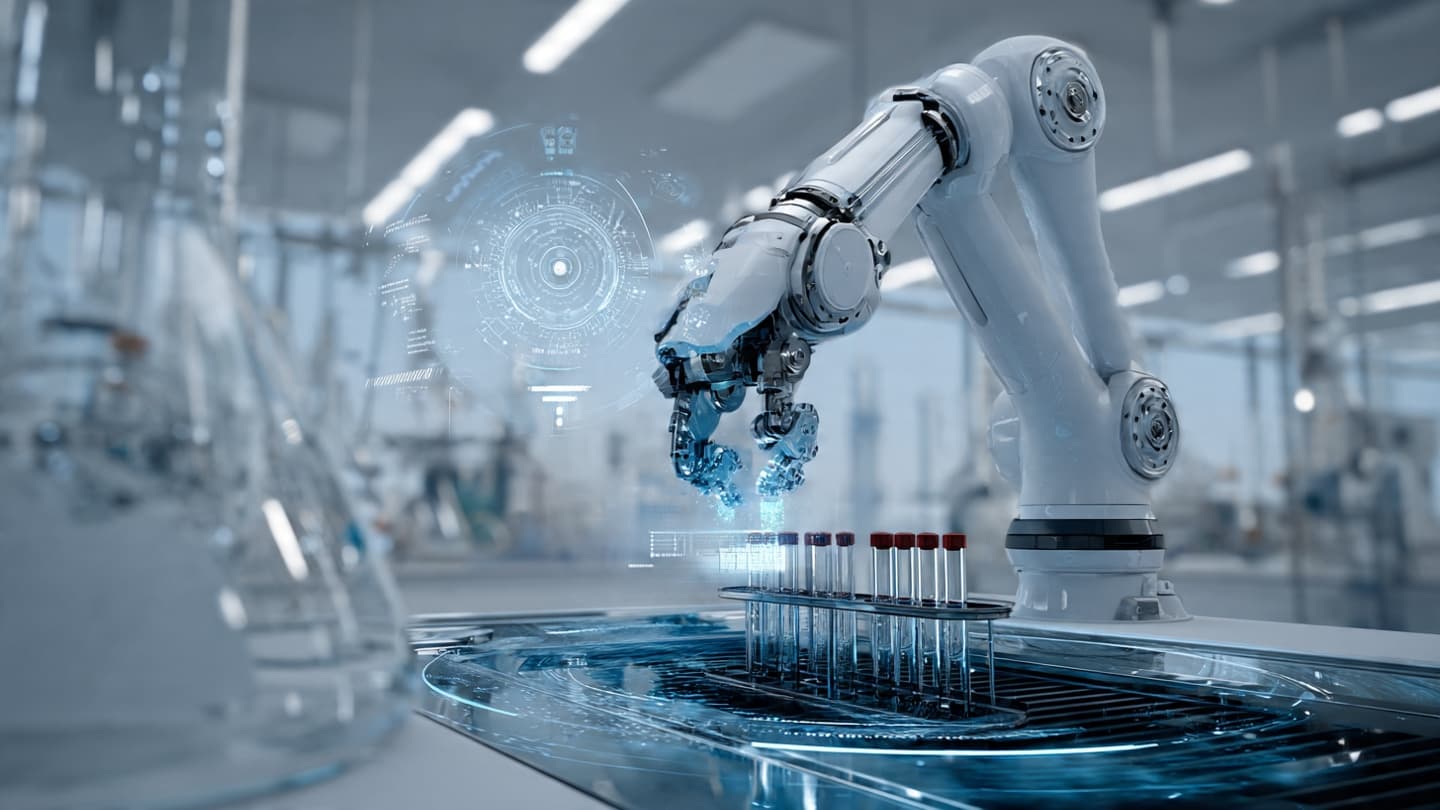
Science has traditionally been a human endeavor, driven by curiosity, intuition, and painstaking experimentation. Researchers spend years designing studies, collecting data, and analyzing results. But now, a new partner has entered the laboratory: artificial intelligence. AI agents are no longer just tools for data analysis; they are becoming active participants in the scientific process. They can hypothesize, design experiments, and even conduct autonomous research in simulated environments. This shift is accelerating the pace of discovery, opening up new frontiers in medicine, materials science, and beyond. It is a revolution in how we understand and interact with the natural world.
The capability of AI to process vast amounts of information and identify patterns is unmatched. In fields like drug discovery, AI can screen millions of potential compounds in seconds, predicting their efficacy and safety. This drastically reduces the time and cost associated with bringing new medicines to market. Similarly, in materials science, AI can predict the properties of new alloys or polymers, guiding researchers toward promising candidates without the need for extensive trial and error. This efficiency is transforming the economics of innovation.
Moreover, AI agents can operate continuously, running simulations and experiments around the clock. They do not tire, and they do not suffer from cognitive biases. This allows for a more exhaustive exploration of the solution space, uncovering insights that humans might miss. In some cases, AI has discovered novel strategies or structures that were counterintuitive to human experts. It is expanding the boundaries of what is possible, challenging our assumptions and inspiring new lines of inquiry.
However, the rise of autonomous science raises important ethical and philosophical questions. Who is responsible for the discoveries made by AI? How do we ensure that the algorithms are transparent and free from bias? The "black box" nature of some AI models makes it difficult to understand how they arrive at certain conclusions. Explainability is crucial for building trust and ensuring that scientific findings are robust and reproducible. Researchers are working on methods to make AI decision-making more interpretable.
Furthermore, the role of the human scientist is evolving. Rather than being replaced, researchers are becoming supervisors and interpreters of AI-driven results. They provide the context, the ethical framework, and the creative direction. The collaboration between human intuition and machine precision is creating a powerful synergy. It allows scientists to focus on high-level questions and strategic goals, leaving the routine tasks to their digital assistants.
The implications for society are profound. Faster scientific progress means quicker solutions to global challenges like climate change, disease, and energy scarcity. It promises a future where innovation is not limited by human bandwidth but by computational power and data availability. However, it also requires careful management to ensure that the benefits are shared equitably and that the technology is used responsibly.
As we look to the future, the integration of AI in science will deepen. We may see fully autonomous laboratories where robots and AI work together to solve complex problems without human intervention. This vision is no longer science fiction; it is an emerging reality. The question is not whether AI will change science, but how we will guide that change.
In the end, the self-driving scientist is a testament to human ingenuity. It is a tool we have created to extend our own capabilities. By embracing this partnership, we can unlock the secrets of the universe faster and more effectively than ever before. The journey of discovery is entering a new chapter, one written in code and guided by curiosity.
AI Image Disclaimer: Images in this article are AI-generated illustrations, meant for concept only.
Sources: ESADE Nature (via ESADE context) WIRED Bloomberg Reuters
Published by Banx Network. This article is part of the Banx decentralized media programme, powered by the BXE token on the XRP Ledger.