There are moments in history that refuse to stay buried, events so vast they leave fingerprints in stone, ash, and the slow decay of atoms. Nearly two thousand years ago, Mount Vesuvius erupted and erased Pompeii and Herculaneum from the map of the living, killing as many as sixteen thousand people . The precise timing of that catastrophe has long been a matter of historical record—thanks to a witness named Pliny the Younger—but until recently, no scientific method could independently confirm it with meaningful precision. Now, researchers have done just that, using only the rocks Vesuvius left behind.
The technique is called argon-argon dating, a method that measures the radioactive decay of potassium-40 into argon-40 within volcanic minerals . Because argon escapes from magma while it is molten but becomes trapped once the rock cools, the ratio of these isotopes acts as a clock, ticking quietly from the moment of eruption . The challenge has always been precision: for events as recent as Pompeii—a geological blink of an eye—the accumulated argon is so slight that the margin of error can exceed the event’s distance from the present.
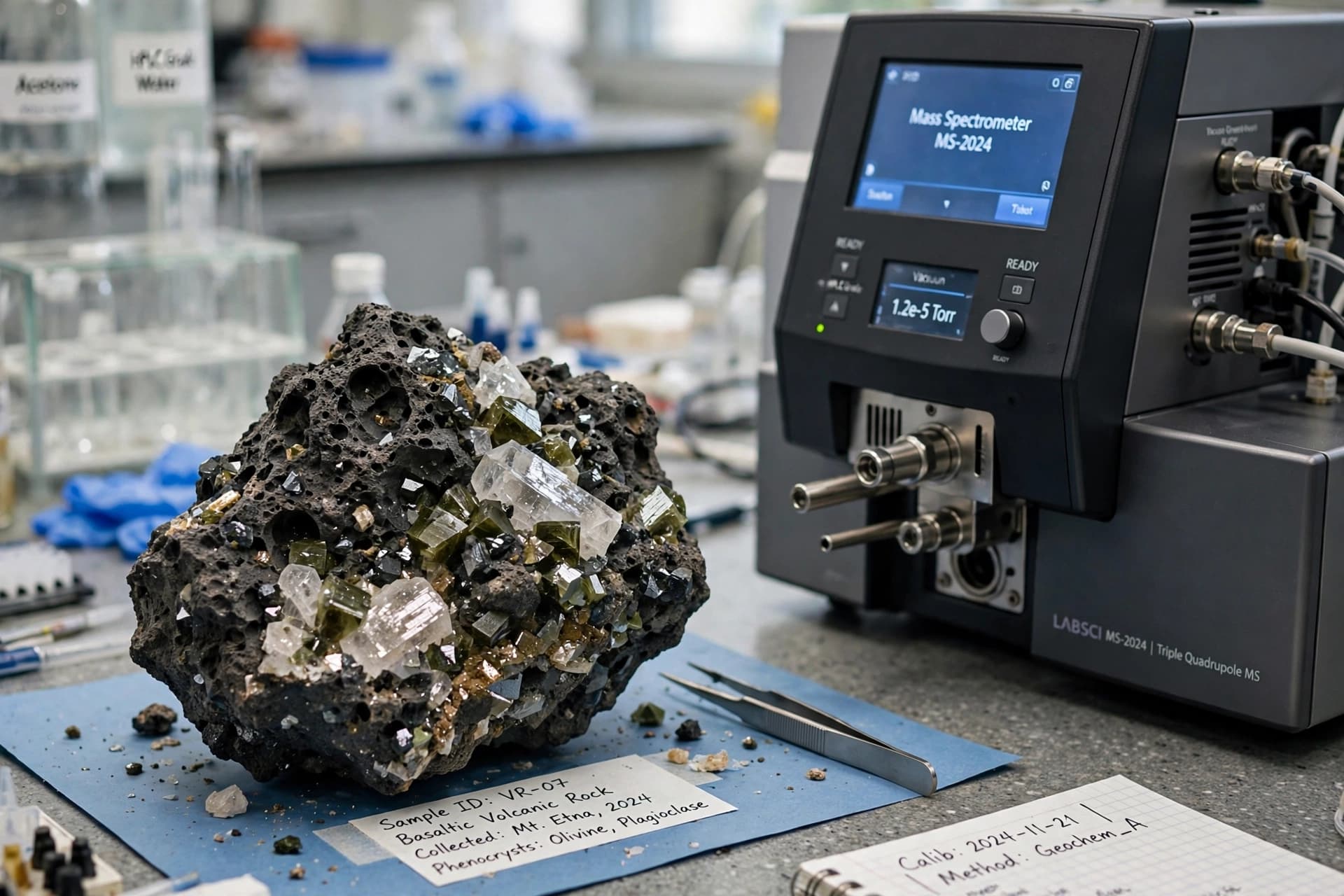
To sharpen that clock, a team led by Paul Renne of the Berkeley Geochronology Center turned to eight samples of sanidine, a potassium-rich mineral from pumice buried early in the eruption at the site of Oplontis . The samples were not new; they had been collected in the late 1990s by co-author Andrea Marzoli and stored for decades, waiting for technology to catch up . When the team finally analyzed them with modern mass spectrometers and refined neutron irradiation techniques, the results were striking. The rocks yielded a date of 1,938 years before analysis, plus or minus 13 years—a precision of 0.7 percent .
That scientific date was then compared against the historical one. Pliny the Younger, who witnessed the eruption from across the Bay of Naples, recorded it as occurring on August 24, 79 C.E. . The match was close: an accuracy of 0.4 percent, meaning the rock clock and the written word agreed to within a handful of years across nearly two millennia . The team also resolved a long-standing historical dispute over a Roman coin that some scholars believed indicated a later, autumn date; graduate student Caroline Hasler compared it with other contemporary coins and determined it had likely been minted before September, reinforcing Pliny’s August timeline .
The implications extend far beyond Pompeii. By anchoring argon-argon dating to a known historical event, the researchers were able to recalibrate the half-life of potassium-40, the fundamental constant on which the method depends. The new value is 12.044 billion years, give or take 0.088 billion—twice as precise as the previous estimate derived from nuclear physics . That improvement will ripple through geology, archaeology, and paleontology, allowing scientists to date volcanic eruptions, meteor impacts, and mass extinctions with greater confidence .
For volcanologists, the work carries a practical edge. Densely populated cities like Naples, Mexico City, and Yogyakarta sit near active stratovolcanoes whose eruptive histories are poorly constrained in the recent past . A dating method that works on the scale of centuries, not just millions of years, offers a better picture of how often these volcanoes awaken and what triggers them.
What the study ultimately demonstrates is a quiet convergence: the written word and the physical world, history and physics, arriving at the same conclusion from entirely different directions. The rocks of Vesuvius remembered what Pliny wrote down. It took nearly two thousand years and a machine that can count atoms to hear them agree.
AI Image Disclaimer: The illustrations in this article are AI-generated and are not photographs of archaeological specimens or historical events.
Sources: Science, University of California, Berkeley, Gizmodo, Science Advances
Published by Banx Network. This article is part of the Banx decentralized media programme, powered by the BXE token on the XRP Ledger.