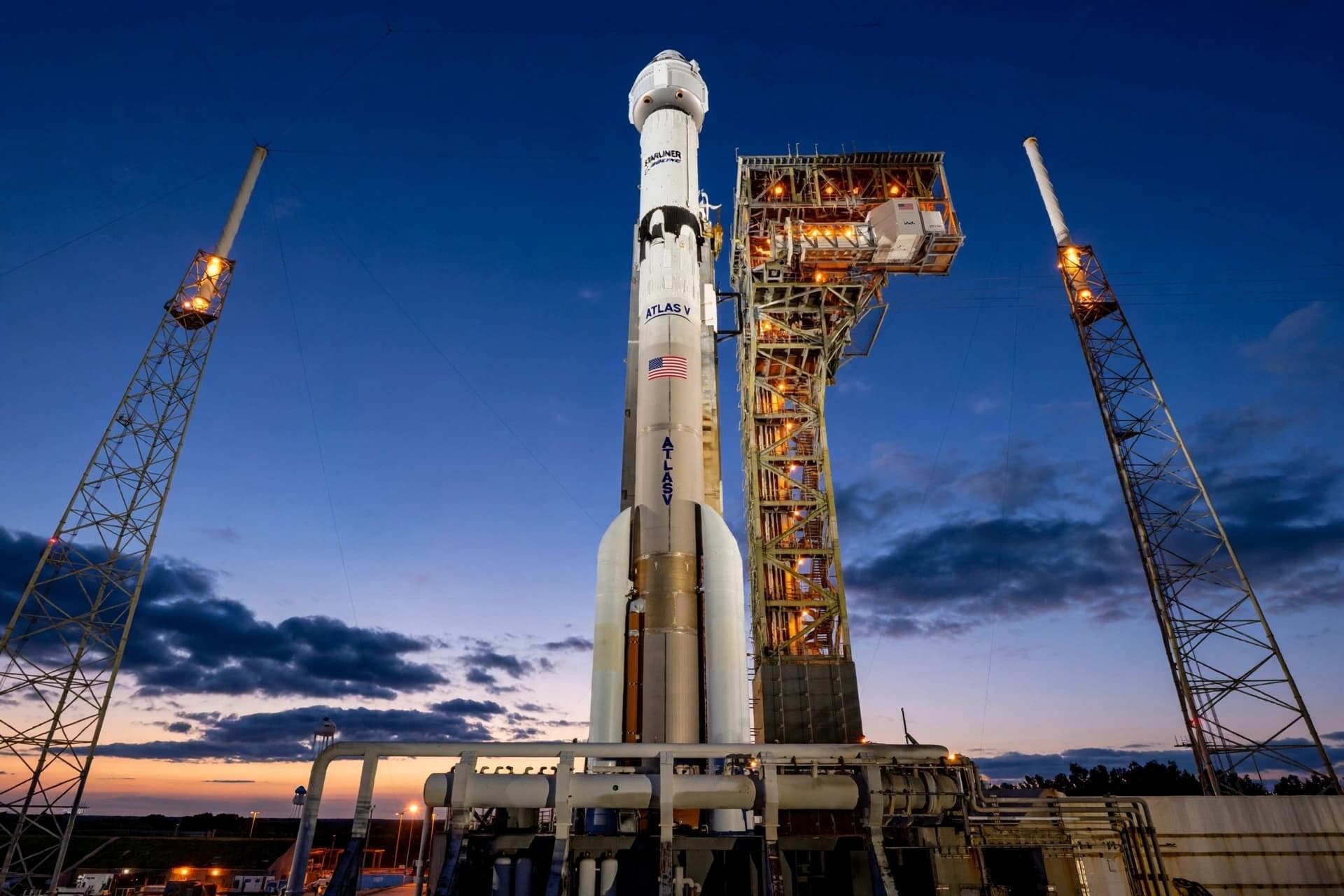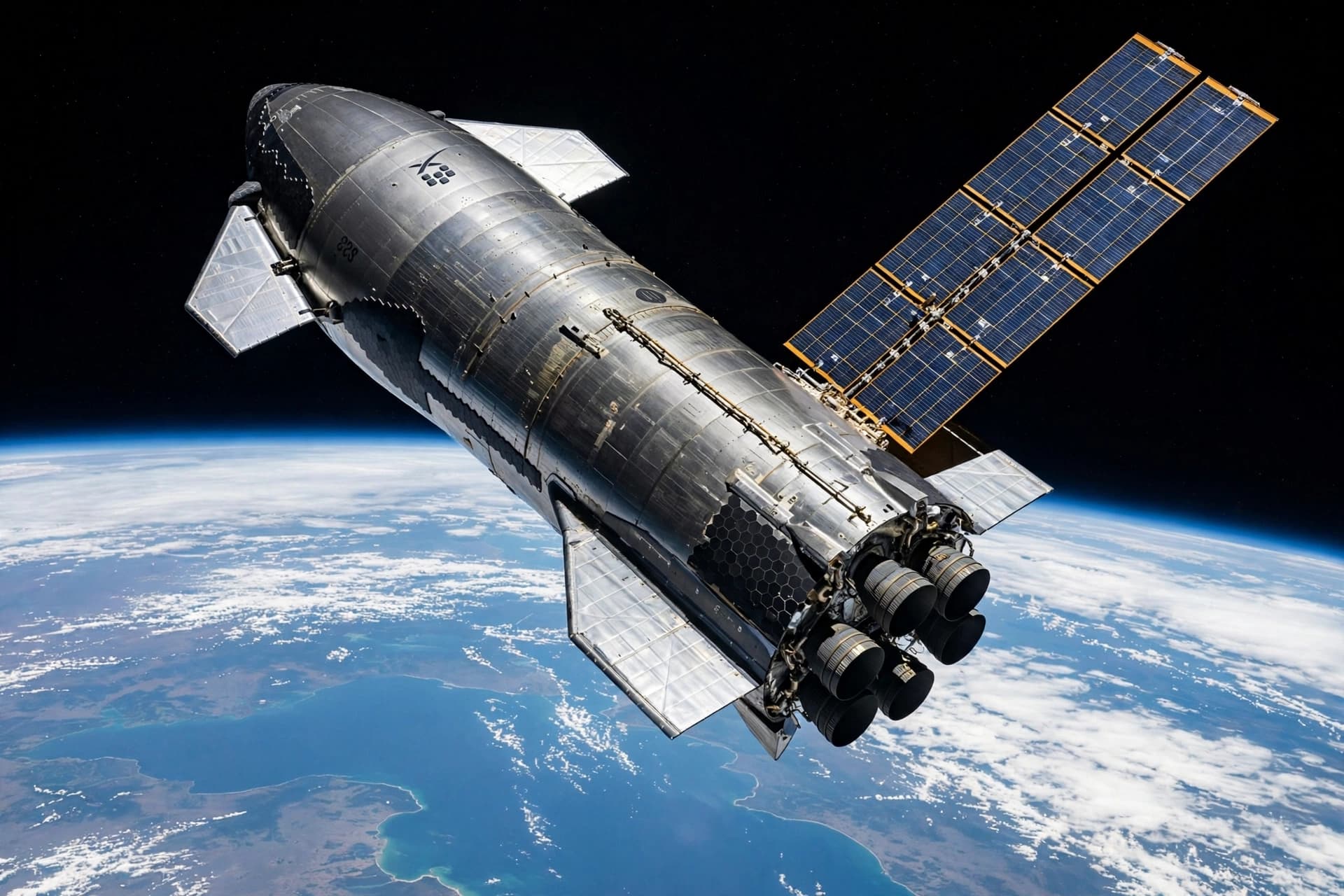
There is a particular frustration in watching a machine achieve what it was built to do, only to stumble on a detail that should have been routine. SpaceX’s Starship reached orbit for the first time on Monday, a milestone that had eluded the company through thirteen previous test flights. But the triumph was cut short—not by a catastrophic failure, but by a single engine that shut down at the wrong moment. And that single engine may carry consequences far beyond a commercial test flight.
During the fourteenth Starship test flight, one of the spacecraft’s three Raptor engines shut down unexpectedly after separation from the Super Heavy booster . Flight controllers proceeded with the orbital insertion and the deployment of 26 Starlink satellites—the first commercial payload Starship had ever released . But the mission was cut several hours short as a precaution, with the spacecraft returning to Earth early and exploding on splashdown in the Pacific .
For SpaceX, the engine failure is a setback to its commercial ambitions. Starship is central to the company’s plans to expand its Starlink satellite constellation, which cannot be launched efficiently on the older Falcon 9 . But the stakes are higher for NASA. Starship is one of two vehicles competing to become the first crewed lunar lander for the Artemis program, and the lander will rely on the same Raptor engines that malfunctioned Monday .
“Any engine fix that holds up the next flights, including the planned attempt to catch the ship with the launch tower’s arms, eats into that schedule,” said Dean Sladen, an aerospace engineer at Accu Components . The critical question is whether the failure was a one-off defect in a single component or evidence of a design flaw requiring fleet-wide changes .
Raptor engine problems have plagued Starship before. During the twelfth test flight in May, one engine failed to ignite as planned . SpaceX had also scrubbed attempts to test-fire Raptors in space during earlier missions. All engines fired successfully during the thirteenth flight in July, suggesting progress, but Monday’s failure reintroduces uncertainty .
NASA’s timeline is already aggressive. The agency aims to return astronauts to the Moon by 2028, ahead of China’s 2030 target, but experts widely view that schedule as optimistic . A working lander is needed even earlier for Artemis III, an Earth-orbit rehearsal mission planned for as early as summer 2027, where astronauts will practice rendezvous and docking maneuvers .
The competitive landscape adds another layer of pressure. NASA originally contracted SpaceX to provide the first lunar lander, but Administrator Jared Isaacman said in April that the agency would use whichever lander is ready first—opening the door for Blue Origin’s Blue Moon, a more conventional design . If both landers are ready, both could participate in Artemis III .
“The real pressure is the Moon,” Sladen said. “NASA needs Starship for Artemis III” . SpaceX has demonstrated that Starship can reach orbit. What remains uncertain is whether it can do so reliably, and whether the engines that carry it there will be ready to carry astronauts to the lunar surface and back.
AI Image Disclaimer: All images accompanying this report were created using artificial intelligence and are illustrative only.
Sources: Reuters (via BTA, The Next Web, Hum English), Futurism, The Times of India, The News International
Published by Banx Network. This article is part of the Banx decentralized media programme, powered by the BXE token on the XRP Ledger.