There is a particular kind of quiet that falls over a field of study when a long-awaited threshold is finally crossed, when a detection that had been theoretically possible for decades becomes, at last, empirically real. For years, astronomers have listened for radio emissions from planets beyond our solar system, and for years the signals remained hidden—drowned in the overwhelming static of their host stars. Now, for the first time, researchers have isolated a radio signal that comes directly from an exoplanet, and in doing so, they have opened a new window onto worlds we can never visit.
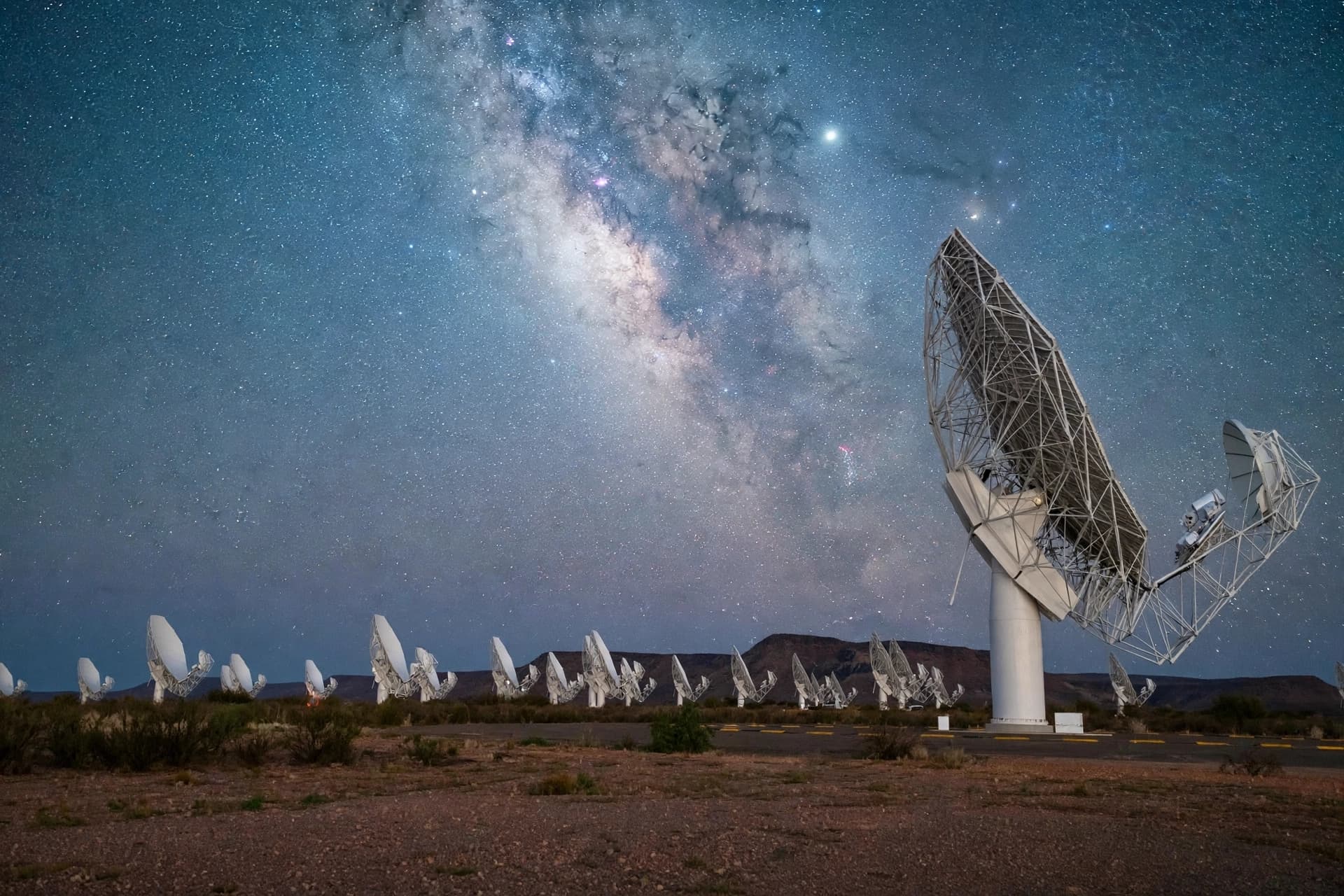
The signal originates from Beta Pictoris b, a young gas giant approximately 63 light-years from Earth. Using the MeerKAT radio telescope array in South Africa, a team led by Kevin Ortiz Ceballos of the Harvard & Smithsonian Center for Astrophysics and the University of Oregon detected rapid, repeating bursts of circularly polarized radio waves across four observation sessions between 2025 and 2026 . The findings were posted to the arXiv preprint server on September 15 and have not yet undergone peer review .
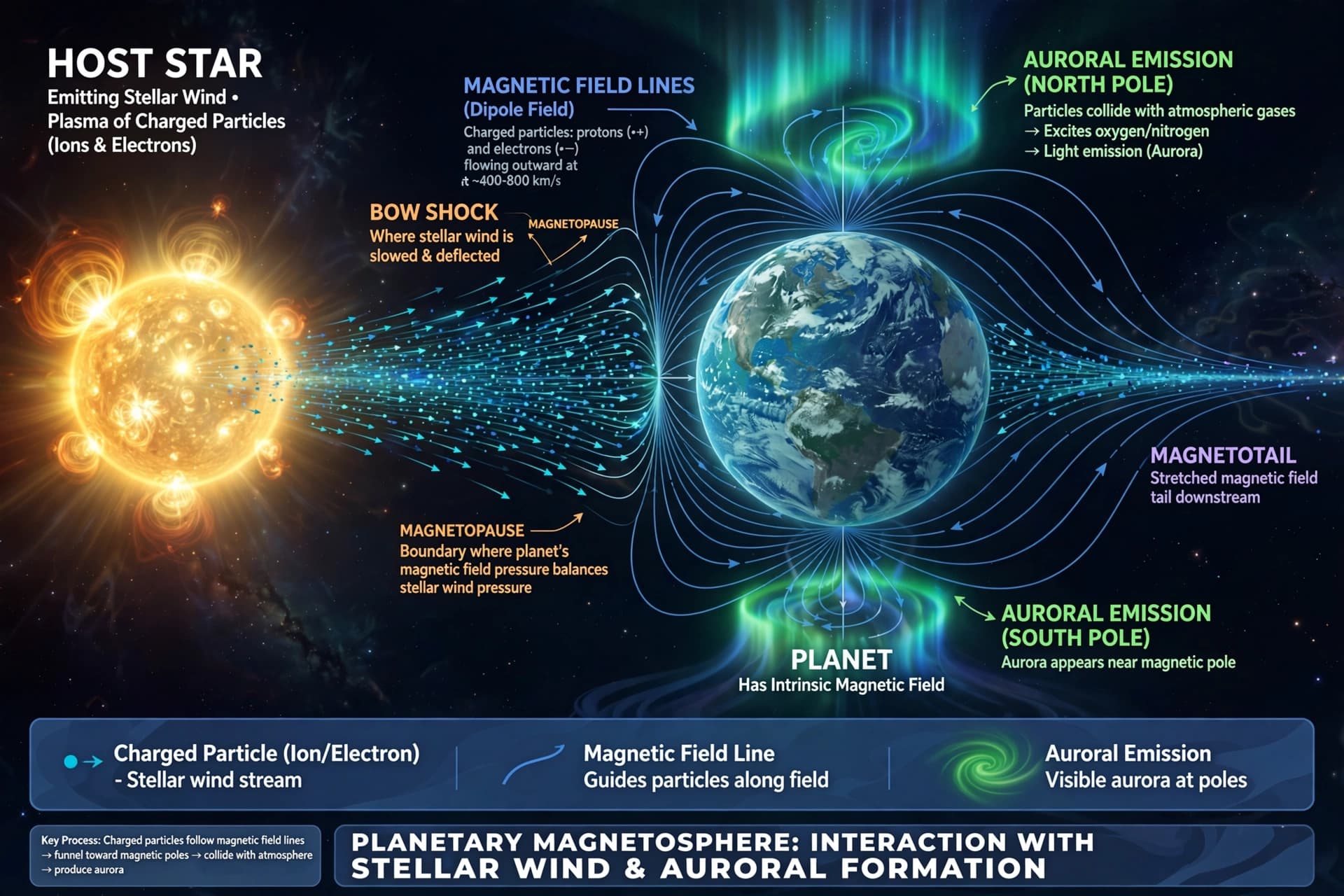
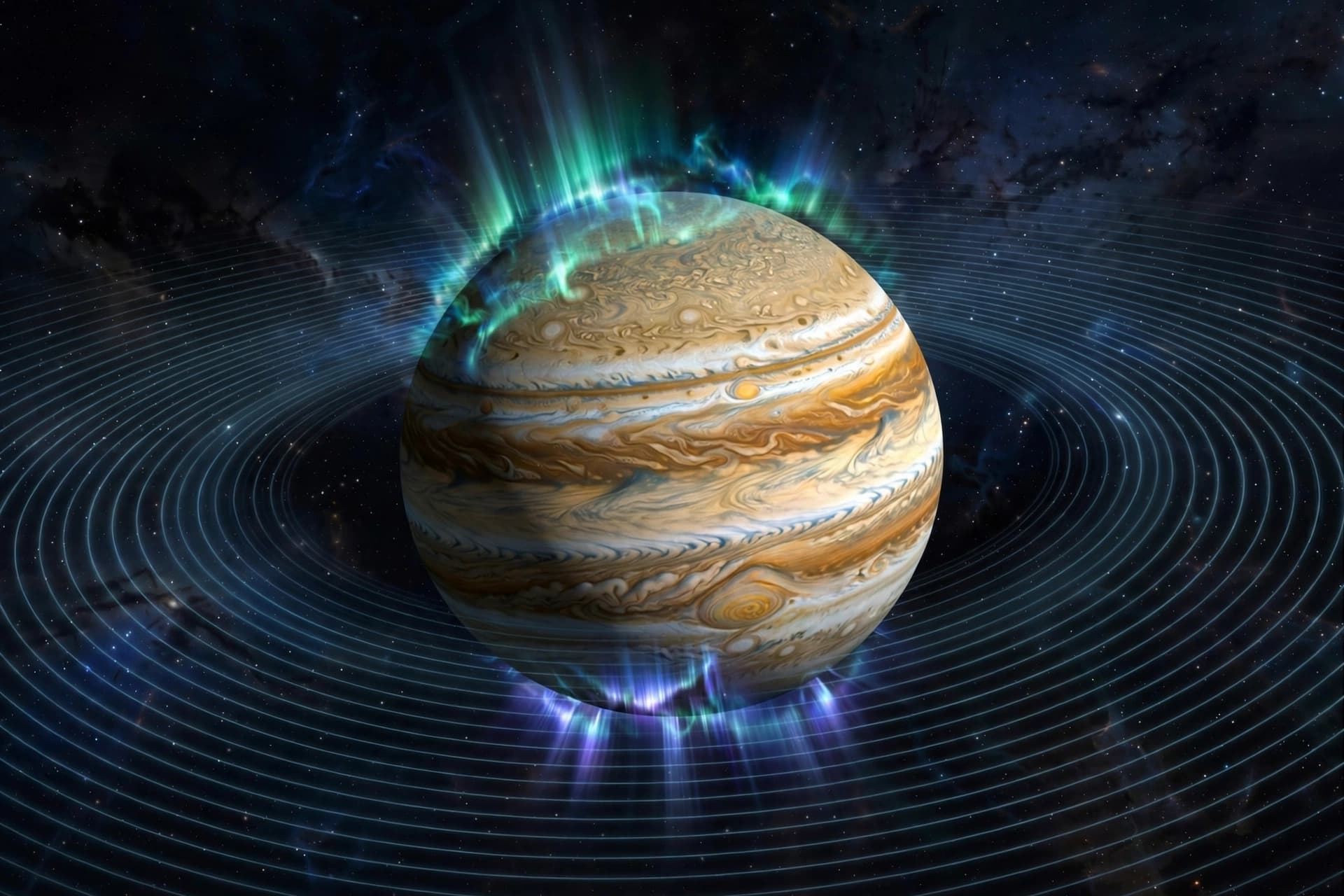
The source of the emission is not a message. It is auroral radio activity—the same fundamental process that produces Earth's northern lights, scaled to a planet roughly twelve times the mass of Jupiter . Charged particles from the host star interact with the planet's magnetic field, spiraling along field lines and releasing energy as coherent radio waves through a mechanism called electron cyclotron maser instability . "There are two natural processes that can produce radio emission on exoplanets," said Suzanne Aigrain, a professor of astrophysics at Oxford. "One is magnetic reconnection. The other is auroras, like on Earth or Saturn" .
The technical challenge was separating the planet's faint signal from the far brighter radio noise of its star. The team solved this by using distant quasars—extremely bright galactic cores that appear nearly stationary in the sky—as calibration reference points, allowing them to pinpoint the source with confidence . The localization results matched the position of Beta Pictoris b and did not match the star or other planets in the system .
That localization enabled something unprecedented: the first direct measurement of an exoplanet's magnetic field. From the observed frequency range, researchers inferred a minimum field strength of approximately 1,250 gauss at the emission site . For comparison, Earth's surface field is roughly half a gauss, and Jupiter's strongest regions reach about 14 gauss . "This is the first time the magnetic field of an exoplanet has been directly measured in this way," the researchers noted .
The significance extends beyond the number itself. Magnetic fields act as shields, protecting atmospheres from stellar winds and surfaces from harmful radiation. Mars lost its magnetic field and, with it, much of its atmosphere and surface water . The ability to remotely measure magnetic fields on distant planets will allow scientists to assess which rocky worlds might retain liquid water and potentially support life. "Although auroral radio bursts are observed in Solar System planets and in some ultracool dwarfs, no radio detection has previously been unambiguously localised to an extrasolar planet rather than its host star," the team wrote .
Beta Pictoris b is a gas giant with no solid surface and is not considered habitable. But the method, if confirmed by independent observations, establishes a new tool for studying the magnetic environments of worlds beyond our solar system. Next-generation radio observatories with five- to seven-fold improvements in sensitivity are expected to bring smaller, rocky planets within reach . For now, the signal is a natural phenomenon, not a greeting. But it is a beginning.
AI Image Disclaimer: The visuals accompanying this article were produced by artificial intelligence and are for illustrative purposes only.
Sources: WIRED, Yahoo Tech, Vietnam.vn, arXiv, Techlicious
Published by Banx Network. This article is part of the Banx decentralized media programme, powered by the BXE token on the XRP Ledger.