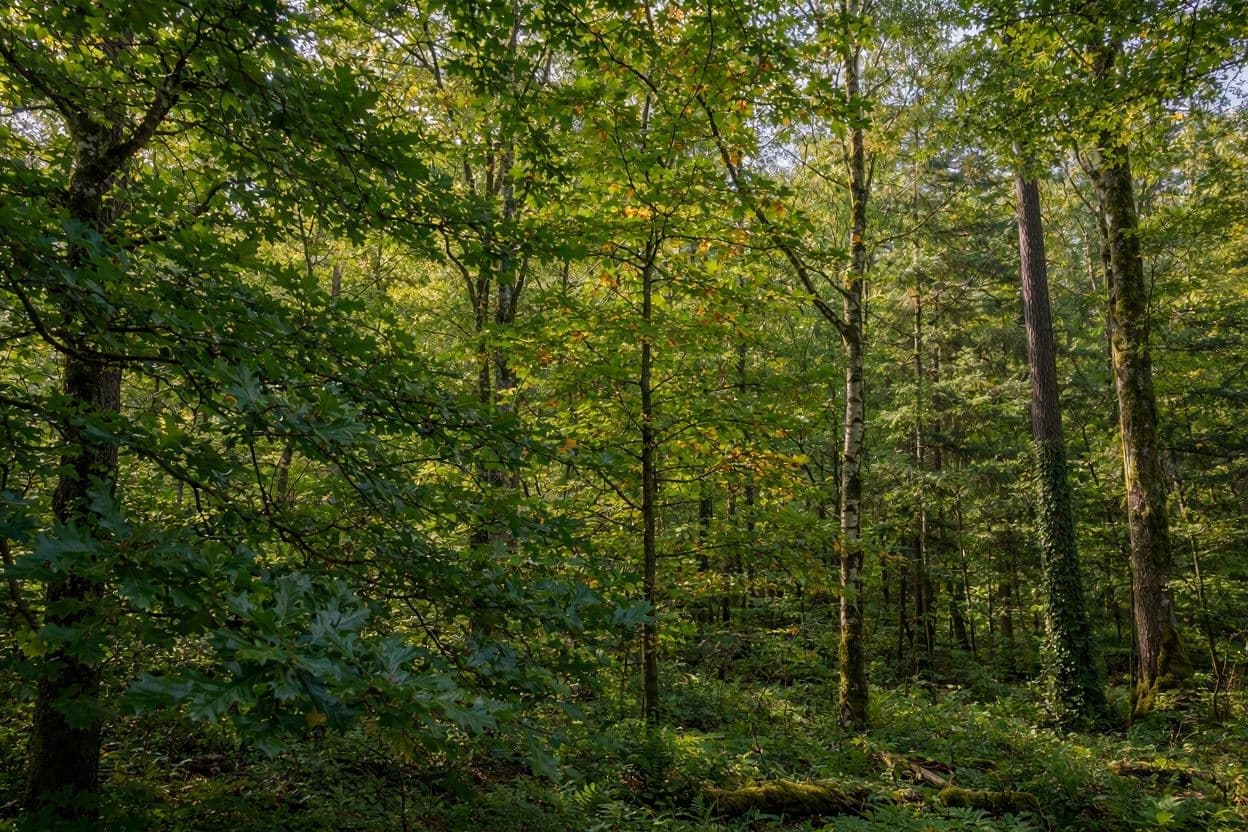
In the quiet resilience of the forest, there is a lesson that has long whispered through the leaves, now confirmed by the rigorous voice of science. We often view nature as a singular, monolithic entity, yet it is actually a complex tapestry woven from countless distinct threads. Recent studies suggest that this intricate variety is not merely aesthetic but essential for survival, offering a buffer against the increasingly volatile rhythms of our changing climate.
The research highlights a profound truth: monocultures, while efficient for timber production, lack the structural integrity to withstand extreme weather events. When droughts strike or storms rage, a forest composed of a single species faces a uniform vulnerability. In contrast, a diverse ecosystem distributes risk, ensuring that if one species falters under pressure, others may thrive, maintaining the overall health and stability of the woodland community.
This protective mechanism operates through what ecologists call the "insurance effect." Just as a diversified financial portfolio mitigates economic shock, a diverse forest mitigates environmental shock. Different tree species possess unique physiological traits—some have deep roots that access water during dry spells, while others have flexible branches that bend rather than break in high winds. Together, they create a resilient system that is greater than the sum of its parts.
The implications for forestry management are significant. For decades, industrial logging favored uniformity, planting vast expanses of a single, fast-growing species. However, as climate extremes become more frequent and severe, this approach reveals its fragility. The study suggests that reintroducing native diversity is not just an ecological ideal but a practical necessity for sustaining forest resources in a warming world.
Beyond carbon sequestration, these diverse forests support a wider array of wildlife, creating habitats that are rich and varied. The interplay between different tree species fosters a soil microbiome that is more robust, aiding in nutrient cycling and water retention. This underground network, often invisible to the naked eye, plays a crucial role in the forest’s ability to recover from disturbances.
As we look toward the future, the preservation of biodiversity becomes a central pillar of climate adaptation strategies. It is no longer enough to simply plant trees; we must plant the right mix of trees. This requires a shift in perspective, viewing forests not as crops to be harvested but as complex living systems that require careful stewardship and respect for their inherent diversity.
The findings serve as a gentle reminder of nature’s wisdom. In its variety, there is strength. In its complexity, there is security. By honoring the diverse identities of tree species, we not only protect the forests but also secure the many benefits they provide to humanity, from clean air to stable climates.
Ultimately, the study underscores that diversity is not a luxury but a fundamental requirement for ecological endurance. As we face the challenges of a changing planet, embracing the complexity of natural systems offers a path forward that is both sustainable and resilient, inviting us to work with nature rather than against it.
AI Image Disclaimer: The accompanying visual representations are generated by artificial intelligence to illustrate the concepts discussed.
Sources: Nature Ecology & Evolution Science Daily Yale School of the Environment
Published by Banx Network. This article is part of the Banx decentralized media programme, powered by the BXE token on the XRP Ledger.