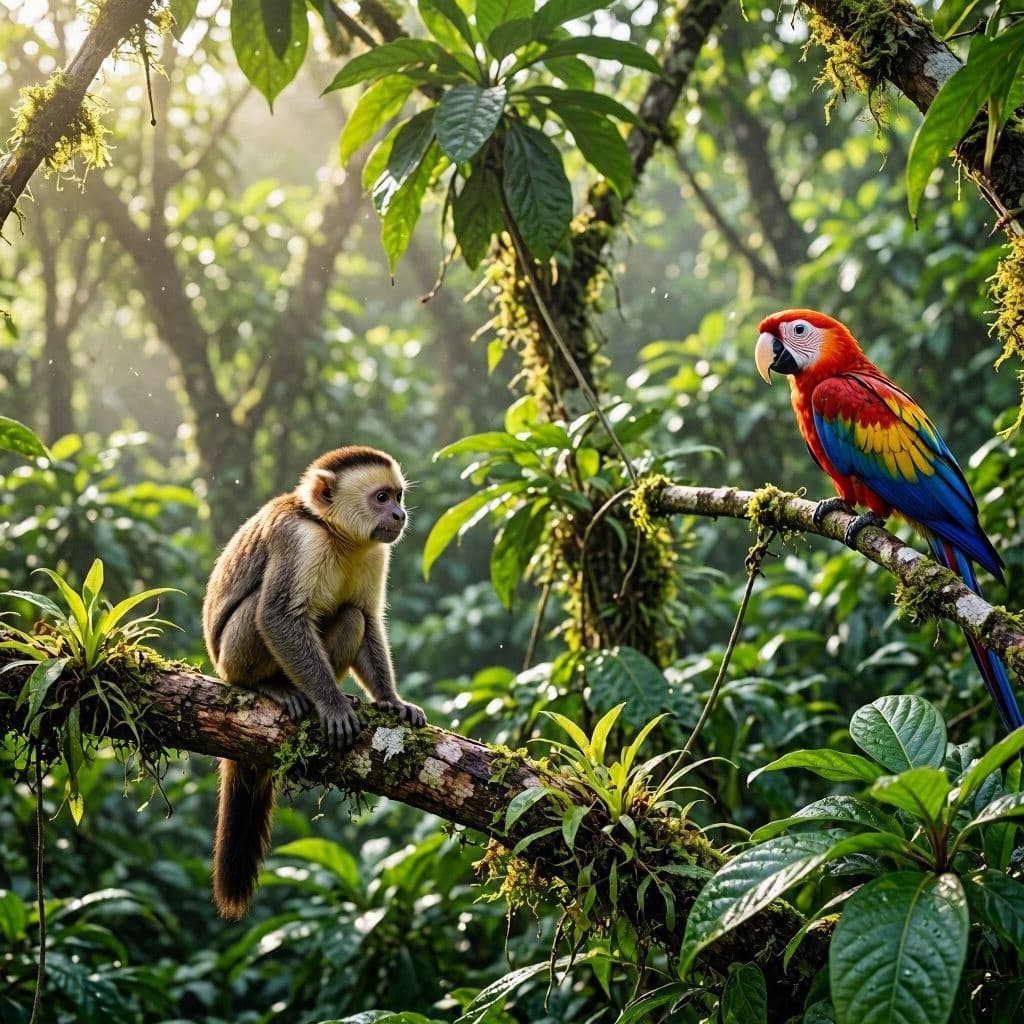
In the dense, green labyrinth of the Amazon rainforest, sound is a vital thread connecting the diverse web of life. Recent research has uncovered a remarkable phenomenon: birds and monkeys are engaged in a cross-species conversation, sharing warnings about predators. A single alarm call from one animal can trigger a chain reaction, rippling through the canopy as others hear, react, and pass the message along. This intricate network of communication highlights the interconnectedness of the ecosystem and the sophisticated ways in which animals cooperate for survival.
The study focused on the interactions between various bird species and primates, such as tamarins and capuchins. Researchers observed that these animals recognize and respond to each other’s alarm calls, even though they belong to different taxonomic groups. When a bird spots a hawk or a monkey detects a snake, their distinct calls serve as universal signals of danger. Other animals, upon hearing these alerts, cease their activities and seek cover, demonstrating a shared understanding of threat.
This mutualistic relationship benefits all parties involved. Birds, with their superior vantage points, can spot aerial predators early, while monkeys, with their keen eyesight in the understory, can detect ground-based threats. By sharing information, they create a more comprehensive surveillance system than either could achieve alone. This cooperation enhances the survival rates of both groups, illustrating the evolutionary advantage of social learning and communication.
The "ripple effect" described by researchers is a testament to the efficiency of this network. An alarm call does not just alert the immediate listener; it is often repeated or acknowledged by others, spreading the warning across a wider area. This amplification ensures that even animals distant from the original source are informed of the danger. It transforms the forest into a responsive community, where information flows as freely as water.
Understanding these dynamics is crucial for conservation efforts. The Amazon is facing unprecedented threats from deforestation and climate change, which disrupt these delicate ecological balances. Noise pollution from human activity can interfere with animal communication, making it harder for them to detect predators. Protecting the acoustic environment of the rainforest is thus as important as preserving its physical structure.
The findings also challenge the traditional view of animal communication as limited to within-species interactions. They suggest a level of cognitive complexity and social awareness that was previously underestimated. Animals are not just reacting to instinct but are actively interpreting and responding to the behaviors of others. This insight deepens our appreciation for the intelligence and adaptability of wildlife.
For scientists, the Amazon continues to be a treasure trove of discovery. Each new finding reveals another layer of complexity in the natural world. The conversation between birds and monkeys is a reminder that nature is not a collection of isolated entities but a symphony of interactions. Listening to these voices helps us understand the health and resilience of the ecosystem.
The discovery of cross-species alarm calls among birds and monkeys in the Amazon highlights the complex cooperative networks that enhance survival and underscores the importance of preserving the rainforest’s ecological integrity.
AI Image Disclaimer: The images referenced in this piece are AI-created visualizations meant to evoke the setting, not direct documentation of the scientific data.
Sources: Current Biology National Geographic Smithsonian Magazine Journal of Animal Ecology
Published by Banx Network. This article is part of the Banx decentralized media programme, powered by the BXE token on the XRP Ledger.