There is a particular weight that attaches to a name in Washington, a weight that can open doors or close them. For Maurene Comey, a veteran federal prosecutor, the name she carried was her father's—James Comey, the former FBI director whom President Donald Trump has long regarded as an adversary. On Monday, a federal judge ruled that the weight of that name, and the politics surrounding it, had been used to justify an unlawful firing.
Judge Jesse M. Furman of the Southern District of New York found that the Trump administration illegally fired Maurene Comey from her position as an assistant U.S. attorney in July 2025, despite her decade of service and what the judge described as "the highest accolades from supervisors and peers alike" . The ruling granted her retroactive reinstatement and back pay through December 20, 2025, when she began a new role at a private law firm .
The government had argued that federal prosecutors exercise the president's "conclusive and preclusive" powers and could therefore be removed at will. Furman rejected that claim, writing that it "flies in the face of nearly two centuries of Supreme Court precedent" . "To accept defendants' argument would be to unsettle the very equilibrium established by this nation's constitutional system," he wrote .
The judge found that Comey's termination violated the separation of powers, the Administrative Procedure Act, and her Fifth Amendment due process and statutory rights . The Civil Service Reform Act, he noted, authorizes the attorney general to remove an assistant U.S. attorney only "in a particular manner and for certain reasons," and Comey's removal "indisputably violated" that law .
Comey's lawsuit had alleged that she was fired because of her father's adversarial relationship with Trump, or because of her perceived political affiliation, or both . During her tenure, she had worked on some of the Southern District's highest-profile cases, including prosecutions involving Jeffrey Epstein, Ghislaine Maxwell, and Sean "Diddy" Combs . The judge reserved judgment on her First Amendment claim, noting it was largely moot since she now works in private practice and no longer seeks actual reinstatement .
A Justice Department spokesperson said the department "disagrees with this decision and will appeal in due course" . Comey's lawyers praised the ruling as a reaffirmation of checks and balances. "This decision reaffirms our bedrock system of checks and balances: the president is not above the law," they said .
There is a larger pattern here that extends beyond a single firing. The case tested whether the administration can swiftly remove career prosecutors who are not politically appointed and whose careers span multiple presidencies. The judge's ruling affirms that Congress can place limits on the executive branch's ability to remove so-called "inferior officers" . The Justice Department's appeal will determine whether that limit holds.
For Maurene Comey, the ruling offers a measure of vindication and a paycheck she was owed. For the broader machinery of American governance, it offers something more: a reminder that the rules governing how public servants can be dismissed are not mere formalities. They are the architecture of a system that insists, however imperfectly, that the president is not the only voice in the room.
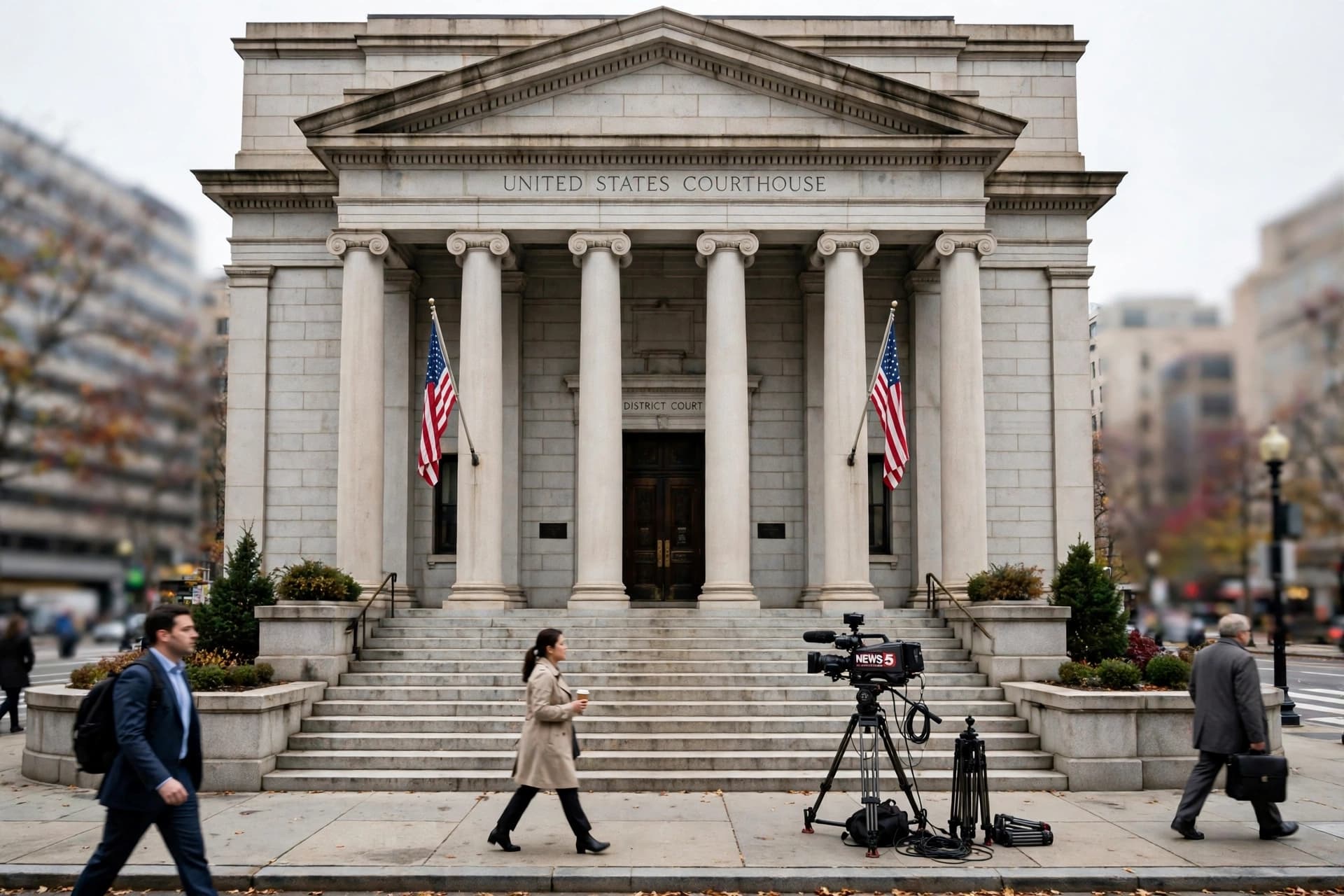
Image note: The visual accompanying this article is an AI-generated illustration and does not depict actual individuals or court proceedings.
Sources: CBC News, Courthouse News Service, Reuters via Missouri Lawyers Media, New York Post, Daily Mail
Published by Banx Network. This article is part of the Banx decentralized media programme, powered by the BXE token on the XRP Ledger.