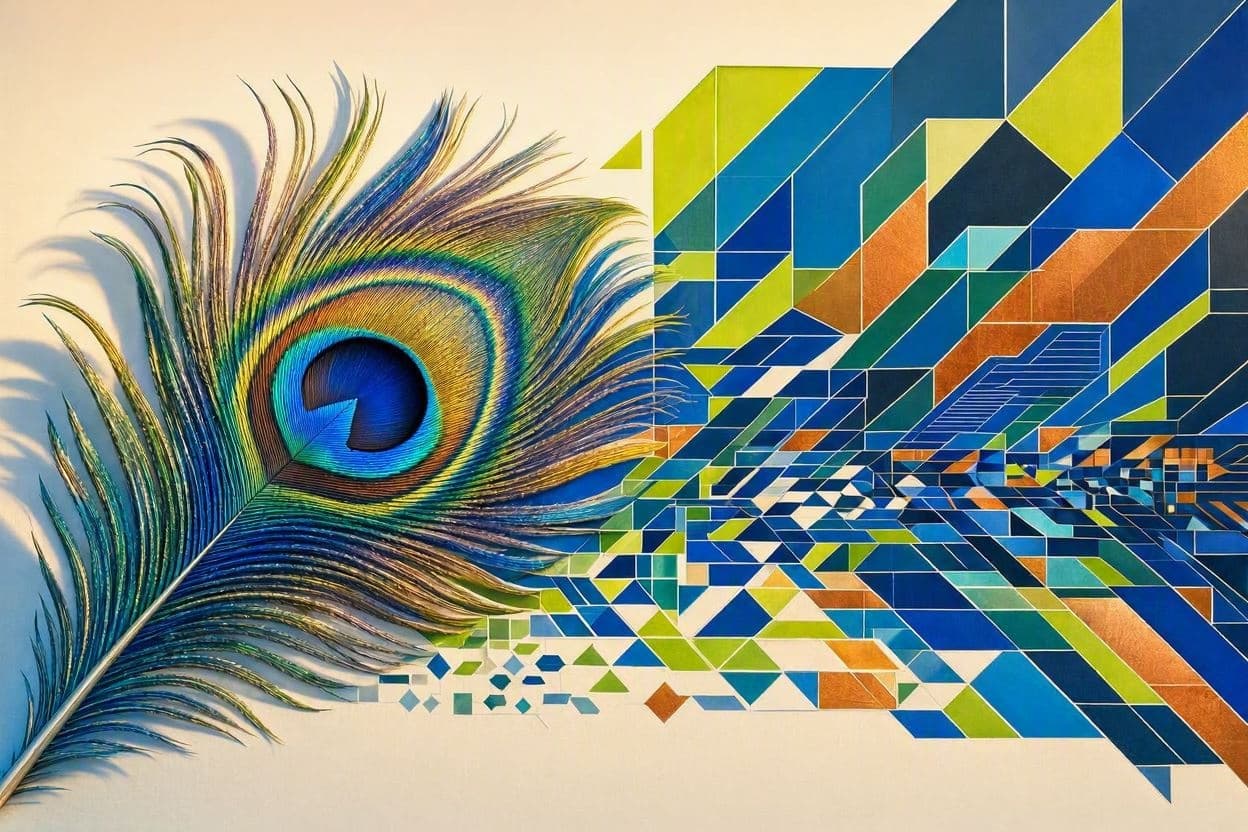
Nature is often viewed as a slow, deliberate sculptor, chiseling forms over millennia to fit the needs of survival. Yet, within the intricate dance of evolution, some traits appear to move with a swiftness that defies this gradualist image. A new model suggests that elaborate visual displays, akin to the iridescent tail of a peacock, may evolve more rapidly than physical weapons like antlers or tusks. This insight invites us to reconsider the pace of biological change, highlighting how the desire to be seen can drive transformation faster than the need to fight.
The study focuses on sexual selection, a powerful force where traits evolve not necessarily for survival, but for reproductive success. For decades, biologists have debated whether ornamental traits, which serve primarily to attract mates, change at a different rate than functional traits used in combat. The new modeling indicates that visual signals are subject to more intense and rapid selective pressure, leading to quicker evolutionary shifts.
Antlers and tusks are tools of direct competition, shaped by the physical demands of wrestling or goring rivals. Their development is constrained by biomechanics and the energy costs of growth. In contrast, a colorful plumage or a complex dance is limited mostly by the sensory preferences of the observer. If a potential mate’s preference shifts, the display must adapt quickly to remain effective, creating a feedback loop that accelerates change.
This rapid evolution of displays can lead to spectacular diversity in a relatively short geological timeframe. It explains why closely related species can look vastly different in their ornamentation while remaining similar in their structural anatomy. The model suggests that the "arms race" of beauty is more volatile and dynamic than the arms race of strength.
Researchers used mathematical simulations to track these changes, comparing the rates of divergence in various species. The results consistently showed that lineages with prominent visual displays exhibited faster rates of trait evolution. This finding aligns with observations in birds, fish, and insects, where color patterns and courtship behaviors vary widely even among neighboring populations.
The implications extend beyond aesthetics. Rapidly changing displays can contribute to reproductive isolation, where groups no longer recognize each other as suitable mates. This mechanism may play a significant role in speciation, the process by which new species arise. Thus, the pursuit of attractiveness may be a key driver of biodiversity.
However, the model also highlights the risks associated with such rapid change. Traits that become too elaborate can incur high survival costs, making individuals more visible to predators or less agile. The balance between attracting a mate and staying alive remains a delicate tightrope, walked by countless species across the globe.
Understanding these dynamics helps scientists predict how species might respond to environmental changes. If visual signals are highly sensitive to selective pressures, they may also be vulnerable to disruptions caused by habitat loss or climate change. Protecting the contexts in which these displays evolve is crucial for maintaining ecological integrity.
A new evolutionary model suggests that ornamental displays, such as those seen in peacocks, evolve more rapidly than physical weapons like antlers. This finding underscores the power of sexual selection in driving biological diversity and highlights the dynamic nature of aesthetic traits in the natural world.
AI Image Disclaimer: The visual representations accompanying this article are AI-generated interpretations designed to symbolize evolutionary biology and natural beauty, using abstract imagery of vibrant colors and organic forms.
Sources: Nature Communications Scientific American University Research Press Releases
Published by Banx Network. This article is part of the Banx decentralized media programme, powered by the BXE token on the XRP Ledger.