

The universe is a theater of grand events, where galaxies collide and black holes devour matter in silent, powerful displays. For centuries, these phenomena were invisible to the naked eye, hidden behind veils of distance and dust. Now, a new gallery of sixteen galaxies offers a window into these deep-space dramas, charting the locations of supermassive black holes and the aftermath of cosmic crashes. This collection invites reflection on the scale of cosmic time and the violent forces that shape the structure of the universe.
The gallery is the result of advanced observational techniques, combining data from X-ray, infrared, and optical telescopes. Each image captures a unique galaxy, many of which harbor active galactic nuclei powered by accreting black holes. These centers of immense gravity emit powerful radiation, lighting up the surrounding gas and dust, making them visible across vast distances. The clarity of these images allows scientists to study the interaction between black holes and their host galaxies.
Several galaxies in the collection show signs of recent mergers, where two galaxies have collided and begun to merge into one. These violent encounters trigger bursts of star formation and feed the central black holes, leading to increased activity. By studying these crashes, astronomers can understand how galaxies grow and evolve over billions of years. It is a glimpse into the dynamic history of the cosmos.
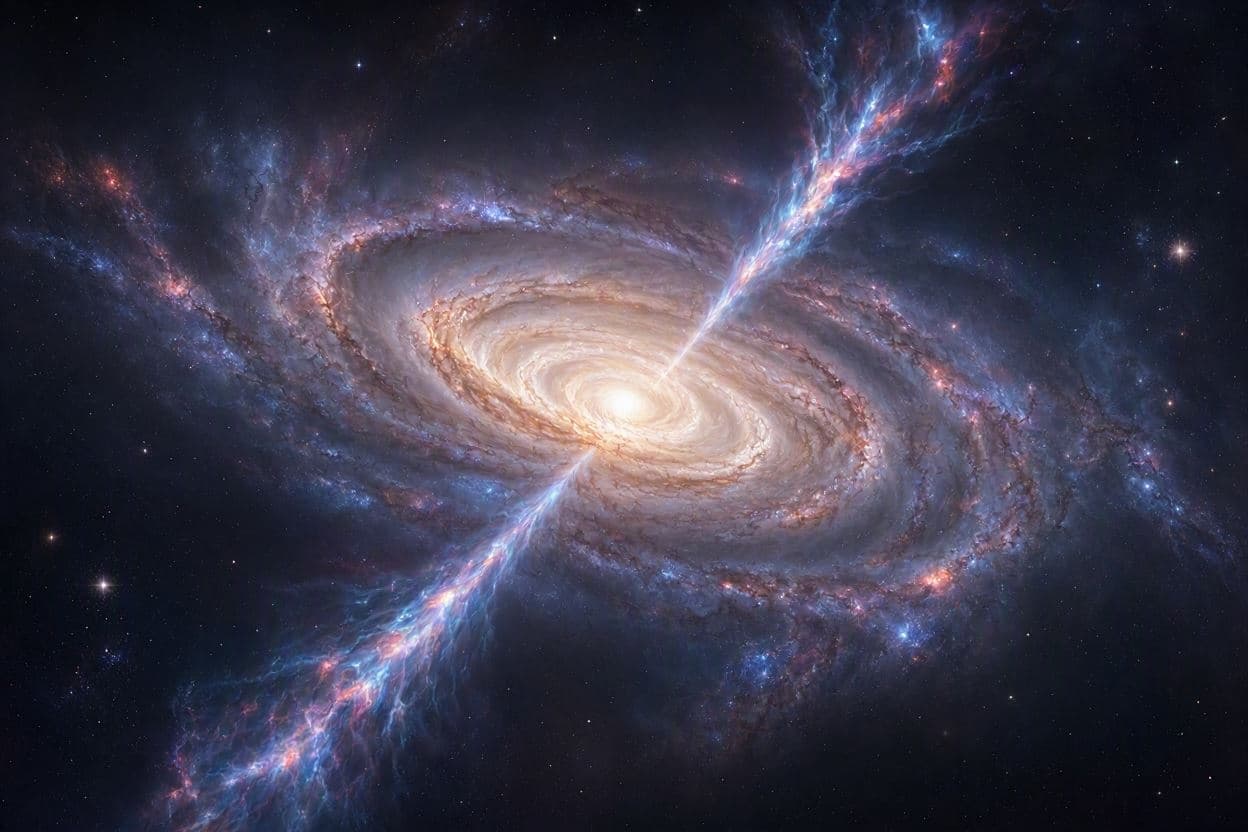
The visual diversity of the gallery is striking. Some galaxies appear as elegant spirals, while others are distorted ellipses, twisted by gravitational forces. The presence of black holes is often marked by bright jets of energy shooting out from the center, piercing through the galactic disk. These features highlight the power of gravity and magnetism in shaping celestial structures.
This collection serves as both a scientific resource and a public outreach tool. By presenting these complex phenomena in an accessible format, it engages the public in the wonders of astronomy. The images are not just data points but works of art, capturing the beauty and terror of the universe. They inspire curiosity and encourage a deeper appreciation for scientific discovery.
For researchers, the gallery provides a standardized set of targets for further study. By comparing these sixteen galaxies, scientists can identify common patterns in black hole growth and galactic evolution. It allows for statistical analysis that can reveal broader trends in cosmic development. The consistency of the data enhances the reliability of subsequent findings.
The technology behind these images continues to improve, allowing for greater resolution and sensitivity. Future telescopes will likely expand this gallery, revealing even more distant and faint objects. Each new addition adds to our understanding of the universe, filling in the gaps of our cosmic map. The journey of discovery is ongoing and ever-expanding.
Viewing these galaxies reminds us of our place in the cosmos. We are observers of a vast, ancient drama, witnessing events that occurred millions or billions of years ago. The light reaching us today is a message from the past, telling the story of how the universe came to be. It is a humbling and awe-inspiring perspective.
A new gallery of sixteen galaxies provides detailed views of deep-space black holes and galactic mergers, offering valuable insights into cosmic evolution. This collection combines scientific rigor with visual beauty, enhancing our understanding of the violent forces that shape the universe.
AI Image Disclaimer: The visual elements accompanying this article are AI-generated interpretations designed to symbolize deep-space observation and galactic structures, using abstract and cosmic imagery.
Published by Banx Network. This article is part of the Banx decentralized media programme, powered by the BXE token on the XRP Ledger.




