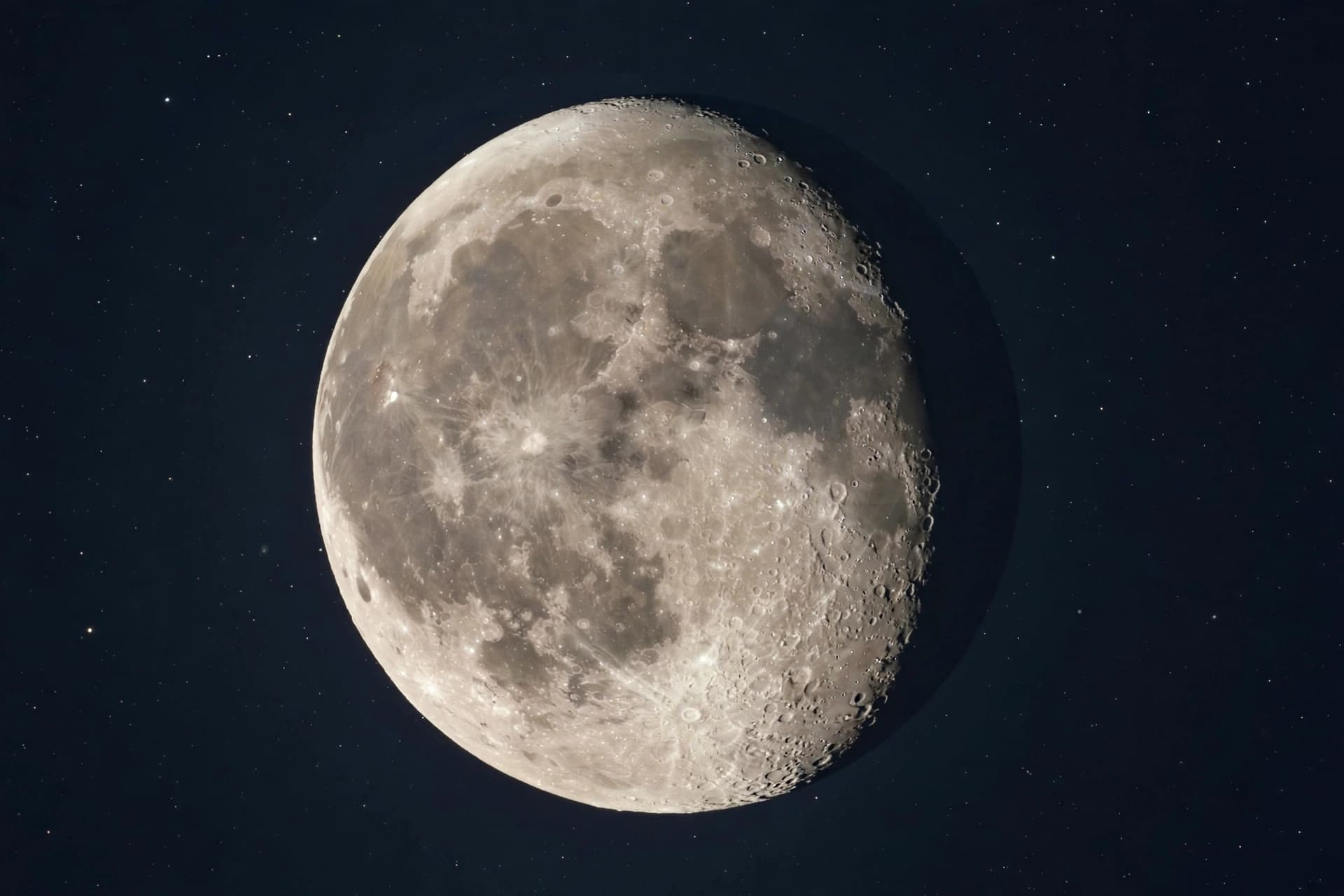
There is a quiet companionship in the Moon that asks nothing of us and yet offers itself nightly to anyone who remembers to look up. On a clear September evening, it hangs above the noise of human affairs, indifferent to elections and deadlines, content simply to be what it has always been. Tonight, it is a waning gibbous orb, past its full brilliance but still generous with its light, a reminder that even fading things can be beautiful.
According to NASA’s Daily Moon Guide, the Moon on September 29, 2026, is in its Waning Gibbous phase, with approximately 92 percent of its visible surface illuminated . The Old Farmer’s Almanac offers a slightly different measurement for some locations—around 88.3 percent—a variance that reflects the way lunar calendars adjust for time zones and viewing positions . Either way, the Moon is in its slow retreat from fullness, a phase that began after the Full Moon on September 26 and will continue until the Last Quarter on October 4 .
This is a particularly good night for those who wish to see the Moon’s surface features without equipment. The dark plains of Mare Imbrium and Mare Serenitatis are visible to the naked eye as soft gray patches, and the bright splash of Tycho Crater stands out in the southern highlands . With binoculars, the Clavius and Alphonsus craters come into view, along with the lunar Alps, a mountain range that bears the name of its terrestrial counterpart . Those with telescopes can locate the landing sites of Apollo 11 and Apollo 17, quiet marks of human presence on a world that has known no footsteps since 1972 .
The Moon’s appearance tonight is the result of a simple geometry. Sunlight strikes the lunar surface from an angle that illuminates most but not all of the near side, leaving a sliver of darkness along one edge. Over the coming nights, that shadow will grow, the illuminated portion shrinking from 92 percent to roughly 56 percent by October 4, when the Moon enters its Last Quarter phase . After that, it will become a waning crescent, a thin curve of light rising before dawn, until it disappears entirely into the darkness of the New Moon on October 10 .
There is nothing urgent about any of this. The Moon keeps its schedule without announcement, and its phases unfold at a pace that has nothing to do with the rhythms of human life. But there is value in noticing, in stepping outside and finding the Moon where the calendar says it should be. It is a small act of attention, and attention is a scarce resource in a world designed to demand it constantly. The Moon asks for none of it. It is simply there, waiting to be seen.
AI Image Disclaimer: The images accompanying this article were generated using artificial intelligence and are for illustrative purposes only.
Sources: NASA Science, The Old Farmer’s Almanac, SkyMaps.com, NewsBreak
Published by Banx Network. This article is part of the Banx decentralized media programme, powered by the BXE token on the XRP Ledger.