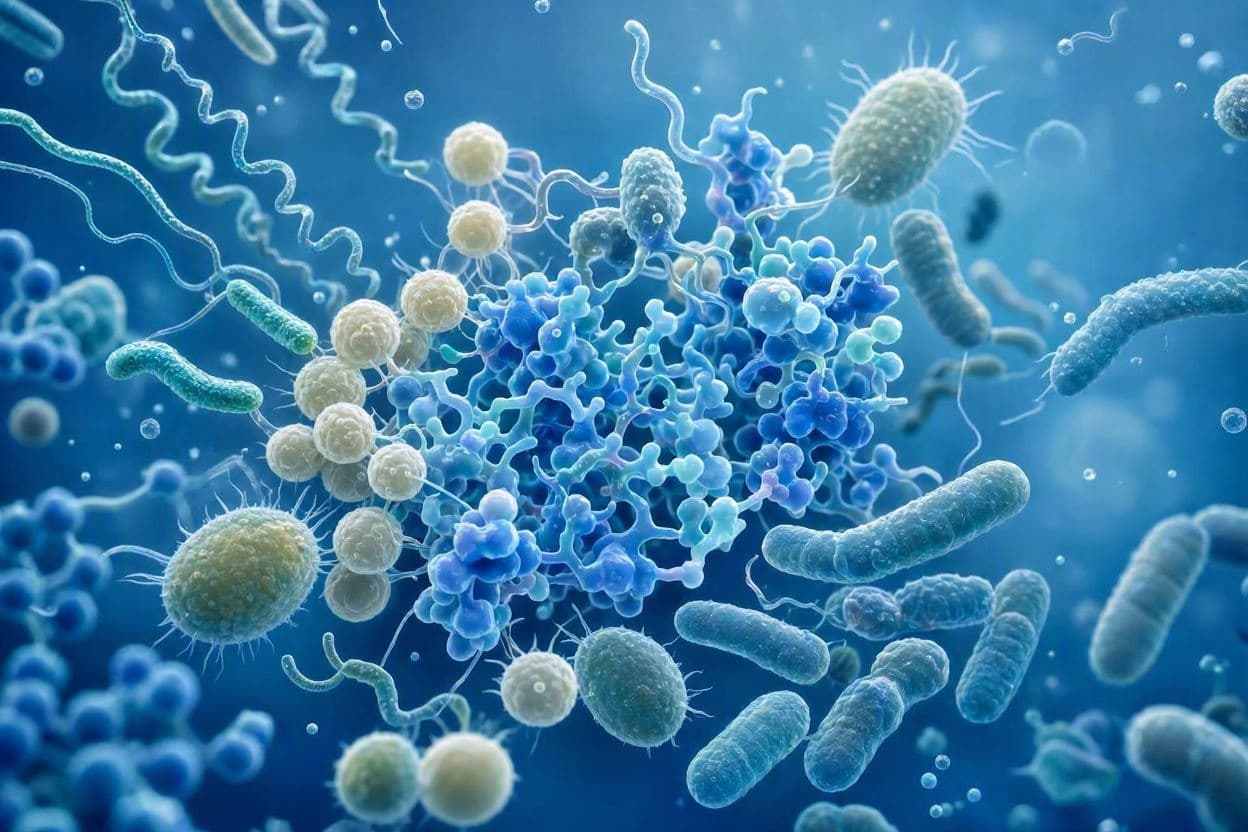
In the vast, sun-dappled expanse of the ocean’s surface, a microscopic drama unfolds that is critical to the health of our planet. Marine bacteria, often invisible to the naked eye, have been observed working in concert to dismantle complex carbon molecules that would otherwise persist in the environment. This collaborative effort highlights the intricate social behaviors of microbial life and their pivotal role in the global carbon cycle, offering new insights into how nature manages waste and recycles energy.
The molecule in question is a type of dissolved organic carbon, resistant to degradation by single organisms. For years, scientists puzzled over how these stubborn compounds were broken down so efficiently in the open ocean. Recent research reveals that specific bacterial species form transient alliances, sharing enzymes and metabolic byproducts to tackle the chemical bonds that individual cells cannot break alone. It is a biological example of teamwork, where the sum is greater than its parts.
This discovery challenges the traditional view of microbes as solitary competitors. Instead, it suggests a complex web of cooperation, where different species specialize in specific steps of the degradation process. One bacterium might cleave a bond, releasing a simpler compound that another species then consumes. This division of labor allows the community to access energy sources that would be unavailable to any single member, driving the efficiency of the marine ecosystem.
The implications for climate science are significant. The ocean acts as a massive carbon sink, absorbing carbon dioxide from the atmosphere. By breaking down organic carbon, these bacteria influence how much carbon is stored in the deep sea versus how much is released back into the air as carbon dioxide. Understanding this microbial machinery helps refine climate models, providing a clearer picture of the ocean’s capacity to mitigate global warming.
Researchers used advanced genomic sequencing and metabolic modeling to identify the key players in this process. They found that certain groups of bacteria, particularly those in the Roseobacter and Alteromonas genera, are central to these cooperative networks. Their genetic makeup includes tools for producing specific enzymes that target tough carbon structures, which they share with their neighbors through chemical signaling.
Beyond the laboratory, this knowledge could inspire new biotechnological applications. If we can harness these microbial partnerships, we might develop more effective methods for breaking down plastic pollution or other persistent organic pollutants in water systems. Nature’s solutions, refined over millions of years, often offer elegant and sustainable answers to modern environmental challenges.
For the broader scientific community, the study underscores the importance of looking at ecosystems as interconnected networks rather than collections of individuals. It invites a shift in perspective, recognizing that cooperation is as fundamental to survival as competition. In the microscopic world, unity is not just a virtue but a necessity for processing the building blocks of life.
In the end, the story of these marine bacteria is a reminder of the hidden complexity that sustains our world. By working together, these tiny organisms perform a vital service, keeping the oceans clean and the carbon cycle in balance. Their silent collaboration is a testament to the power of collective action, even at the smallest scale.
AI Image Disclaimer: The visual representations in this article are AI-generated illustrations designed to convey the themes of marine microbiology and ecological cooperation.
Sources: Nature Microbiology, ScienceDaily, Woods Hole Oceanographic Institution, Max Planck Institute
Published by Banx Network. This article is part of the Banx decentralized media programme, powered by the BXE token on the XRP Ledger.