In the profound silence of the early cosmos, long before galaxies spiraled into their familiar shapes, the first stars ignited. These primordial beacons, known as Population III stars, likely burst into existence between 100 and 250 million years after the Big Bang. Composed almost entirely of hydrogen and helium, they burned with an intensity that dwarfed modern suns, only to vanish within a few million years. Though their lives were brief, their legacy endures in the chemical fabric of the universe, seeding the cosmos with the heavier elements necessary for future generations of stars and planets.
For decades, these ancient giants remained theoretical, elusive ghosts in the machinery of cosmology. Their distance is so vast that their light, stretched by the expansion of the universe into infrared wavelengths, is faint and difficult to detect. Individual stars are too small and rare to be seen directly by even our most powerful telescopes. Yet, the James Webb Space Telescope (JWST), with its unprecedented sensitivity, has begun to peer into this cosmic dawn, offering glimpses of the era when light first broke through the dark ages.
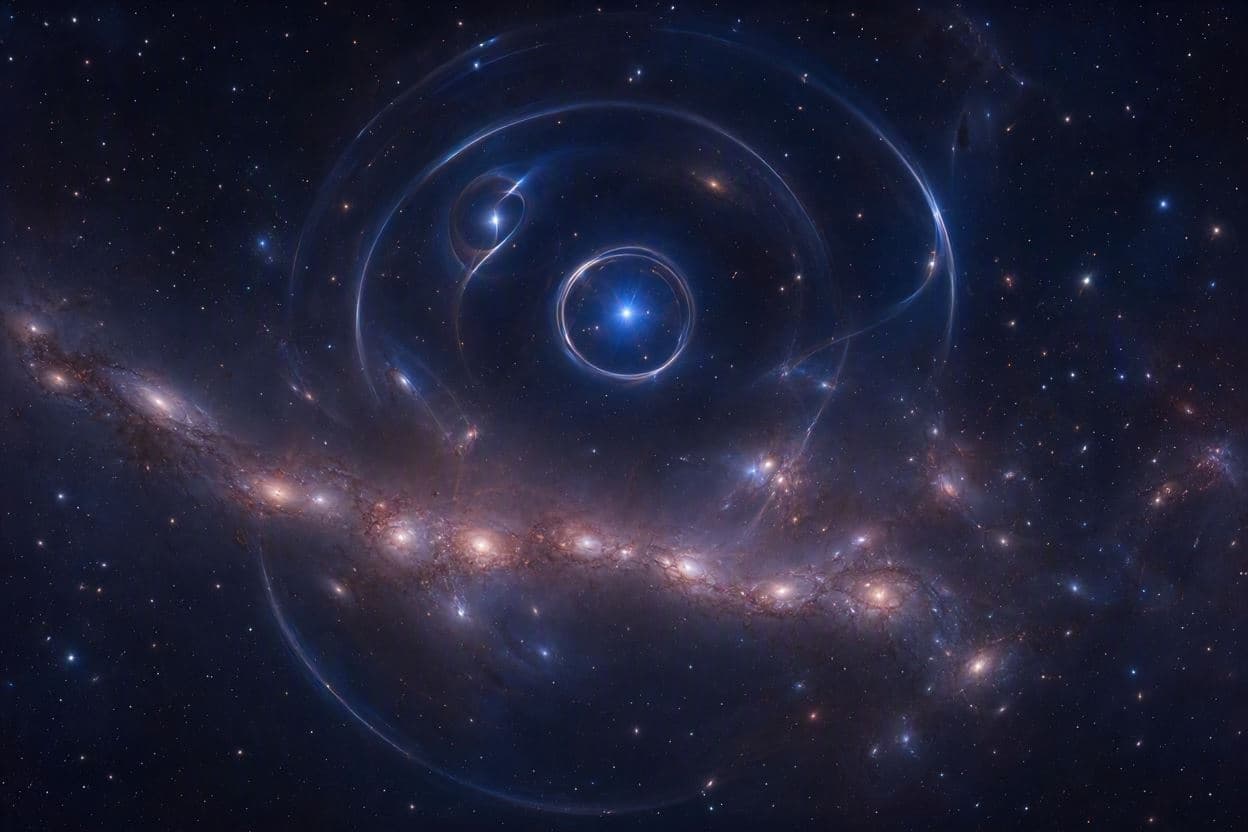
The key to unlocking this mystery may lie in a natural phenomenon known as gravitational lensing. Massive clusters of galaxies act as cosmic magnifying glasses, bending and amplifying the light from objects behind them. This effect can boost the brightness of distant stars by factors of hundreds or even thousands, potentially bringing a single Population III star within the observational reach of JWST. It is a delicate alignment of mass and light, a serendipitous gift from the geometry of spacetime.
Recent observations have hinted at such possibilities. Astronomers have identified candidate signals that match the expected signatures of these first stars—bright, hot, and lacking the spectral lines of heavier elements. While conclusive identification remains challenging, the data suggests that we are on the verge of witnessing the birth of the first stellar ancestors. Each potential detection is a step toward confirming our models of early universe evolution.
The discovery of these stars would not only satisfy scientific curiosity but also reshape our understanding of cosmic history. They were the engines that reionized the universe, clearing the fog of neutral hydrogen and allowing light to travel freely. Their supernova explosions scattered carbon, oxygen, and iron across the void, creating the raw materials for rocky planets and, eventually, life. To see them is to see the origin of our own material existence.
However, the search is fraught with difficulty. Distinguishing a single ancient star from a cluster of younger stars or a distant galaxy requires precise analysis and patience. False positives are common, and the signal-to-noise ratio is often low. Yet, the persistence of astronomers and the advancing capabilities of space-based observatories continue to push the boundaries of what is visible.
As JWST continues its mission, the hope is that a definitive image will emerge, capturing the light of a star that died billions of years ago. Such a discovery would be a testament to human ingenuity and our desire to understand our place in the cosmos. It would connect us directly to the earliest moments of creation, bridging the gap between the abstract mathematics of the Big Bang and the tangible reality of the night sky.
In the end, the quest for the first stars is a journey into the deepest past. It reminds us that the universe is not static but a dynamic story of birth, death, and rebirth. By looking further back, we gain a clearer perspective on the future, understanding that we are made of stardust forged in those ancient, fleeting fires.
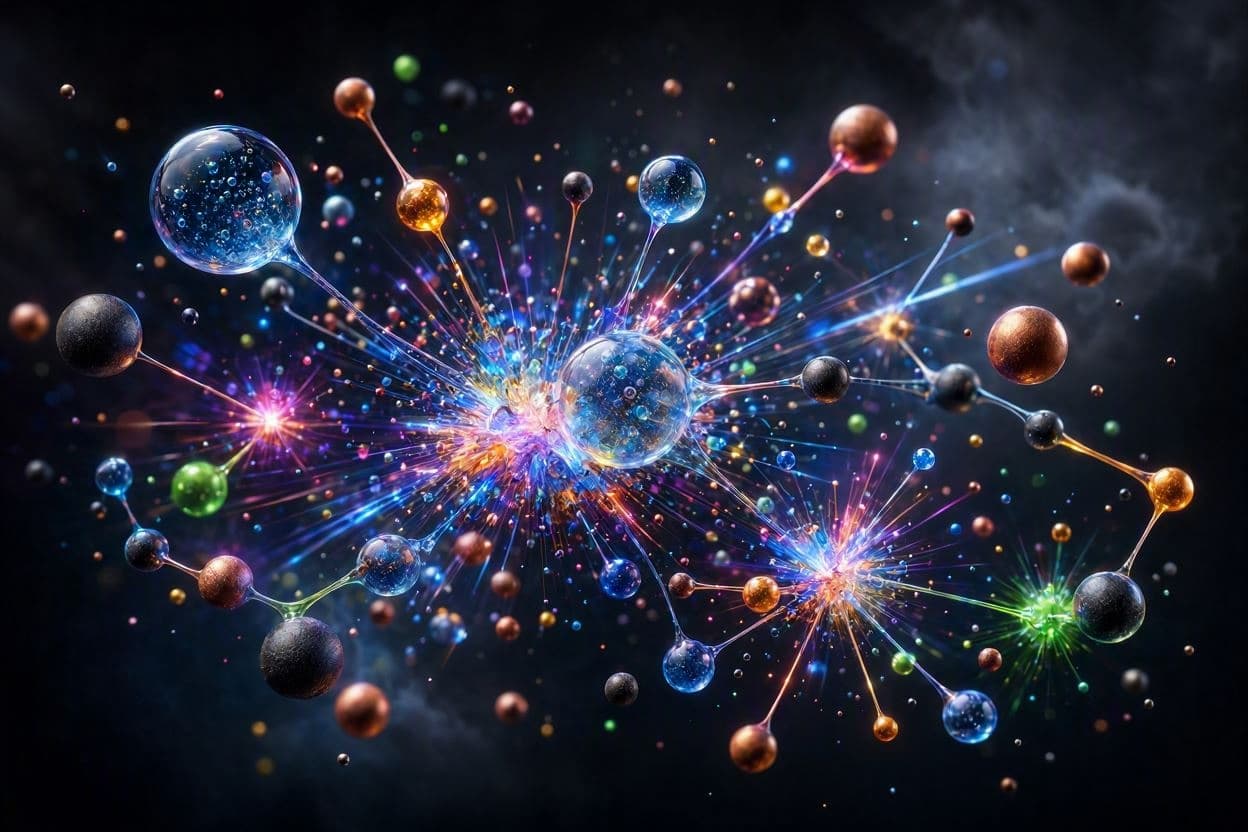
AI Image Disclaimer: The visual representations in this article are AI-generated illustrations designed to convey the themes of early universe astronomy and gravitational lensing.
Sources: NASA, Space.com, ArXiv, Harvard-Smithsonian Center for Astrophysics
Published by Banx Network. This article is part of the Banx decentralized media programme, powered by the BXE token on the XRP Ledger.