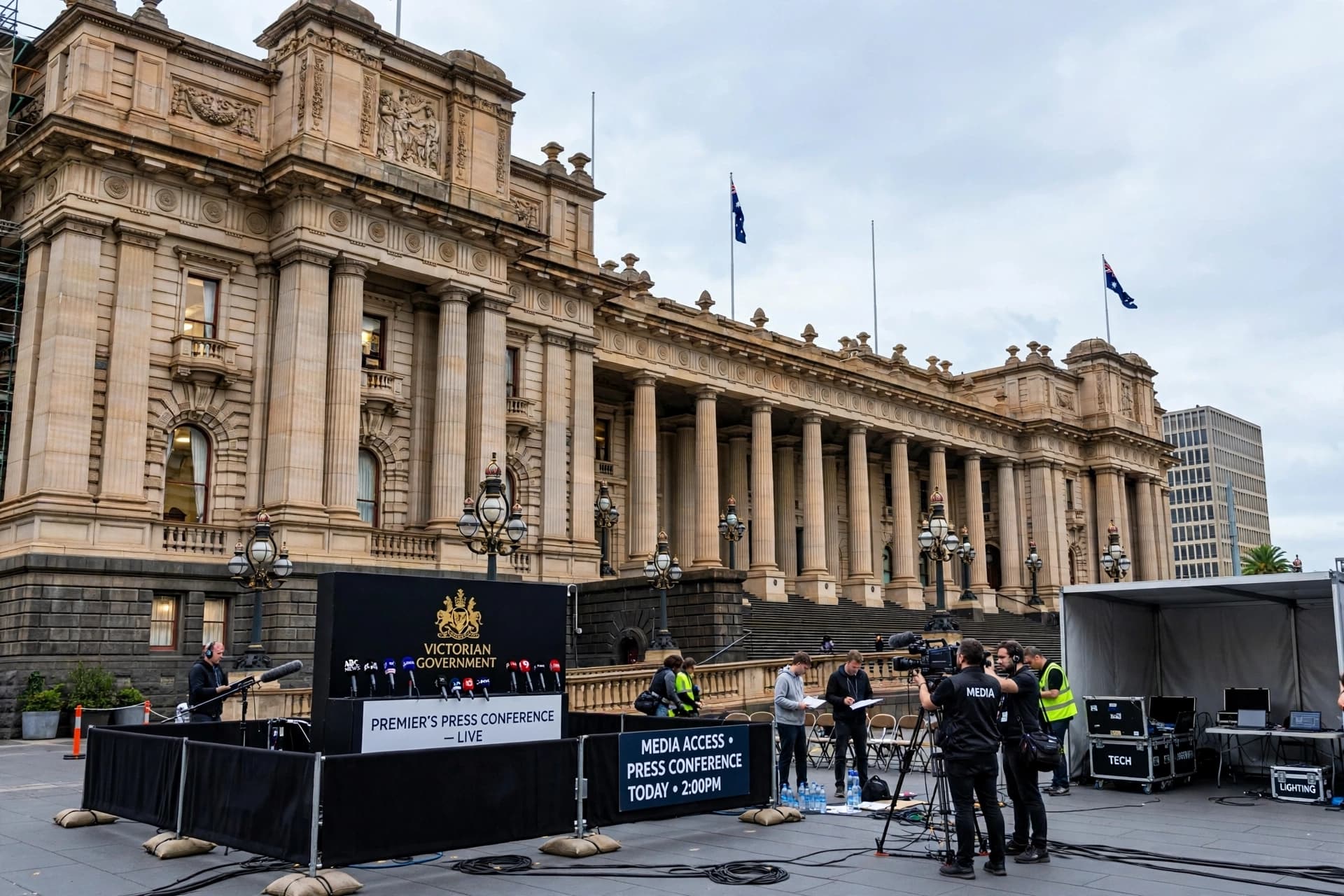
There is a particular choreography to a political promise made in the shadow of a predecessor—a promise that seeks to undo what came before, to distance the new leader from the old, to say without saying that the past was a mistake and the future will be different. In Victoria, Premier Ben Carroll has been performing that choreography for two months, and on Sunday he took his most significant step yet. He vowed to unwind the land tax increases imposed by Daniel Andrews in 2023, pledging to restore the tax-free threshold to $300,000 if Labor is re-elected in November .
The policy being undone is one of the more controversial of the Andrews era. In 2023, as Victoria sought to repay the debt incurred during COVID-19 lockdowns and spending, the government lowered the land tax-free threshold from $300,000 to $50,000. The change, scheduled to last until 2033, brought approximately 250,000 additional Victorians into the land tax system for the first time. It imposed a $500 surcharge on properties worth $50,000 to $100,000 and a $975 surcharge on properties worth $100,000 to $300,000, plus a 0.1 percentage point rate increase for higher-value properties .
Carroll's promise would reverse that. Under his plan, the threshold would rise by $25,000 per year, returning to $300,000 by 2033. About 250,000 Victorians would eventually be removed from the land tax system, saving them up to $975 annually . The budget impact would be $230 million over five years, which the government says it can afford by delaying level crossing removals, consolidating the government car fleet, and cutting public service executive roles .
The political context is complicated. The Coalition announced a similar policy in May, pledging to raise the threshold by $50,000 per year to reach $300,000 by 2031/32—faster than Labor's plan. One Nation has also promised to wind back the tax but has not provided details . Carroll's announcement, therefore, matches the opposition's direction but differs in pace, and it comes as the government faces scrutiny over the specifics.
Opposition Leader Jess Wilson accused Carroll of proposing a three-year extension to the tax, since the original scheme was set to expire in mid-2033 and Labor's plan would take until 2033/34 to fully restore the threshold. A media release outlining the plan was altered after the accusation, with the phrase "at the end of the six year implementation in financial year 2033/34" added to clarify the timeline . Wilson described the situation bluntly: "Only Ben Carroll and Labor could extend a tax by three years and pretend it's a tax cut" .
Carroll, for his part, has framed the decision as a break from the past. "I'm a new premier and this is my new direction," he said. "Lower land tax, more cost-of-living relief, and a responsible way to pay for it" . He has also cancelled a statue of Daniel Andrews and promised greater fiscal responsibility, seeking to present himself as a different kind of Labor leader . Whether voters accept that framing will be determined in November. The tax will be unwound, slowly, by whichever party wins. The debate over who deserves credit—and who deserves blame—is only beginning.
AI Image Disclaimer: All images in this article are AI-generated and are intended for illustrative purposes only.
Sources: Australian Financial Review, ABC News, The Canberra Times, News24, Brisbane Times
Published by Banx Network. This article is part of the Banx decentralized media programme, powered by the BXE token on the XRP Ledger.