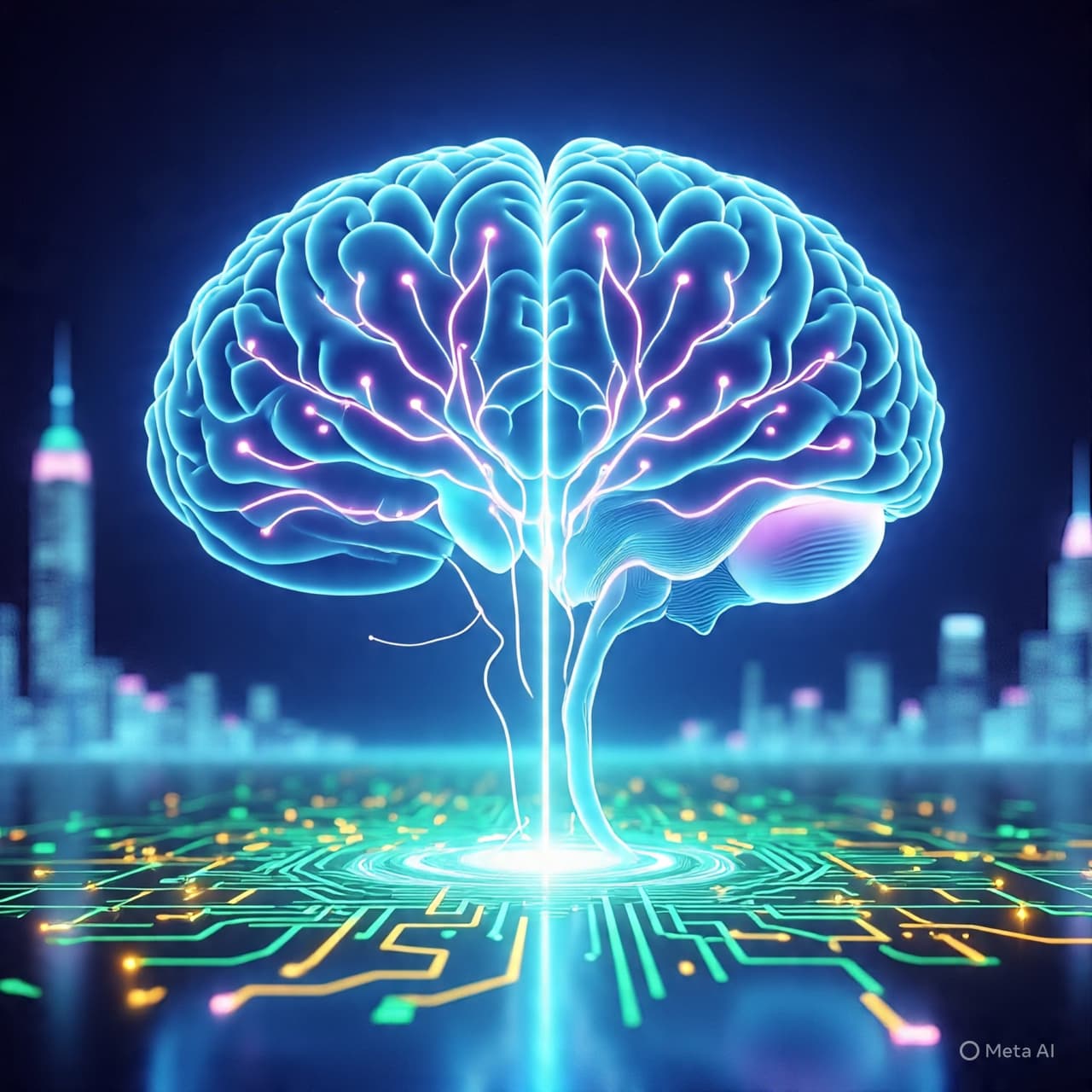
Artificial intelligence has advanced at a remarkable pace, mastering tasks once thought exclusive to human skill — composing music, diagnosing medical images, and even creating prose. Yet the human brain, honed over millennia of evolution, retains subtle advantages that machines have yet to fully emulate.
Researchers suggest that one of the most potent ways humans outsmart AI lies in intuition and contextual reasoning. While algorithms excel at pattern recognition within defined datasets, they struggle to navigate ambiguity, infer motives, or apply common sense across varied situations. Our brains can synthesize fragmented information, make probabilistic leaps, and anticipate outcomes in ways that remain uniquely human.
This advantage is not a mystical power, but a cognitive strategy grounded in experience. People can detect inconsistencies, recognize hidden cues, and adjust behavior dynamically — capacities that machines typically require explicit programming to approach. Storytelling, metaphor, and emotional insight are examples where human cognition naturally outpaces algorithmic reasoning.
Education and mental engagement further enhance this edge. Exposure to diverse experiences, problem-solving challenges, and creative thinking exercises strengthens the neural pathways that underlie flexible reasoning. In contrast, AI models rely entirely on data they have already encountered.
Importantly, this does not render AI obsolete. The technology remains extraordinarily powerful as a tool to augment human decision-making. Rather, it highlights a symbiosis: humans provide context, intuition, and judgment, while machines offer speed, computation, and pattern recognition at scale.
For those concerned about a future dominated by artificial intelligence, the lesson is encouraging. By cultivating critical thinking, creativity, and adaptive reasoning, we preserve capacities that no algorithm can fully replicate. The human mind’s ability to infer, imagine, and intuit remains a resource that transcends raw computation.
In the unfolding partnership between humans and machines, one truth endures: our brains, when exercised thoughtfully, can still outperform artificial intelligence in the most nuanced and unpredictable challenges.
Published by Banx Network. This article is part of the Banx decentralized media programme, powered by the BXE token on the XRP Ledger.