There is a quiet arithmetic to the food we eat that most of us never see. We count calories, scan labels, balance macros—believing that if the numbers match, the body will respond the same way. But a new study from Virginia Tech suggests that this arithmetic may be incomplete, that the body reads something beyond the numbers on a label, something embedded in the very structure of what we consume.
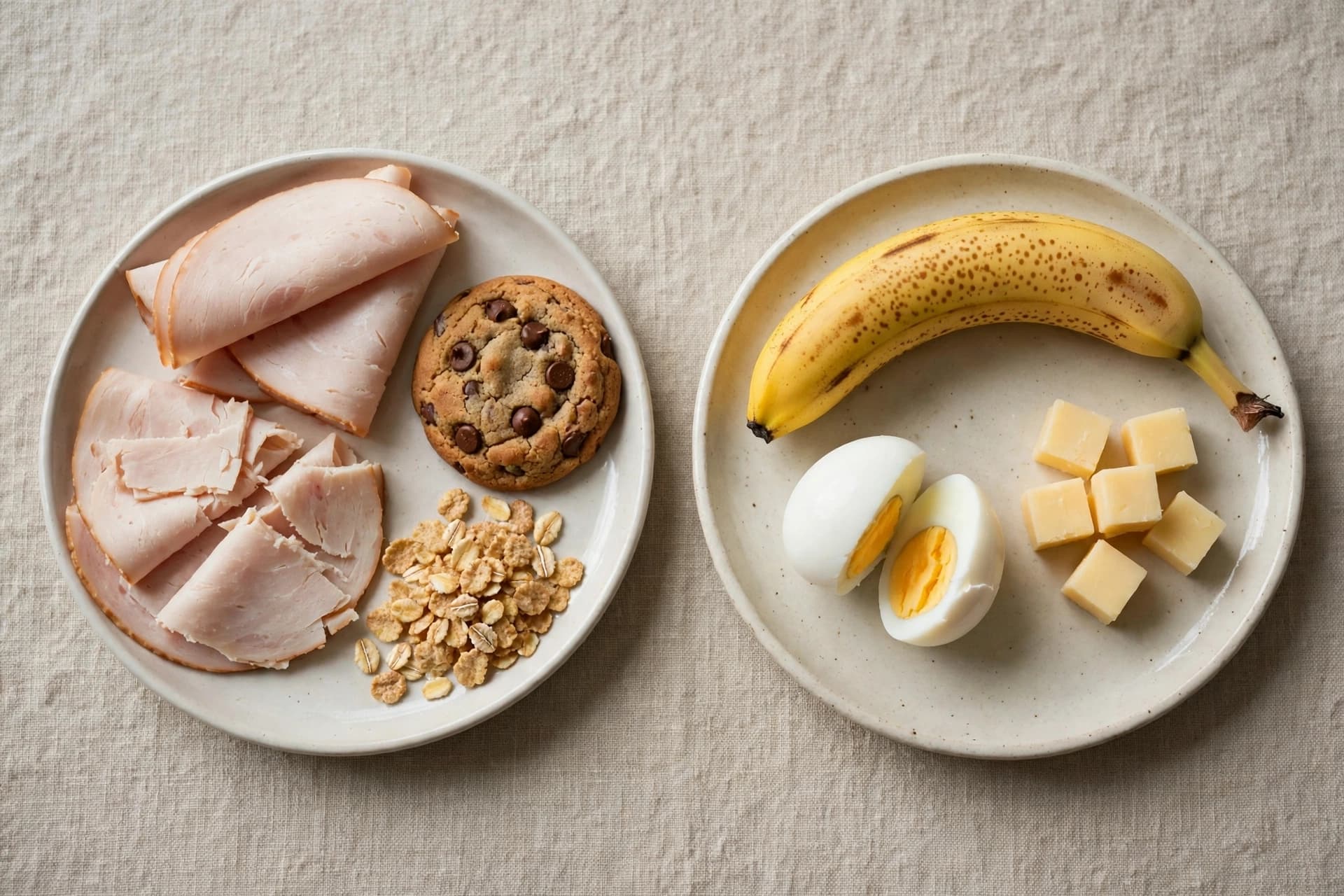
The study, published in Nature Metabolism, recruited 57 healthy adults and served them two meals on separate days. The meals were engineered to be nutritional twins: 300 calories each, matched within 1 percent for carbohydrates, fat, protein, water, and salt . One meal was ultra-processed—deli turkey, instant mashed potatoes, a chocolate chip cookie, frosted cereal, veggie chips, white bread with peanut butter and jelly. The other was minimally processed: a hard-boiled egg, banana, dried cranberries, cheese, and sea salt .
If the meals had carried nutrition labels, they would have been practically identical. But what happened inside the bodies of the participants was not.
Blood samples taken over three hours revealed that the ultra-processed meal triggered a significantly higher insulin response, with levels staying elevated for about two hours before returning to baseline . Blood glucose remained slightly higher for longer. The metabolic rate increased, and the body burned more fat and less carbohydrate after the ultra-processed meal .
"We were shocked when every single metabolic metric differed," said Zach Hutelin, the study's first author . The researchers had controlled for everything they could measure on a label—calories, macronutrients, fiber, sodium, even glycemic index—and still, the body responded differently .
The study also examined brain activity. In a separate experiment, participants viewed images of ultra-processed and minimally processed foods while undergoing functional MRI scans. The researchers found an association between neural activity in the striatum—a region linked to reward and motivation—and how the body burned carbohydrates after each meal . This suggests that the way our bodies use food for fuel may be connected to the cues our brains receive about what we are eating.
The findings do not prove that ultra-processed foods cause disease, nor do they explain why the metabolic responses diverged. The researchers suggest possible mechanisms: altered physical structure affecting how quickly nutrients are absorbed, or additives that influence metabolism in ways not yet understood . The study was small, involving only healthy-weight adults, and observed only a single meal over three hours. Longer-term effects remain unknown.
Still, the study offers a clue to a puzzle that has lingered for years. Ultra-processed foods make up more than half the calories consumed in the United States, and their consumption is associated with obesity, type 2 diabetes, and other health problems . Whether those associations stem from poor nutritional composition or from the processing itself has been an open question. This study suggests the answer may be both.
The arithmetic of nutrition, it seems, is more complex than the numbers on a label. The body, it turns out, is reading a different text.
AI Image Disclaimer: All visual elements in this article were created by artificial intelligence for illustrative purposes only and do not depict the actual meals or participants described.
Sources: ScienceAlert, Nature Metabolism, Virginia Tech, Food Ingredients First, Science et Vie
Published by Banx Network. This article is part of the Banx decentralized media programme, powered by the BXE token on the XRP Ledger.