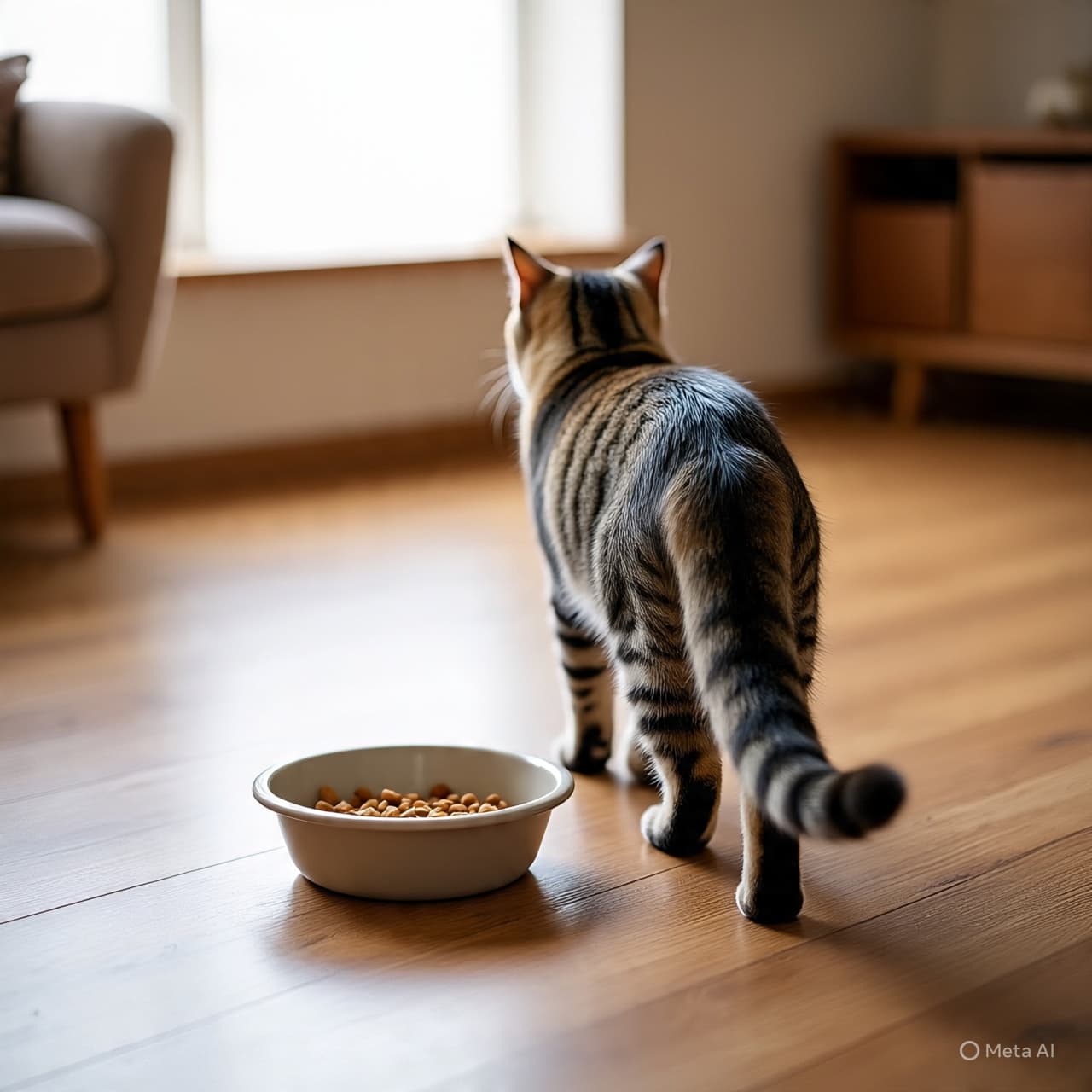
It is a familiar scene in many homes: a cat approaches its bowl, eats a few bites, and walks away, leaving food behind as if the meal were only partially important. For years, this small habit has puzzled pet owners, inviting questions that linger quietly in everyday routines.
Recent scientific insights suggest that this behavior is not random, nor is it a sign of simple disinterest. Instead, it may reflect deep-rooted instincts shaped long before cats became companions in human households.
Domestic cats, despite their comfortable lives, retain many traits of their wild ancestors. In the wild, eating everything at once could be risky. Leaving food behind—and returning later—can reduce exposure to predators and conserve resources across uncertain conditions.
Researchers also point to the role of “prey-sized meals.” Unlike dogs, which may consume large portions in one sitting, cats are natural hunters that typically eat small amounts multiple times a day. A full bowl of food does not align perfectly with this instinct, leading to partial consumption.
Another factor may involve environmental sensitivity. Cats are known for their heightened awareness of surroundings. Noise, movement, or even subtle changes in their environment can interrupt feeding, causing them to leave before finishing.
There is also evidence that scent plays a role. Cats rely heavily on smell, and food that has been exposed to air may quickly lose its appeal. Even slight changes in odor can signal that the meal is no longer optimal.
Interestingly, stress and routine disruptions can amplify this behavior. Changes in household dynamics, feeding schedules, or even the placement of the food bowl may influence how much a cat chooses to eat at once.
Veterinarians emphasize that while this behavior is generally normal, sudden or extreme changes in eating patterns should be monitored. In some cases, they may indicate underlying health issues that require attention.
Understanding this habit offers more than just explanation—it invites a shift in perspective. What appears as pickiness may, in fact, be a quiet expression of an ancient survival strategy.
In the end, the unfinished bowl is not a mystery left unsolved, but a small reminder that even in domestic comfort, the instincts of the wild still gently endure.
AI Image Disclaimer Images in this article are AI-generated illustrations, meant for concept only.
Source Check (Credible Media):
Scientific Reports Journal of Feline Medicine and Surgery BBC Science Focus National Geographic The Guardian Science
Published by Banx Network. This article is part of the Banx decentralized media programme, powered by the BXE token on the XRP Ledger.