There are discoveries that arrive with fanfare — grand bones brought to light, scientists climbing into desert quarries at dawn, headlines screaming “new species found!” — and then there are discoveries that wait. They wait in quiet drawers, among other fragments of ancient lives, unremarked on for decades. Sometimes history whispers rather than shouts, and it is only with careful listening that we realize just how much it has to tell.
Such is the story of Galahadosuchus jonesi, an ancient relative of modern crocodiles that roamed what is now the southern United Kingdom some 215 million years ago. It was unearthed not in a dramatic desert dig, but in 1969, buried within fissures of limestone where the bones of many long-vanished creatures had been washed and preserved. For more than half a century, the fossil sat in a museum collection, catalogued alongside better‑understood specimens of Terrestrisuchus and largely forgotten by science.
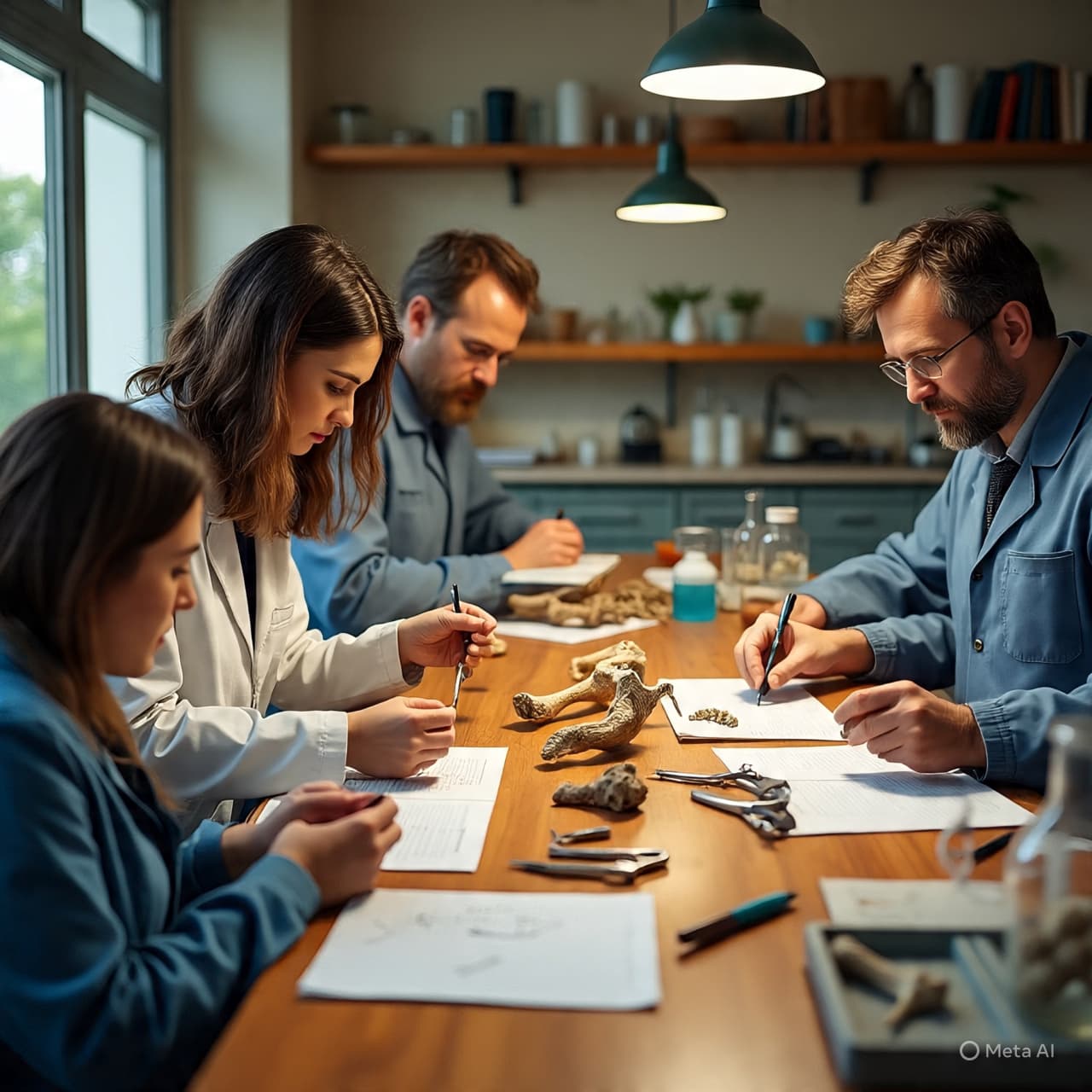
What changed was not a new quarry of bones, but a fresh pair of eyes. A team of researchers, led by Ph.D. student Ewan Bodenham, undertook an in‑depth review of early crocodylomorph fossils — animals that included the ancestors of today’s crocodiles and alligators. Comparing tiny features of bone and joint, they noticed thirteen anatomical characteristics that set this specimen apart from anything previously named. What once had been labeled another example of a known species was, in fact, new to science.
The animal they described was unlike the crocodilians people commonly imagine. Instead of an ambush predator lurking by a riverbank, Galahadosuchus was built for dry land, sleek‑limbed and swift — more like a greyhound than a swimmer. Its elongated limbs and upright posture hint at a life spent chasing small reptiles, amphibians, and early mammals across upland landscapes. This terrestrial disposition contrasts sharply with the semi‑aquatic habits of modern crocodiles and adds nuance to our understanding of early crocodylomorph diversity.
The name Galahadosuchus jonesi holds both poetic and personal resonance. “Galahado” evokes the knightly figure of Arthurian legend, chosen to reflect the creature’s upright stance, while the species name honors David Rhys Jones, a Welsh physics teacher who inspired the lead researcher’s journey into science. Rather than a dry taxonomy, the name carries a story of mentorship and curiosity.
This kind of discovery underscores something important about scientific collections: the shelves and drawers of natural history museums are not static archives, but living libraries. Each specimen has a history of its own, and as methods and perspectives evolve, so too does what we can learn from these preserved pieces of deep time. In revisiting old material with new tools and fresh questions, researchers continue to fill in the branching tree of life with connections we once overlooked.
For those who study ancient life, Galahadosuchus is more than a name on a list. It is a reminder that the story of evolution is layered and complex, and that sometimes the past waits patiently for us to catch up.
AI Image Disclaimer Visuals are created with AI tools and are not real photographs.
Sources Natural History Museum (UK) Daily Galaxy Phys.org Discover Magazine Natural History Museum reporting (context)
Published by Banx Network. This article is part of the Banx decentralized media programme, powered by the BXE token on the XRP Ledger.