There is a particular kind of recognition that arrives not for a single discovery but for a lifetime of opening doors that others did not know existed. Paul B. Corkum has spent his career peering into the fastest processes in nature, the movements of electrons so brief that they defy ordinary measurement. Now, Optica has named him an Honorary Member, the most distinguished category the society bestows, awarded by unanimous vote to individuals who have made seminal contributions to the field of optics.
The citation is specific: Corkum is recognized for his many outstanding advances in ultrafast laser technology, including pioneering the field of attosecond science . He is currently a Distinguished Research Chair of Attosecond Photonics and Professor of Physics at the University of Ottawa and the National Research Council Canada. Gisele Bennett, Optica's 2026 President, described him as a pioneer in ultrafast optical science whose leadership, vision, and innovations will have a lasting impact on the field .
What makes Corkum's work remarkable is its ambition. Attosecond science deals with timescales of quintillionths of a second, the timescale on which electrons move within atoms and molecules. To study these movements, Corkum developed the three-step model of high-harmonic generation, a framework that explained how intense laser light interacts with matter to produce bursts of extreme ultraviolet and soft X-ray radiation . The model provided the foundational understanding that enabled the generation of attosecond pulses, the shortest controlled light flashes currently available to science.
The mechanism is elegant in its simplicity, even if the physics is not. Intense, short infrared light pulses ionize a material, freeing electrons. The electric field of the laser then controls those electrons, forcing them to re-collide with the ions from which they came. That recombination produces coherent soft X-ray radiation and attosecond pulses, flashes of light brief enough to capture the motion of electrons . Corkum's group has used this capability to measure the time delay caused by an electron's interaction with other atomic or molecular electrons, and he believes it may one day be possible to measure the ultimate time response of electronic matter.
The honors Corkum has accumulated over his career are numerous: the Wolf Prize in Physics, the Isaac Newton Medal and Prize, the Royal Medal, the Lomonosov Gold Medal, Optica's Frederic Ives Medal and Charles Hard Townes Medal, among many others . He is a Fellow of Optica, the American Physical Society, the Institute of Physics, the Royal Society of Canada, and the Royal Society. He has authored more than 360 peer-reviewed papers and delivers over twenty public, plenary, or invited lectures annually.
Honorary Membership is not awarded lightly. Optica limits the number of Honorary Members to two-thousandths of its total membership, and the designation requires a unanimous vote of the Board of Directors . It is reserved for those whose contributions have shaped the field itself, not merely advanced it. Corkum's work on attosecond pulses has done precisely that, creating a new capability for science and a new way of seeing the world at its most fundamental level.
For Corkum, the recognition is a capstone to a career spent at the frontier of the very fast and the very small. For the field, it is an acknowledgment that the tools he helped build have become essential. The electrons have always moved this quickly. It took someone to figure out how to watch them.
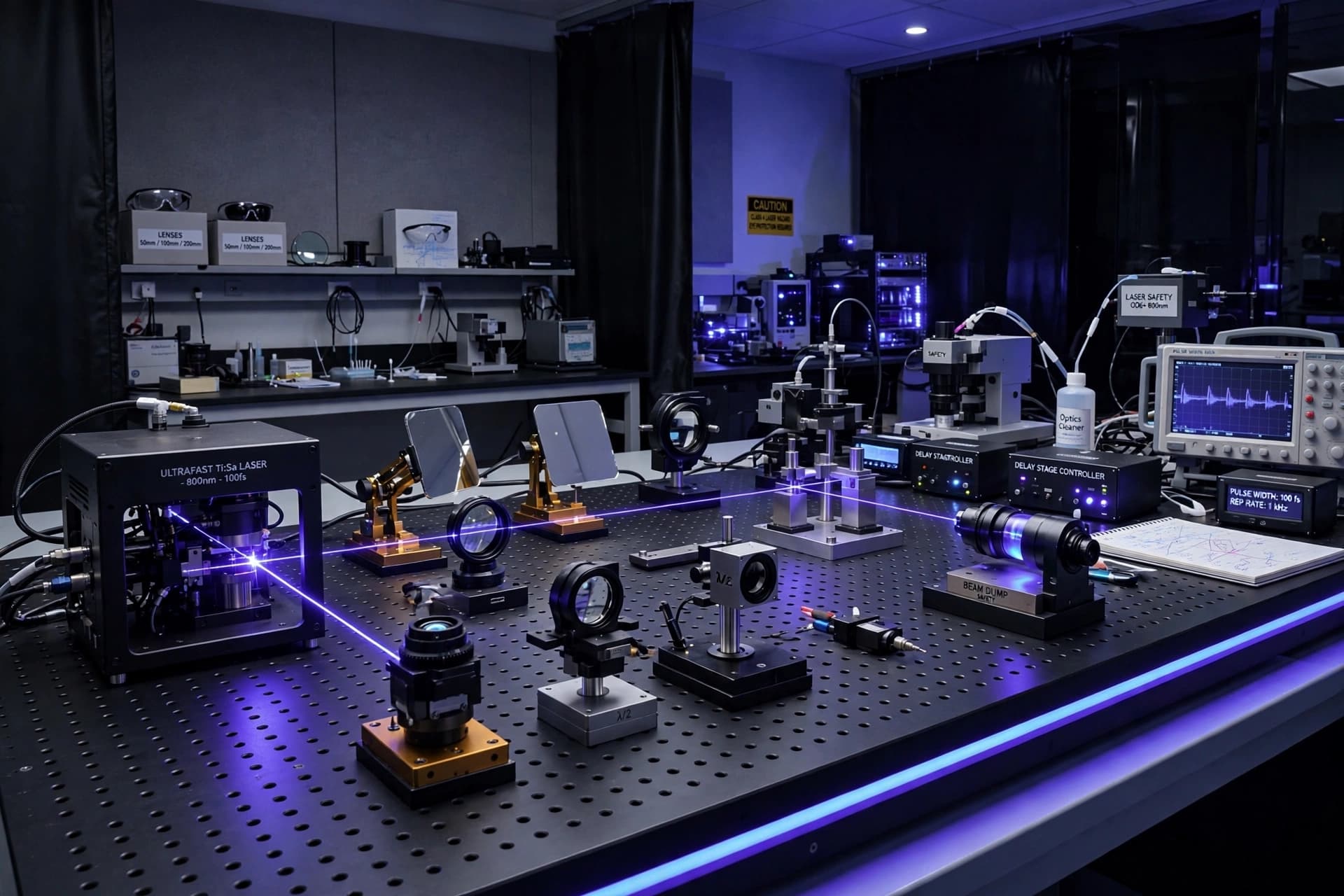
Image note: The visuals accompanying this article were generated with artificial intelligence and do not depict the actual individuals or events described.
Sources: Optica, ADVFN
Published by Banx Network. This article is part of the Banx decentralized media programme, powered by the BXE token on the XRP Ledger.