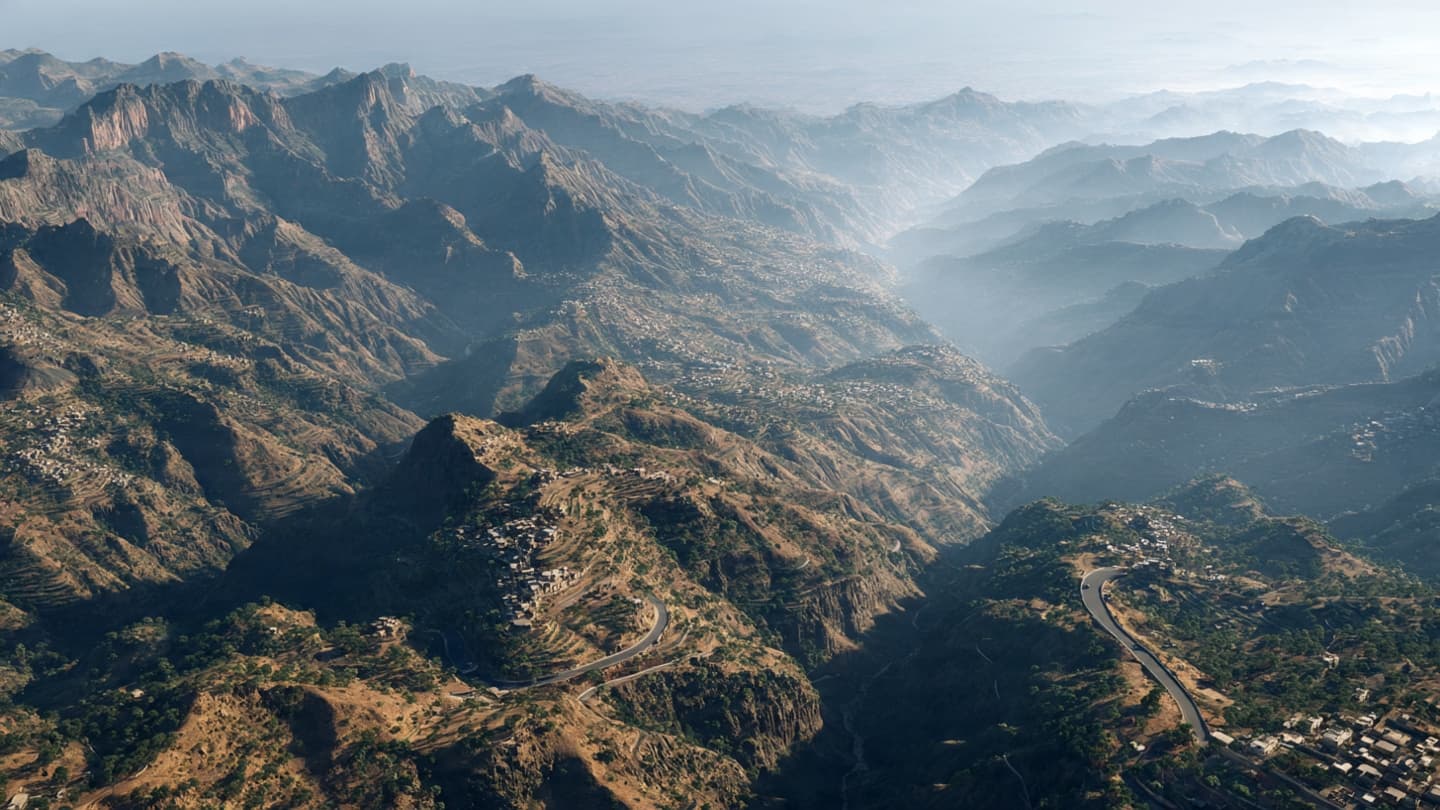
Morning arrives gently over Yemen's rugged mountains, where villages cling to steep hillsides and narrow roads wind toward distant valleys. Along the Red Sea coast, fishing boats still leave the shore before sunrise, following routines that have endured through years of uncertainty. Yet beneath these familiar rhythms, another chapter appears to be forming—one shaped not only by the echoes of past conflicts but also by changing alliances, evolving military technologies, and a region searching for a new balance.
For more than a decade, the Houthi movement has transformed from a localized armed group into one of the Middle East's most influential non-state military forces. Years of conflict have strengthened its organizational structure, expanded its arsenal, and deepened its experience in asymmetric warfare. Recent confrontations in the Red Sea have further demonstrated its ability to project influence beyond Yemen's borders, drawing international attention to shipping routes that carry a significant share of global trade.
If another major war unfolds, however, the conditions surrounding the Houthis may differ substantially from those of previous campaigns. The movement now faces an environment in which regional powers possess greater experience responding to drone and missile threats, while intelligence sharing among international partners has become more coordinated. Military planners across the region have spent recent years adapting their defenses to technologies that once provided the Houthis with greater tactical surprise.
The maritime dimension has become especially significant. The Red Sea and the Bab el-Mandeb Strait connect Europe and Asia through one of the world's busiest commercial corridors. Any renewed escalation could affect shipping schedules, insurance costs, and international trade far beyond Yemen itself. Naval patrols by multiple countries have expanded in response to attacks on commercial vessels, making the surrounding waters an increasingly complex arena where diplomacy and deterrence move side by side.
At the same time, the Houthis continue to retain considerable advantages inside Yemen. Their familiarity with the country's mountainous terrain, established command networks, and ability to mobilize experienced fighters remain important strategic assets. Years of conflict have also shaped logistical systems capable of operating under difficult conditions, allowing the group to adapt even when external pressure intensifies.
Regional diplomacy adds another layer of complexity. Gulf states have increasingly emphasized dialogue alongside security measures, while international mediators continue efforts to prevent wider regional escalation. These diplomatic initiatives do not eliminate the possibility of renewed conflict, but they create additional channels through which crises may be managed before expanding into broader confrontations.
The humanitarian dimension remains impossible to separate from any discussion of Yemen's future. Millions of civilians continue to depend on humanitarian assistance after years of conflict, economic disruption, and infrastructure damage. Another prolonged military campaign would likely deepen existing challenges, affecting access to food, healthcare, education, and essential public services. The consequences would extend far beyond military calculations, touching communities whose daily lives have already been shaped by years of instability.
Military analysts therefore suggest that any future conflict may not resemble earlier phases of Yemen's war. Instead of large territorial advances alone, greater emphasis could fall on precision strikes, maritime security, air defense systems, cyber capabilities, and economic pressure. The contest may become increasingly technological while remaining deeply rooted in Yemen's complex geography and political landscape.
As international attention remains fixed on developments across the Middle East, Yemen once again stands at a quiet but consequential crossroads. Whether the coming months bring renewed confrontation or sustained diplomatic engagement, the country's mountains, coastlines, and communities will continue to witness the choices made beyond their horizons. Like the changing tides along the Red Sea, the future remains unsettled—shaped by forces both visible and unseen, yet always carrying profound consequences for those who call Yemen home.
AI Image Disclaimer
The accompanying visuals were generated with AI to illustrate the subject and are not authentic photographs.
Sources
Reuters Associated Press BBC News International Crisis Group United Nations Office for the Coordination of Humanitarian Affairs (OCHA)
Published by Banx Network. This article is part of the Banx decentralized media programme, powered by the BXE token on the XRP Ledger.