We are taught to think of the day as a fixed thing, a unit as reliable as the ticking of a clock. But the clock, it turns out, is a human invention, and the planet it measures is not so easily pinned down. The Earth’s rotation is a conversation between forces visible and invisible, a negotiation between the pull of the Moon and the churning of the planet’s own interior. The 24-hour day we take for granted is an approximation, a convenient fiction that has held well enough for most of human history but that scientists have long known to be inexact.
The modern definition of time does not rely on the Earth at all. The second is defined by counting cycles of microwave light inside cesium atoms, a standard so precise that it surpasses any astronomical measurement . But the Earth, unlike the atom, is not a perfect timekeeper. Its rotation rate is slowing, and the length of the day is increasing by about 0.002 seconds per century . That seems negligible, and for daily life it is. But over geological time, those fractions of a second accumulate into something profound: a planet whose day was once much shorter than the one we know.
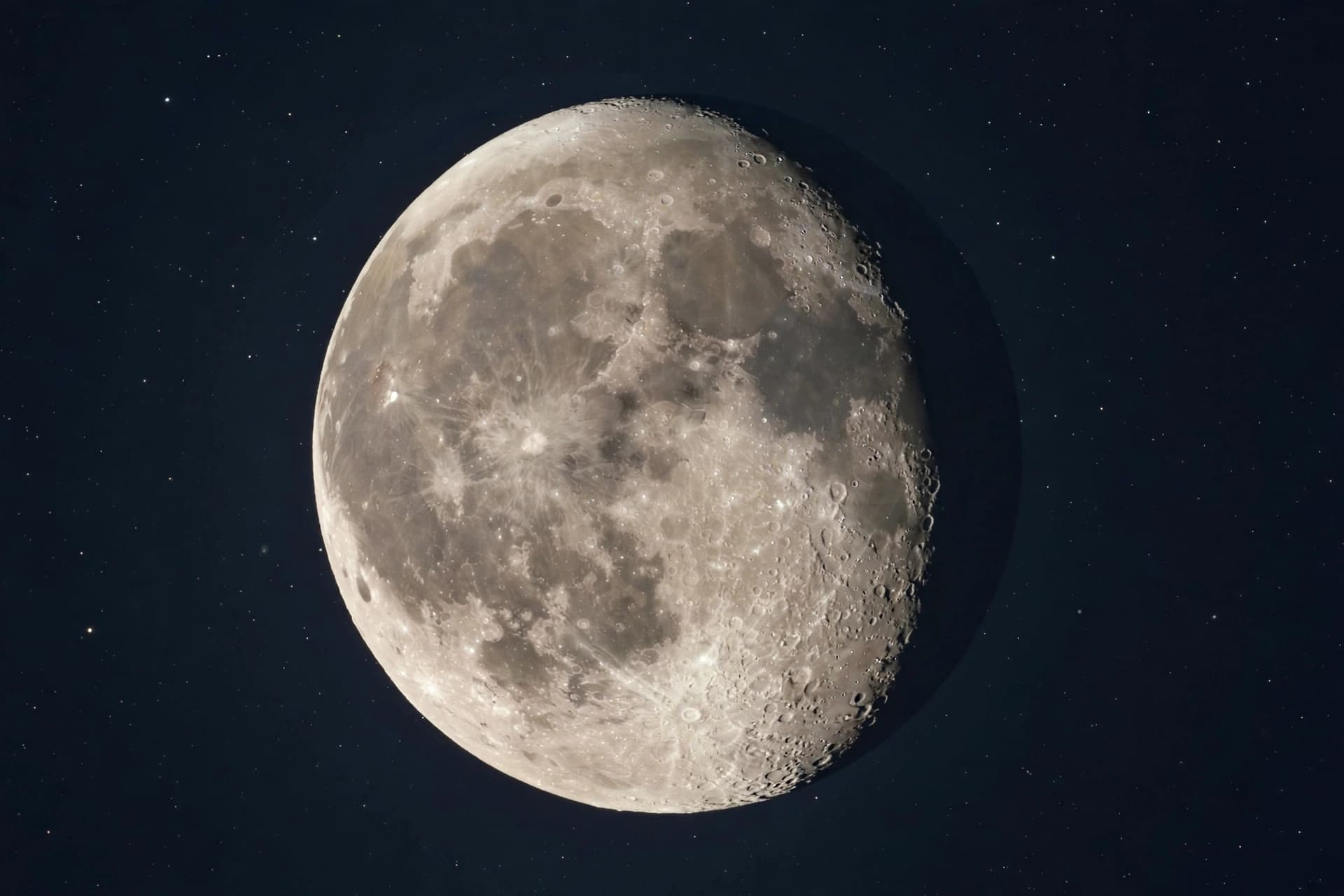
The primary cause of this slowdown is tidal friction. The Moon’s gravitational pull creates a bulge on the Earth’s surface, and because the Earth rotates faster than the Moon orbits, that bulge does not point directly at the Moon but lags slightly behind. The gravitational attraction between the bulge and the Moon acts as a gentle brake, dissipating energy and slowing the Earth’s spin. As angular momentum is conserved, the Moon drifts away in response, moving about 3.83 centimeters farther from Earth each year .
But tidal friction is not the whole story. Geological evidence suggests that the Earth’s deceleration has not been a smooth decline but a “staircase” pattern, with periods of rapid slowing followed by stretches of relative stability. A study published in PNAS identified two notable changes in the rate of deceleration: one between roughly 650 and 480 million years ago, and another between 350 and 280 million years ago . These shifts suggest that something other than the Moon has been influencing how quickly the planet spins.
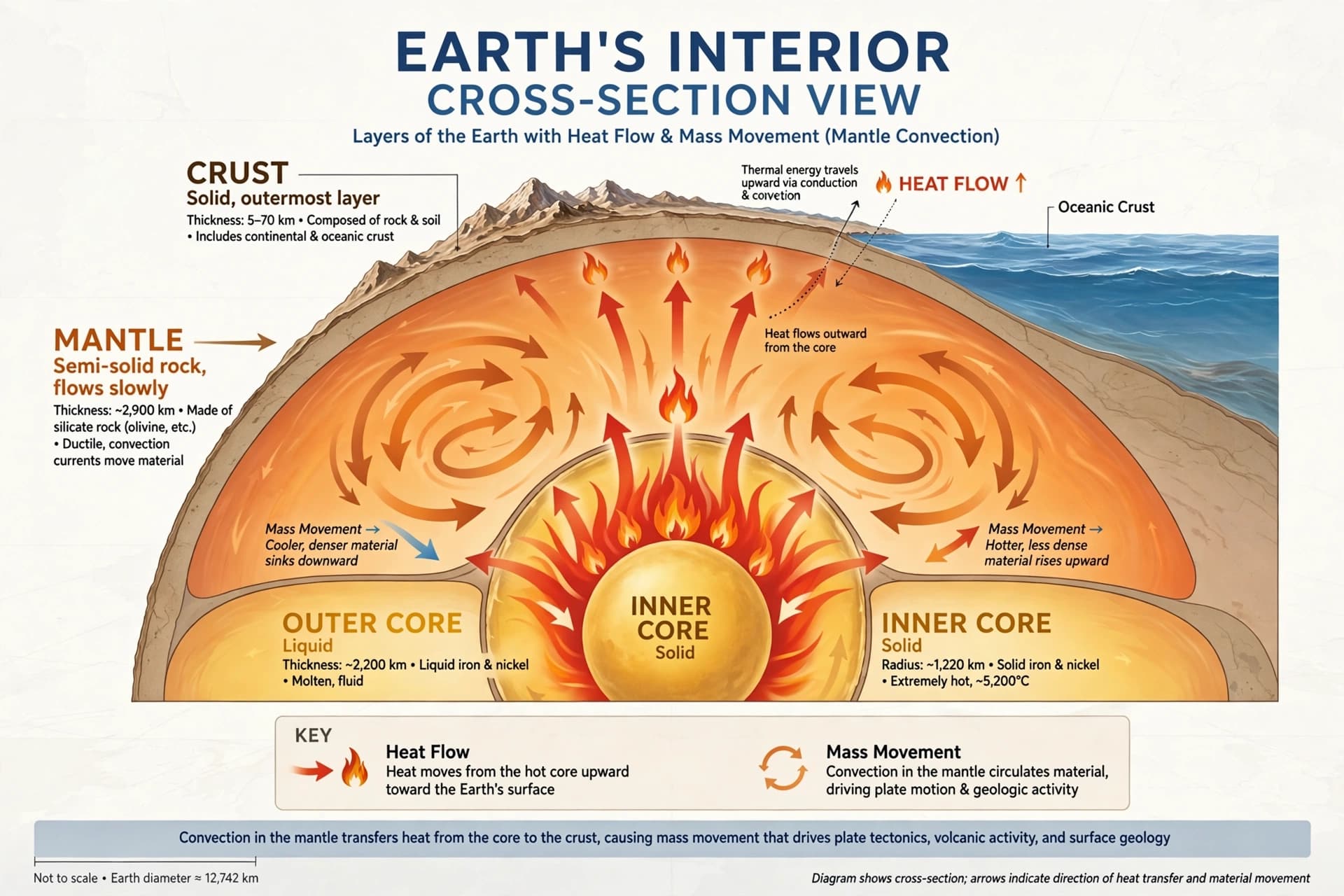
That something may lie deep inside the Earth. The planet’s interior is not a uniform sphere but a layered structure of core, mantle, and crust, each with its own dynamics. Heat flows in the liquid outer core, which generates the magnetic field, also cause shifts in mass that can affect rotation. The viscous mantle, where rock deforms slowly under immense pressure, moves in ways that redistribute mass over millions of years . These internal processes, coupled with the tidal braking from the Moon, create a rotation history that is more complex than a simple linear slowdown.
There is also a more recent influence: climate change. As ice sheets in Greenland and Antarctica melt, water flows from the poles toward the equator, increasing the planet’s physical inertia and slowing its rotation further. A study from ETH Zurich found that if greenhouse gas emissions continue, climate change could have a greater effect on the length of the day than the Moon, which has been the dominant force for billions of years . “We humans have a greater impact on our planet than we realize,” said Benedikt Soja, a professor of space geodesy .
The practical implications are modest for most of us. A day that is a millisecond or two shorter or longer than average is imperceptible; it takes 100 to 400 milliseconds just to blink an eye . But for timekeepers, astronomers, and satellite operators, those milliseconds matter. The International Earth Rotation and Reference Systems Service monitors the Earth’s rotation and has added 37 leap seconds to Coordinated Universal Time since 1972 to keep atomic clocks aligned with the planet’s actual spin . The Earth is not a clock, but it keeps its own time, and we are still learning to read it.
AI Image Disclaimer: All visuals in this article were produced by artificial intelligence and are not photographs of actual scientific instruments or phenomena.
Sources: National Institute of Standards and Technology, PNAS, CNRS News, EurekAlert!, Taylor & Francis
Published by Banx Network. This article is part of the Banx decentralized media programme, powered by the BXE token on the XRP Ledger.