A cell is often likened to a bustling village, a place where countless events unfold beneath a veil of invisibility. Within this tiny cosmos, molecules flit like traders through a market, conversations of genes shape destinies, and fleeting signals determine life’s unfolding script. Among these unseen patterns, there have always been traces, whispers of what happened yesterday and clues about what might come tomorrow. Now, in a gentle twist of ingenuity, scientists have taken one of the cell’s most mysterious components—the so-called vault—and taught it to keep a diary of genetic activity over time.
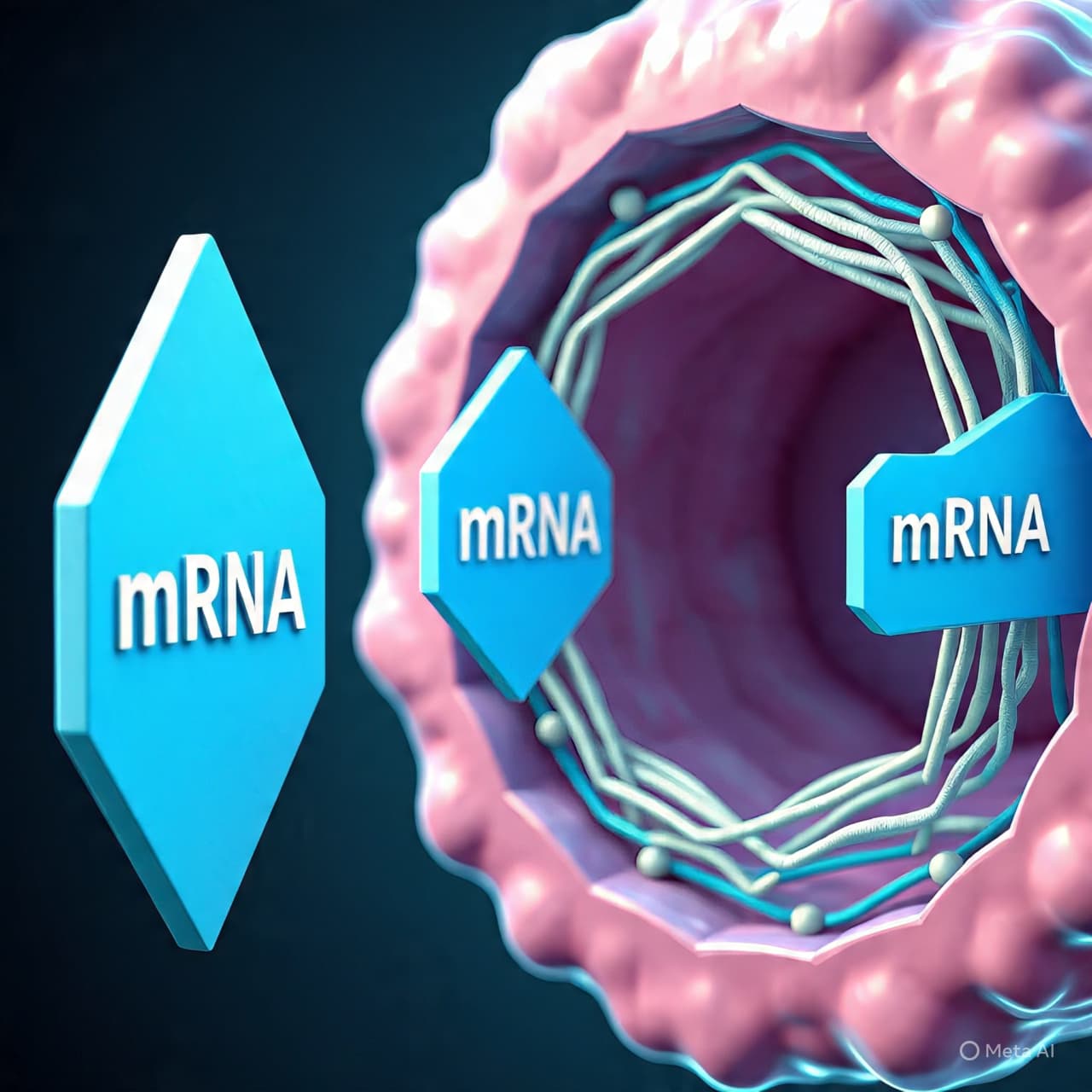
The vault has been a quiet presence in biology for decades, a barrel-shaped structure seen in nearly every cell yet shrouded in mystery, like an ancient relic whose purpose was forgotten. First noticed by researchers in the 1980s, these hollow ribonucleoprotein particles were observed with intrigue but with little understanding of why they existed or what secrets they might hold. Life continued to bustle around them, and vaults stayed, neither star nor spectator.
In a story that feels almost like coaxing a forgotten journal out of a dusty attic, a team led by scientists at institutions including the Broad Institute of MIT and Harvard began to imagine vaults not as mysterious ornamentation, but as potential keepers of cellular history. They saw a structure whose interior could be adapted to protect the ephemeral messages of life—messenger RNA, the transcripts of genes turned on or off in a cell at given moments. Messenger RNA is like a snapshot of a cell’s activity at a particular instant; left unprotected, it fades as quickly as a thought after it flits from mind.
By engineering vaults to capture and sequester mRNA, researchers created what they describe as a TimeVault—a biological time capsule that can shelter these fragile molecules from degradation for days longer than they would ordinarily survive. Within such vaults, mRNA is shielded, stabilized, and preserved, preserving the narrative of its gene’s voice. When scientists later retrieve and sequence the contents, they unlock a record of which genes were active at earlier moments, effectively reading the cell’s past.
This inventive approach contrasts with earlier methods that took snapshots of gene activity at isolated moments, akin to a traveler capturing a landscape with a single photograph, unaware of the hours of shifting light that came before and after. The TimeVault offers something closer to a journal of experience, allowing researchers to follow nuanced changes in gene expression over several days and to compare entries in this biological journal against other observations.
In practical terms, the implications reach into fields like cancer research, where tumor cells sometimes change their gene activity to evade treatment. Using TimeVault, scientists have detected gene expression signatures that precede drug resistance, illuminating not just how cells react, but when their internal rhythms shift toward survival.
The elegance of this method lies in its poetic simplicity: instead of overwriting the cell’s DNA or disrupting its natural machinery, it borrows a structure already present in most cells, repurposing it lovingly to serve as both container and chronicler. There is a quiet beauty in using nature’s own form to reveal nature’s own story, piece by piece, like reading a diary penned by a cell for itself long before human eyes ever turned to look.
As researchers continue to refine the TimeVault concept and explore its potential in animals and disease models, this innovation may become a gentle companion to exploration—a tool that helps decode the subtle dialogues by which life writes its own history.
In transforming a cellular mystery into a recorder of its hidden moments, scientists remind us that even the smallest structures can carry profound stories, waiting patiently for curious minds to listen
AI Image Disclaimer “Images in this article are AI-generated illustrations, meant for concept only.”
Sources Singularity Hub Phys.org / news DongA Science Harvard Gazette LinkedIn science commentary
Published by Banx Network. This article is part of the Banx decentralized media programme, powered by the BXE token on the XRP Ledger.