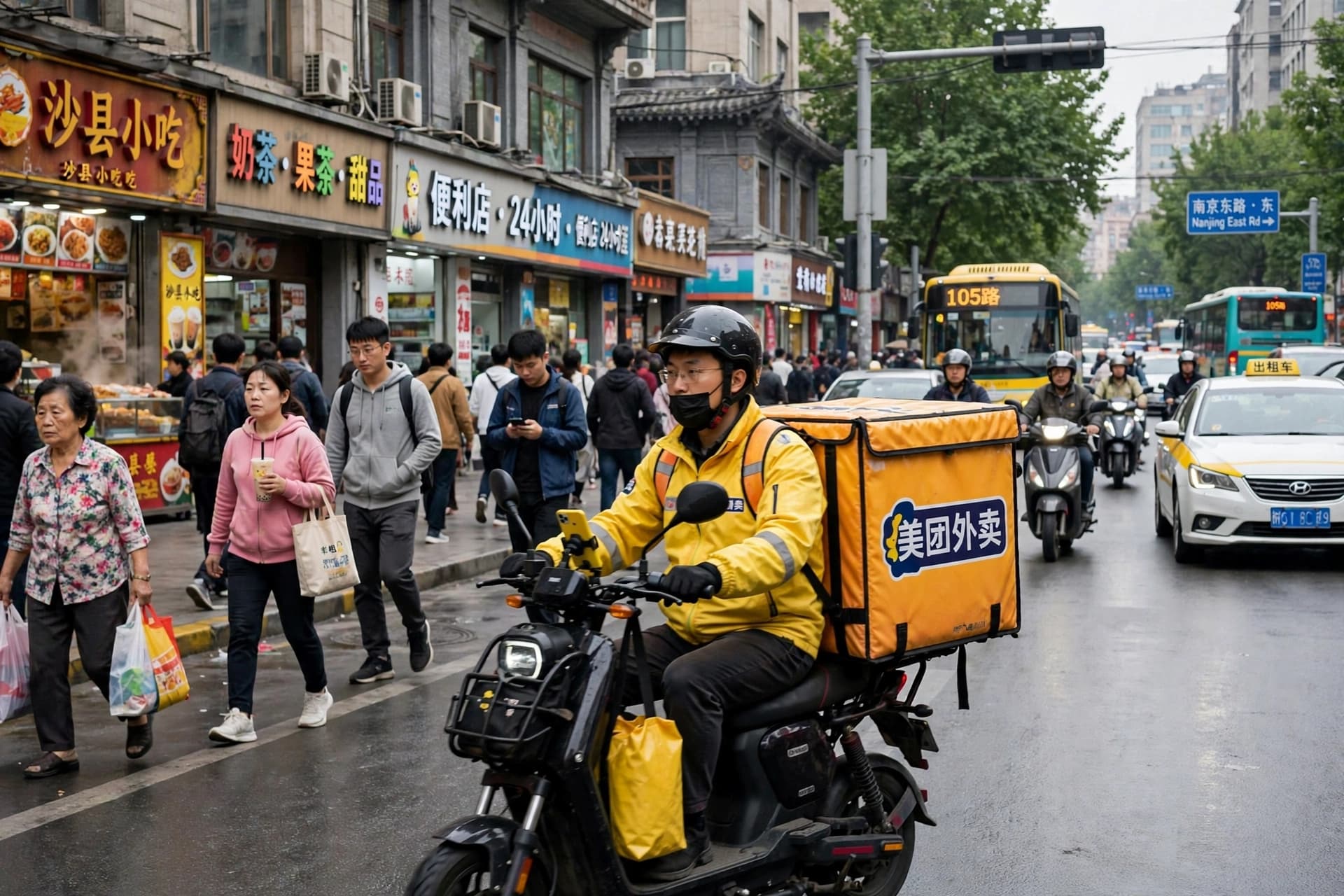
There is a particular invisibility that attaches to the people who move goods through a city—a invisibility that is not about being unseen but about being unconsidered, about the way a package arrives on a doorstep without the recipient thinking about the hands that carried it, the algorithms that timed it, the body that paid the price. In China, the delivery drivers who power the world's largest e-commerce economy are among the most visible workers on the street—their uniforms, their scooters, their hurried movements are everywhere. And yet, their reality is one of brutal hours, precarious pay, and a system that measures their worth in seconds and stars.
A recent account of the life of a delivery driver in China describes a working day that begins before dawn and ends after dark, with meals eaten on the move and breaks measured in minutes. Drivers are paid per delivery, with bonuses for speed and penalties for lateness. The algorithms that assign their routes are designed to optimize efficiency, but the optimization is relentless. A driver who is five minutes late may lose a portion of his pay. A driver who receives a negative review may lose more. The margin between a good day and a bad one is razor-thin, and the consequences of falling behind are immediate.
The physical toll is significant. Drivers spend hours on scooters, exposed to weather, traffic, and pollution. They carry heavy loads, climb stairs, and navigate complex building layouts. They are at risk of accidents, and the insurance they receive is often minimal. Many work twelve-hour days, six days a week, and some work more. The income can be adequate for a single person with few expenses, but for those supporting families, the margins are tight. The system that employs them is not designed to provide security or benefits; it is designed to move packages as quickly and cheaply as possible.
The social dimension of this work is equally complex. Delivery drivers are often migrants from rural areas, drawn to cities by the promise of income but excluded from the urban social contract that provides housing, healthcare, and education to registered residents. They live in dormitories or shared apartments, far from the customers they serve. They are essential to the functioning of the digital economy but remain largely invisible within it. The platform companies that employ them have created a new form of labor that is neither traditional employment nor independent contracting, with the obligations of neither and the protections of neither.
The Chinese government has recognized the problem. Regulations have been introduced to improve conditions, including requirements for rest periods and limitations on penalties. But enforcement is difficult, and the platforms have powerful incentives to maintain the status quo. The workers themselves have few avenues for collective action; unions are tightly controlled, and strikes are rare. For now, the system continues, powered by the bodies of people who are measured in minutes and miles, who deliver the goods that others order without thinking, and who return home each night to the anonymity that the city grants them.
AI Image Disclaimer: All images in this article are AI-generated and are intended for illustrative purposes only.
Sources: Analysis based on reporting and research on China's delivery economy
Published by Banx Network. This article is part of the Banx decentralized media programme, powered by the BXE token on the XRP Ledger.