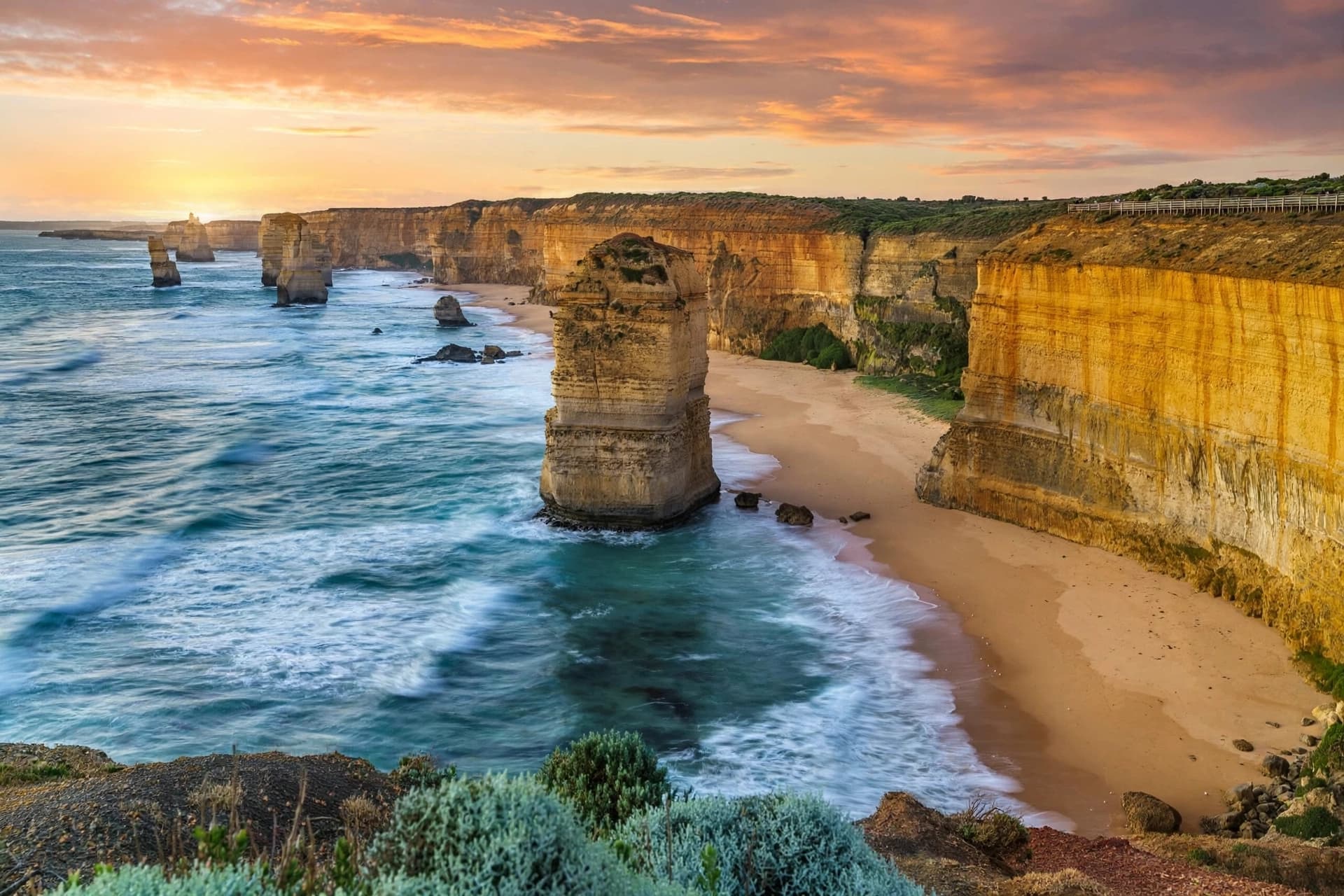
There are places that belong to everyone and no one—landmarks so iconic that they seem to exist outside the ordinary rules of commerce, their beauty a kind of public trust. The Twelve Apostles, those limestone sentinels rising from the Southern Ocean along Victoria's Great Ocean Road, have long been such a place. But beginning next week, the experience of seeing them will change.
From October 16, visitors will be required to book ahead to enter the newly constructed $126 million Twelve Apostles Visitor Centre. Visiting remains free until April 2027, after which an entry fee will be introduced . Local residents and traditional owners from the Eastern Maar community will be exempt from the charge .
The booking system is designed to manage overcrowding at one of Australia's most visited natural attractions. More than 2 million people visit the Twelve Apostles each year, part of the roughly 6 million who travel the Great Ocean Road . At peak times, the site has struggled with congestion—buses and cars competing for limited parking, walkways crowded, and the surrounding environment strained by the sheer volume of foot traffic .
The Victorian government says the fees collected will be reinvested into visitor infrastructure and environmental projects along the coast. Environment Minister Steve Dimopoulos framed the change as a matter of stewardship: "It's only fair that visitors to the region pay a small fee to visit this world-class destination so that we can maintain it for future generations" .
The new visitor centre, a rammed-earth structure with immersive cultural storytelling, retail and food offerings, and a rooftop garden, replaces what had been basic roadside stops. The Great Ocean Road Coast and Parks Authority says the booking model will help spread visitors across the day, reduce congestion, and provide a more predictable experience for tour operators and independent travelers alike .
Not everyone has welcomed the change. Port Campbell Progress Group vice-president Kylie Treble expressed concern that the fees could displace visitors who cannot afford them, and that revenue might be spent on infrastructure rather than the wellbeing of the park itself. "With people who may not be able to afford the fee, there still needs to be some opportunity to view the Twelve Apostles without having to pay the fee," she said . Victorian Opposition Leader Jess Wilson called the plan "another example of a government that's run out of money" .
For those who have long cherished the freedom of pulling off the highway and walking to the cliff's edge, the change marks the end of an era. The rocks themselves remain free to view from the road, but the experience of visiting them—parking, facilities, the carefully managed flow of people—will now come with a price and a time slot. Whether that is the cost of preservation or the beginning of a different kind of loss is a question each visitor will have to answer.
AI Image Disclaimer: The images accompanying this article are generated by artificial intelligence and are intended for illustrative purposes only.
Sources: Australian Broadcasting Corporation, Great Ocean Road Coast and Parks Authority, Travelnews, The Canberra Times
Published by Banx Network. This article is part of the Banx decentralized media programme, powered by the BXE token on the XRP Ledger.