There is a particular weight that settles over a small town when the state issues its judgment on a death that has already divided it, a weight that is not resolution but the beginning of a longer argument. In Senatobia, Mississippi, that judgment arrived on Monday, four months after a police officer fired into a car in a Walmart parking lot and killed a one-year-old boy named Kohen Wiley. The Mississippi Attorney General's Office announced that the use of force was justified. The officer will not face criminal charges .
The finding was brief, three sentences posted on the attorney general's website. It followed an investigation by the Mississippi Bureau of Investigation, which said officers responded to a shoplifting call on June 14 and saw two women and a child leaving the store and getting into a car. According to the bureau, the driver drove toward officers, nearly striking one, and an officer fired into the vehicle . Kohen was sitting on his mother's lap in the passenger seat. He was struck and killed. The driver, Latoya Ferrell, was critically injured .
Kohen's mother, Vellesiya Wiley, has disputed the account from the beginning. In a video released days after the shooting, she said she and her friend had not stolen anything, and that she raised her son up to show officers he was in the car before the shots were fired . Neither woman has been charged with shoplifting or any other crime, according to court records . Ben Crump, the civil rights attorney representing the family, said a preliminary independent autopsy indicated Kohen was shot from the side of the car, not the front, contradicting the claim that the vehicle was heading toward officers .
What has not been released is the footage. Body-worn camera video, dash camera video, and surveillance footage from the Walmart parking lot have all been withheld. Crump has called for their release repeatedly, arguing that the public cannot accept the attorney general's conclusion without seeing the evidence that supports it. "If the footage supports the state's decision, release it," he said in a statement . The family's grandmother told reporters she learned of the attorney general's decision on Facebook, and that no one from the state had reached out to them .
There is a context to this shooting that extends beyond a single afternoon. The Senatobia Police Department has faced a series of incidents that have eroded trust with the city's Black residents. A former chief was fired after reports that he used racist slurs in private text messages. An officer was fired for arresting a ten-year-old boy for urinating in public. And a complaint alleged that the officer who shot Kohen, identified in records as Sgt. Hunter Foster, made a racially offensive remark to a Black officer days before the shooting . These details do not determine whether the shooting itself was justified. But they shape the climate in which the question is being asked.
The attorney general's finding closes one door. It does not close the others. The family's legal options remain, and the call for transparency will continue. The town of Senatobia, forty miles south of Memphis, is left with a ruling that says the law was followed and a community that is not persuaded. Kohen Wiley would have turned two this year. He was shot on Juneteenth, a detail that carries its own quiet weight. What remains is a family waiting for footage they believe will tell a different story, and a state that has said the story is already complete.
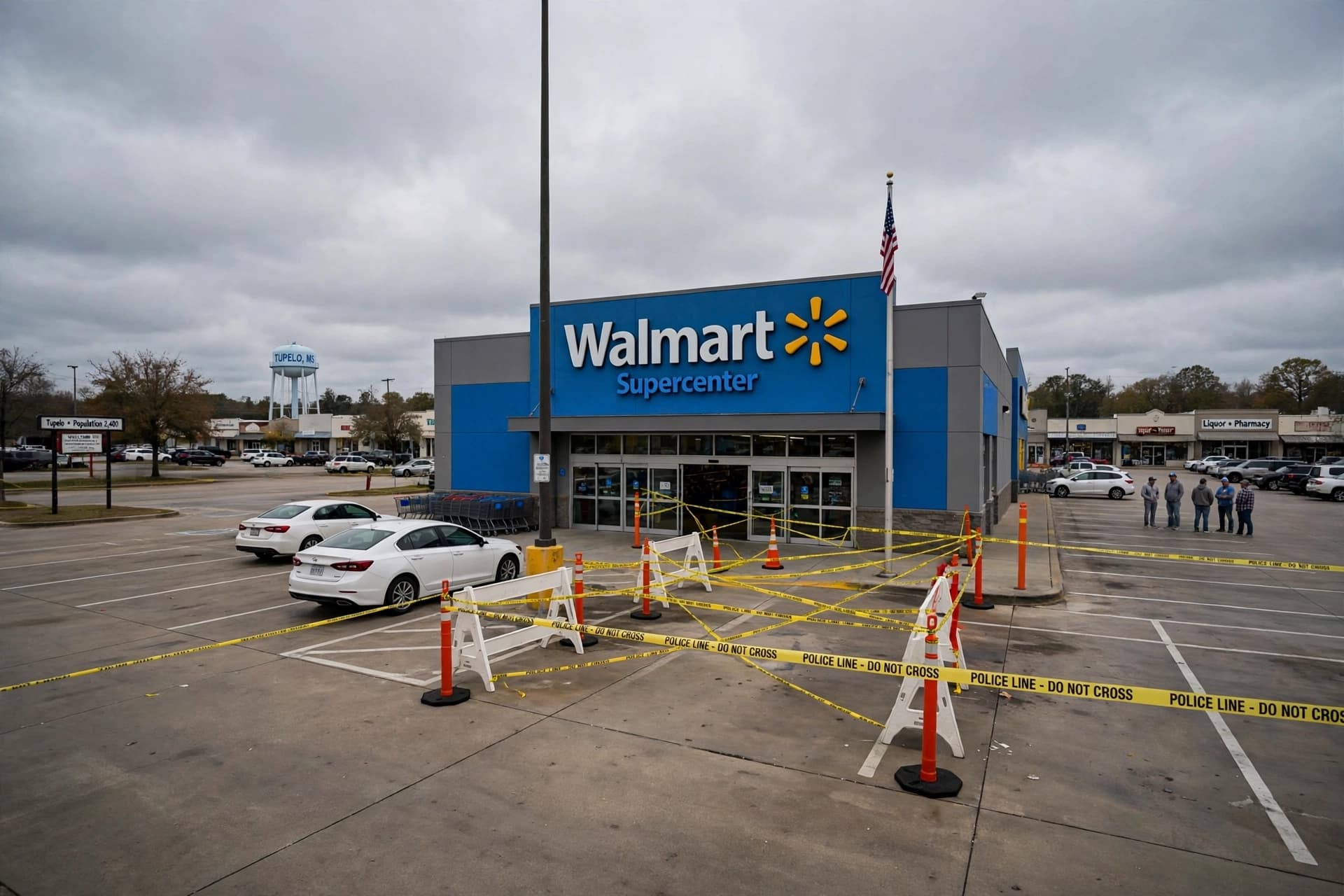
AI Image Disclaimer: The visuals accompanying this article are generated by artificial intelligence and are for illustrative purposes only.
Sources: CNN, BBC, PBS NewsHour, The Intercept, USA Today, NBC News
Published by Banx Network. This article is part of the Banx decentralized media programme, powered by the BXE token on the XRP Ledger.