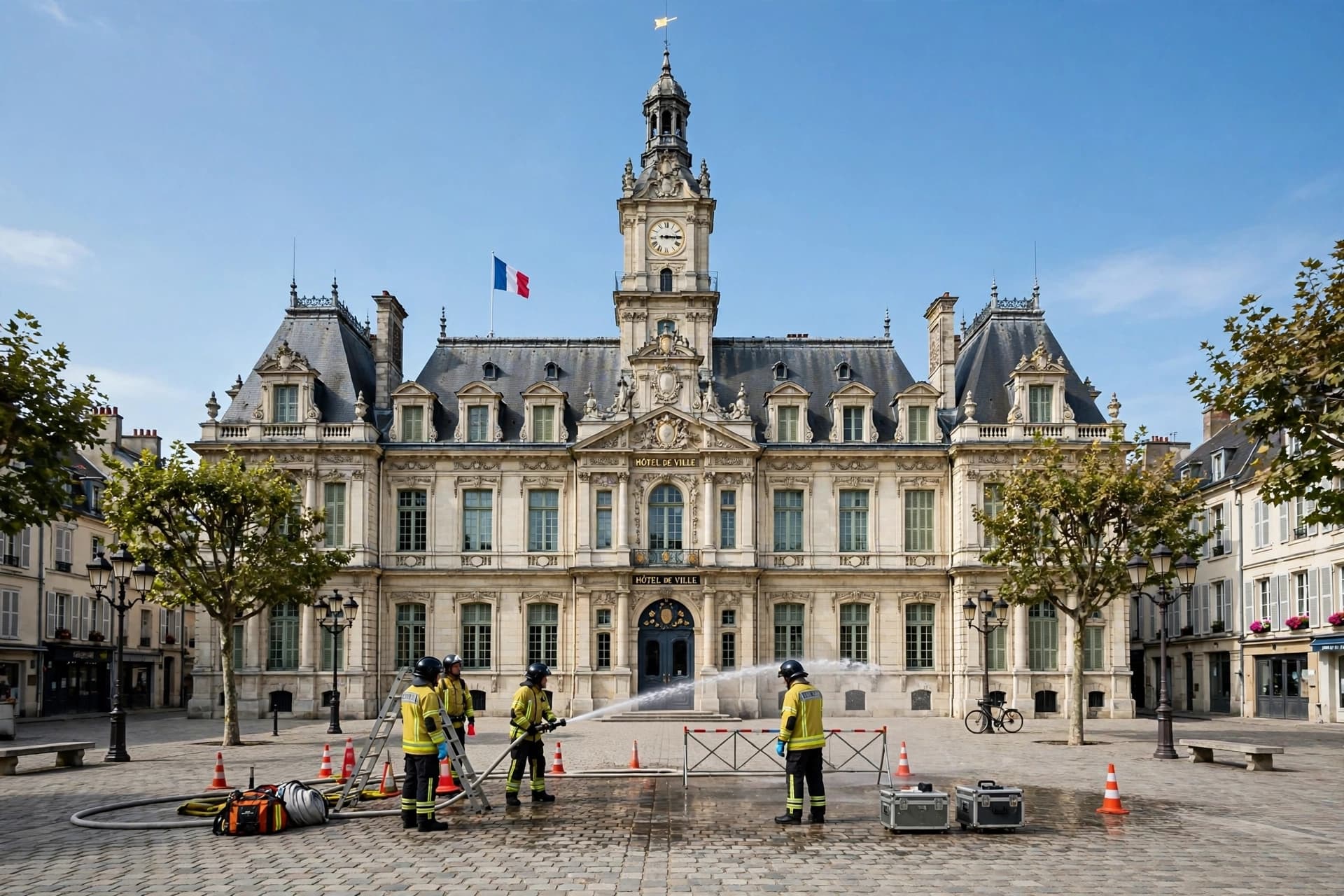
There is a particular kind of loss that occurs when a building burns, a loss that is not measured only in stone and timber but in the accumulated life of a place. In Limoges, the city hall that went up in flames on Saturday was inaugurated in 1883, its clock tower and ornate roof part of the city's silhouette for nearly a century and a half. By the time the fire was extinguished, the interior of the historic wing was nearly destroyed, the roof and belfry had collapsed, and a symbol of civic permanence had become, in the space of an evening, a ruin.
On Tuesday, French police arrested a thirty-four-year-old man in connection with the fire. The suspect, identified in French media as Hodei C.D., was detained by the elite RAID unit in Val d'Issoire, about thirty miles from Limoges . He was already known to authorities: he is on the "S" list, France's national security watchlist, for suspected links to the ultra-left, and he has a criminal record that includes a conviction for assaulting a police officer during a 2024 protest against a wood pellet factory . Neighbors described him as a temporary construction worker committed to environmental causes, and French media reported that he had participated in actions by Les Soulèvements de la Terre, a radical ecology collective known for civil disobedience .
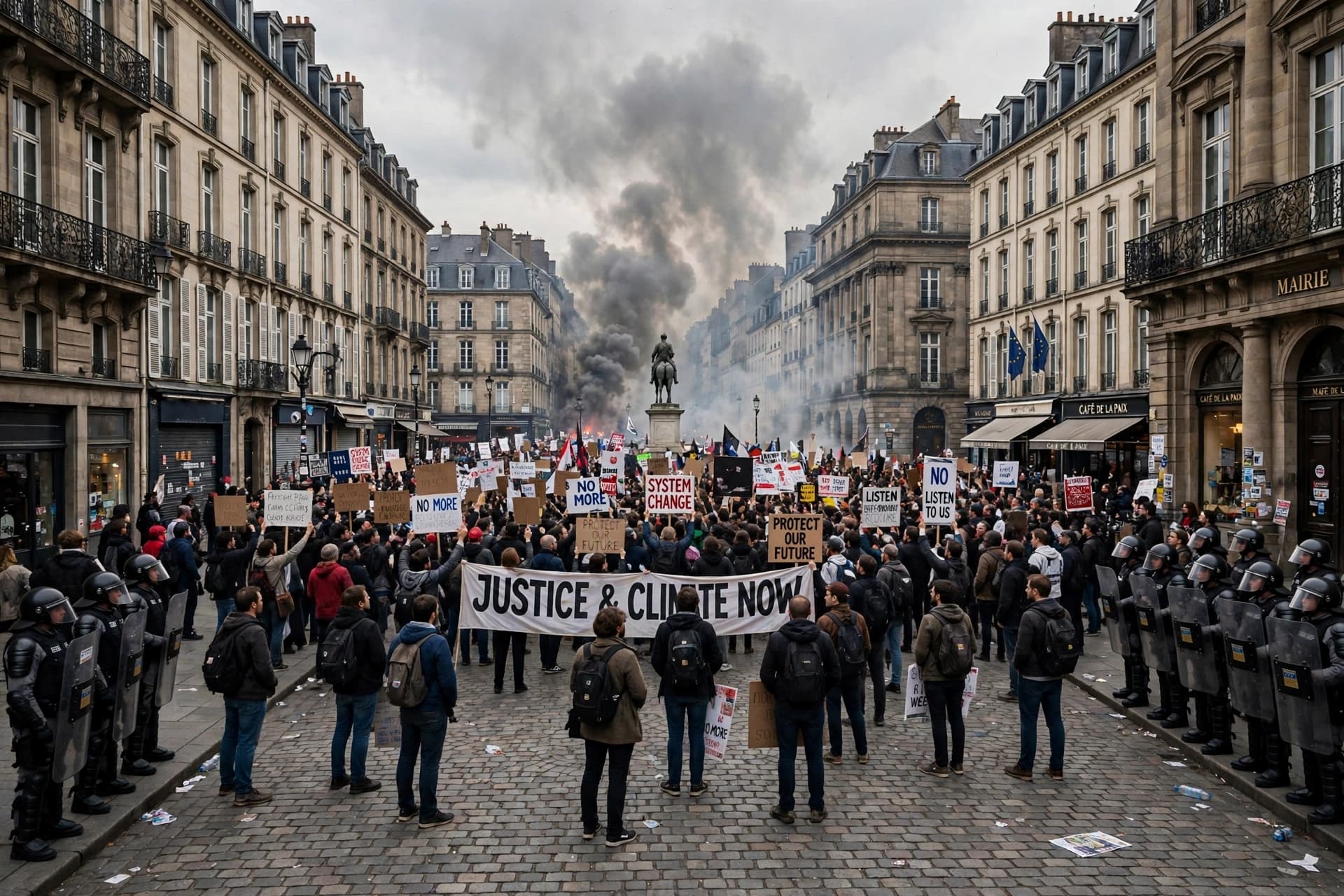
The fire occurred during a day of nationwide demonstrations against the rising cost of living, deteriorating public services, and conditions in schools. Hundreds of thousands took to the streets. In Limoges, between five hundred and seven hundred people gathered in front of the city hall before a group forced entry, breaking windows and setting the building alight . The destruction became a symbol of the violence that marred the day, and the government's response has been swift and severe. Justice Minister Gérald Darmanin said more than 2,500 people had been arrested since the disorder began, with 149 in detention following the weekend . Prime Minister Sébastien Lecornu called the fire a "clear symbol" of the threat posed by the ultra-left, and the anti-terrorism prosecutor's office is evaluating whether to take over the case .
The mayor of Limoges, Guillaume Guérin, said the suspect likely directed the attack. "You don't destroy a two-century-old building with a box of matches and a lighter," he said, expressing his expectation that further arrests would follow . The investigation is examining whether the fire was the result of coordinated action intended to sow terror, a determination that will decide whether the case is treated as arson or as a terrorist act.
There is a context here that extends beyond a single building. The suspect's father, according to French media, was sentenced in April to three years in prison for a series of arson attacks, including the burning of eight vehicles belonging to the electric utility Enedis and the destruction of telecommunications installations . The son's path, in this telling, did not emerge from nowhere. It was shaped by a lineage of radical action and a conviction that the structures of the state are legitimate targets.
For the people of Limoges, the immediate question is reconstruction. Lecornu has promised that the state will contribute, and the mayor has said he wants the same capacity to rebuild that was given to Notre-Dame de Paris . The suspect remains in custody, and the investigation continues. What remains of the city hall is a facade at risk of collapse and an interior that no longer exists. The building will rise again, perhaps. What it represented—the quiet continuity of civic life—will take longer to restore.
---
AI Image Disclaimer: The visuals in this article are AI-generated and are for illustrative purposes only.
Sources: New York Post, BBC, EFE, UPI, Daily Mail
Published by Banx Network. This article is part of the Banx decentralized media programme, powered by the BXE token on the XRP Ledger.