There is a particular fear that attaches to a drug that kills within minutes—a fear made sharper by the knowledge that the person who died may not have known what they were taking. In Tasmania, that fear has arrived. Health authorities have issued a public warning following an overdose death involving a substance suspected to have been laced with a novel synthetic opioid—the first known detection of its class in the state. The deceased person, who has not been identified, "may not have known" about the contamination, according to the Department of Health .
The substance belongs to a group known as novel U-class opioids—drugs designed illegally to mimic pharmaceutical opioids like fentanyl, morphine, and oxycodone. Acting Secretary of the Department of Health Dinesh Arya said the case was the first known detection of this class of opioid in Tasmania. "U-class opioids are not regularly detected in Australia," he said. "This is a dangerous substance and we do not want to see more of it" .
What makes these substances particularly dangerous is their unpredictability. Amanda Roxburgh, a senior research fellow at the Burnet Institute, explained that novel synthetic opioids have no reliable potency—they can be far stronger than expected, and the window between consumption and overdose is measured in minutes. "There's such a short window of time between someone consuming the substance and overdose, people can overdose and die within minutes," she said . Roxburgh noted that these substances are difficult to trace because they are often ordered online on the dark web, and their potency means they can be brought into the country in very small amounts.
The warning comes amid a broader pattern of synthetic opioid contamination in Australia. Nitazenes—another class of highly potent synthetic opioids—have been detected in every Australian state and territory since 2021, often appearing in counterfeit pain medications, heroin, ketamine, and even vapes . In 2025, a Victorian coroner found that protonitazene, a form of the drug, was responsible for the deaths of four people who believed they were inhaling cocaine . Tasmania had previously been the only jurisdiction where nitazenes had not been detected, but reports in mid-2026 indicated the drug had reached Hobart's emergency departments .
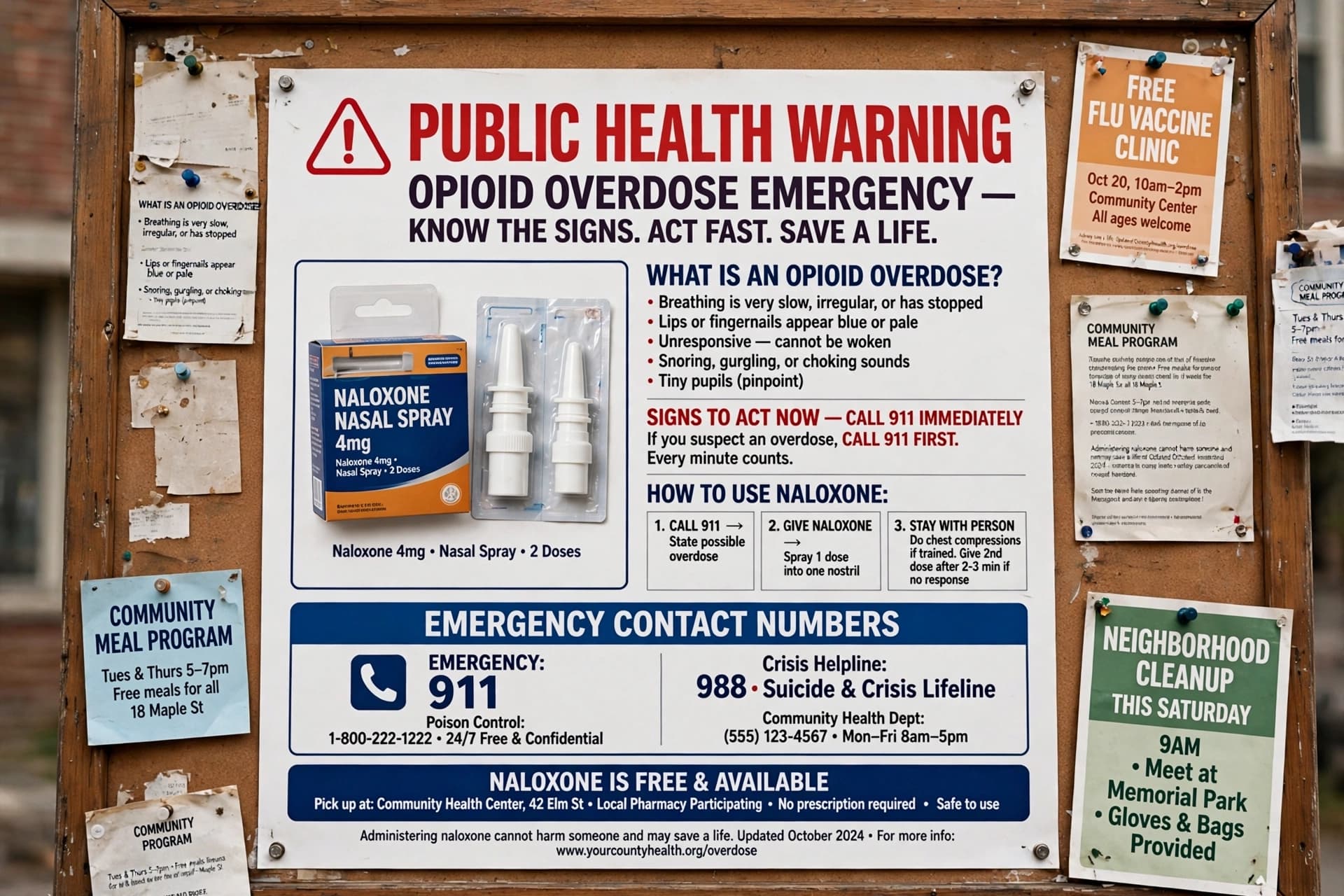
The Department of Health has advised healthcare professionals to be prepared with naloxone, a medication that can temporarily reverse an opioid overdose. Signs of overdose include slow or stopped breathing, reduced consciousness, pinpoint pupils, and blue or grey lips or fingertips. Anyone witnessing these symptoms is urged to call Triple Zero immediately or seek urgent medical attention .
For Tasmania, the detection represents a new phase in a crisis that has been building across the country. The state's health authorities have acted quickly to alert both the public and the medical community. But the underlying problem—the presence of a drug that can kill before the user even understands what they have taken—remains, and it will not be solved by warnings alone.
AI Image Disclaimer: All images in this article are AI-generated and are intended for illustrative purposes only.
Sources: Australian Broadcasting Corporation, News24 Australia, Pulse Tasmania, The Examiner
Published by Banx Network. This article is part of the Banx decentralized media programme, powered by the BXE token on the XRP Ledger.