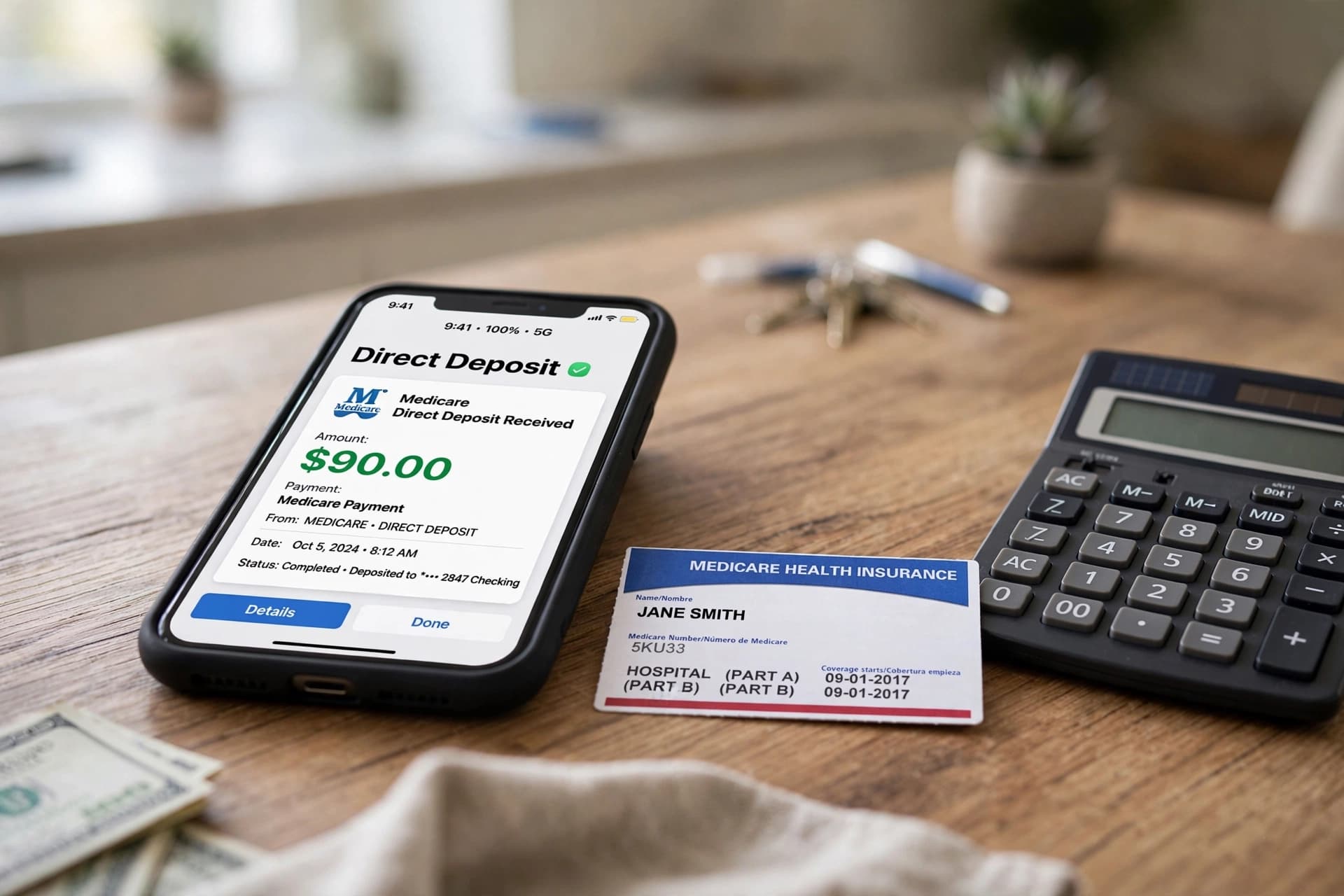
There is a particular arithmetic to a payment made just before an election—a calculation that weighs the immediate benefit to the recipient against the political benefit to the sender, and that leaves the recipient to decide whether the gesture is generosity or strategy. This month, more than 20 million Medicare beneficiaries will receive a one-time $90 payment from the federal government, announced by President Donald Trump in a late-night post on Truth Social and framed by the White House as a rebate to help with Medicare Part B premiums. The payment will arrive by direct deposit or check in early October, roughly a month before the midterm elections .
The eligibility criteria are specific. To qualify, a person must live in the United States, be enrolled in Original Medicare Part B, not receive premium assistance from Medicaid, and not pay the higher income-related monthly adjustment amount, known as IRMAA . People enrolled in Medicare Advantage—the private-plan alternative that covers more than half of all Medicare beneficiaries—are not eligible, even though many of them also pay the Part B premium . The payments will be drawn from the Medicare Improvement Fund, a $2 billion reserve that Congress established in 2008 to improve Medicare’s fee-for-service program and that the White House says has never been used .
The context of the payment is a standard Part B premium of $202.90 per month in 2026, meaning the $90 covers less than half of a single month’s bill . The premium is projected to increase by $79 annually for 2027, and KFF analysis notes that beneficiaries may also face rising deductibles, cost-sharing, and Medigap premiums—costs that the one-time payment will not offset . Six years ago, ahead of the 2020 election, Trump proposed a similar measure: a $200 drug card for Medicare beneficiaries. Those cards were never sent, amid questions about the design of the experiment and its projected $8 billion cost .
For the 20.8 million people who will receive it, the $90 is a modest sum—enough to cover a few weeks of groceries, a utility bill, or a portion of a prescription. For the administration, it is a visible reminder of a promise kept, delivered at a moment when the cost of living remains the dominant concern for voters. Whether it is understood as a rebate or a campaign tactic will depend on who is doing the understanding. The payment is automatic. The judgment is not.
AI Image Disclaimer: The images accompanying this article were generated by artificial intelligence and are for illustrative purposes only.
Sources: NewsNation, KFF, Becker's Payer Issues, Salon, USA Today Network
Published by Banx Network. This article is part of the Banx decentralized media programme, powered by the BXE token on the XRP Ledger.