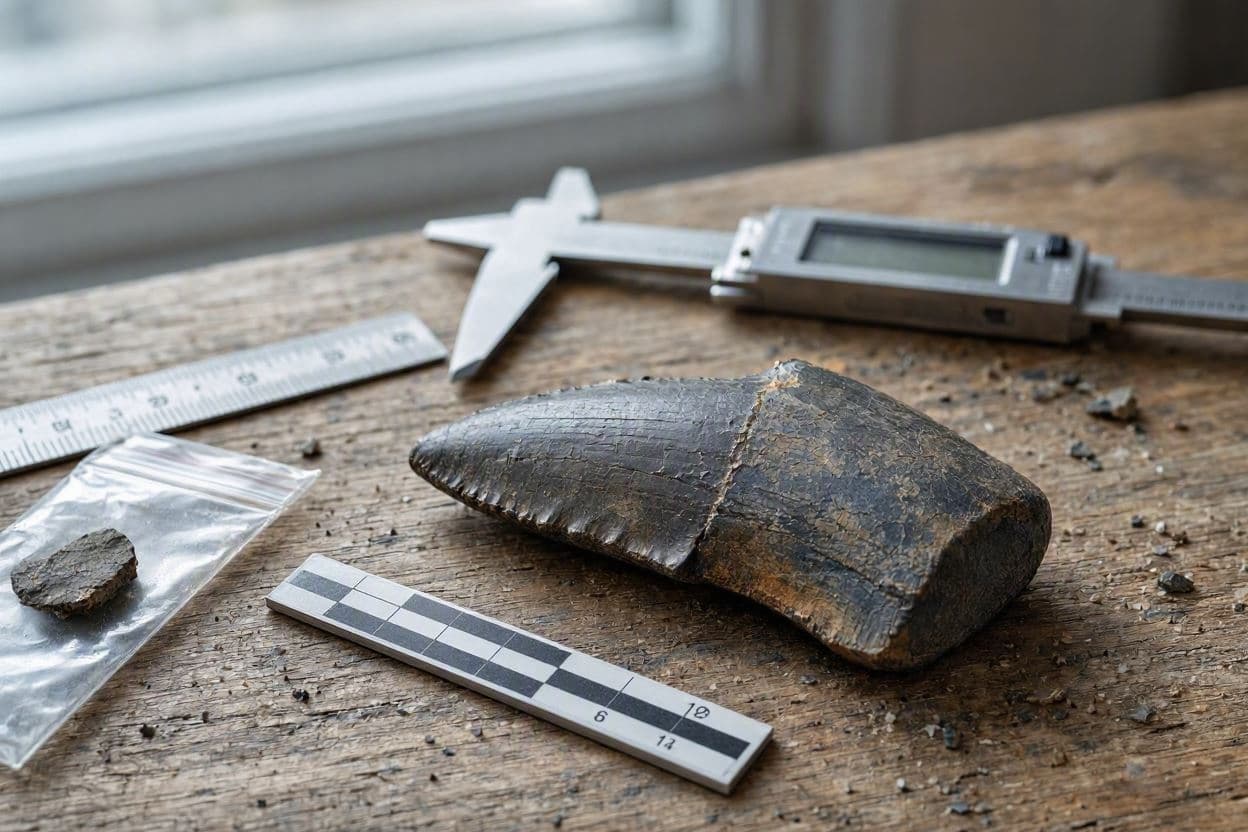
In the silent, fossilized remains of the ancient past, a single tooth holds a secret that has long eluded scientists. For decades, paleontologists have debated whether the mighty Tyrannosaurus rex was a cold-blooded reptile, sluggish in the cool morning air, or a warm-blooded predator, vibrant and active like modern mammals. Now, a groundbreaking analysis of a 66-million-year-old tooth suggests that T. rex ran at a body temperature of approximately 97 degrees Fahrenheit (36.3 degrees Celsius), remarkably similar to that of humans. This discovery not only reshapes our understanding of dinosaur physiology but also offers a new perspective on how these colossal creatures thrived in their prehistoric world.
The study, conducted by researchers at UCLA, utilized a novel method involving the chemical composition of fossilized enamel. By measuring the ratios of oxygen isotopes within the tooth structure, scientists were able to estimate the internal body temperature of the animal when it was alive. Unlike previous methods that relied on indirect evidence such as growth rates or bone structure, this approach provides a direct thermal reading. The results indicate that T. rex maintained a high, stable body temperature, suggesting a metabolism far more efficient than that of modern crocodiles or lizards.
This finding challenges the traditional view of dinosaurs as slow-moving, ectothermic beasts. Instead, it supports the growing consensus that many large theropods were endothermic, or warm-blooded. Such a metabolism would have allowed T. rex to be an active hunter, capable of sustained movement and quick bursts of speed. It also implies that these animals could regulate their body heat internally, reducing their dependence on external environmental conditions. This adaptability may have been key to their dominance across diverse climates during the Late Cretaceous period.
The implications extend beyond T. rex to other large dinosaurs. If one apex predator maintained human-like temperatures, it is likely that others did as well. This raises questions about the energy requirements of such massive bodies. Consuming enough food to fuel a warm-blooded metabolism would have required frequent hunting and large prey. It paints a picture of a dynamic ecosystem where energy flowed rapidly through the food chain, driven by highly active predators.
For scientists, the ability to measure dinosaur temperatures directly opens new avenues for research. It allows for more accurate models of dinosaur behavior, growth, and ecology. By comparing temperatures across different species and sizes, researchers can better understand how metabolism evolved in archosaurs. It also helps clarify the relationship between dinosaurs and their modern descendants, birds, which are known to be warm-blooded. The connection between T. rex and contemporary avians becomes even stronger with this thermal link.
Public interest in dinosaurs often focuses on their size and ferocity, but their biology is equally fascinating. Knowing that T. rex shared a similar body temperature with humans creates a subtle sense of kinship across millions of years. It humanizes these ancient giants, making them feel less like monsters and more like complex living beings. This emotional connection can inspire greater appreciation for paleontology and the natural history of our planet.
However, the study also highlights the limitations of fossil evidence. While teeth provide valuable data, they represent only a snapshot of an animal’s life. Variations in temperature due to age, health, or season remain difficult to determine. Future research may involve analyzing other tissues or using advanced imaging techniques to refine these estimates. Science is a process of continuous refinement, and each discovery builds upon the last.
In the end, the 66-million-year-old tooth serves as a window into a lost world. It reminds us that the past is not static but filled with life, warmth, and activity. As we continue to uncover these secrets, our understanding of Earth’s history deepens. T. rex was not just a symbol of power but a testament to the resilience and adaptability of life. Its warmth, preserved in stone, continues to enlighten us today.
AI Image Disclaimer: The visual representations included here are AI-generated illustrations designed to depict prehistoric scenes and scientific analysis, not actual photographs of the specific fossil or laboratory procedures.
Sources: Scientific American CNN Phys.org
Published by Banx Network. This article is part of the Banx decentralized media programme, powered by the BXE token on the XRP Ledger.