Key Highlights
- New Research:A study published in Geophysical Research Letters reveals that red and green auroras may share a common electron source.
- Implications:This finding could lead to revisions in space weather models, enhancing prediction accuracy.
- Research Team:The study was conducted by scientists from the University of California, Berkeley, and NASA's Goddard Space Flight Center.
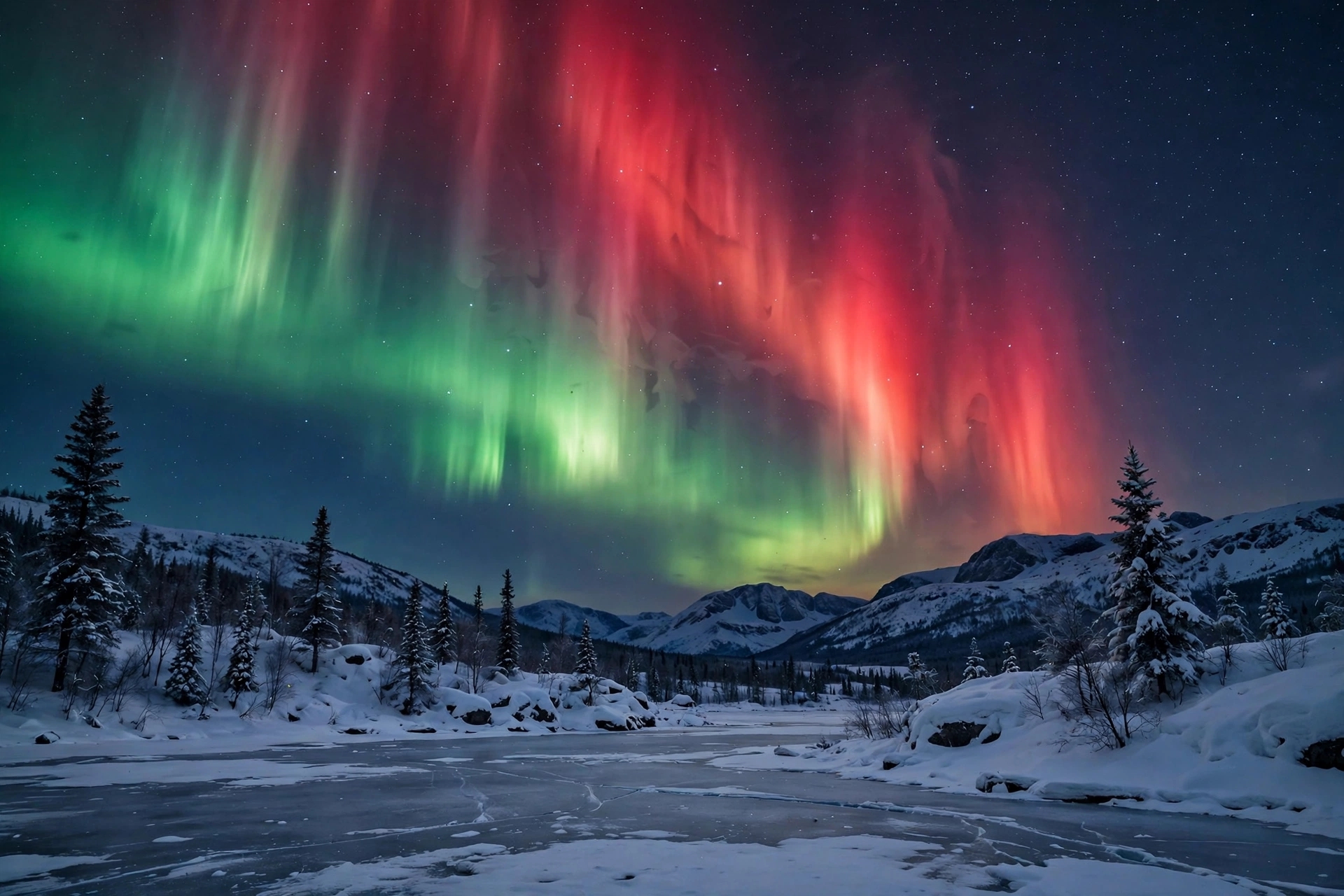
[Significance of the Study] The aurora borealis, or northern lights, has long captivated observers with its stunning displays of color. Traditionally, scientists believed that the green and red hues of the aurora were produced by different populations of electrons, accelerated by distinct mechanisms. However, a recent study challenges this notion, suggesting that both colors may originate from a single source of electrons. This research, published in the esteemed journal Geophysical Research Letters, utilized data from a combination of satellites and ground-based instruments to analyze auroral events where red and green emissions occurred simultaneously.
[Research Methodology] Led by a team from the University of California, Berkeley, and NASA's Goddard Space Flight Center, the researchers examined a series of auroras that exhibited both red and green light. They discovered that the electrons responsible for these emissions shared a common energy spectrum and pitch-angle distribution. This finding indicates that the electrons were accelerated by the same process, rather than by separate mechanisms as previously thought. The study relied on data from the THEMIS mission and ground-based observations from the Poker Flat Research Range in Alaska, allowing the team to track the electrons' journey down the magnetic field lines.
[Implications for Space Weather Models] The implications of this research extend beyond the beauty of the aurora. Understanding the common source of red and green auroras could significantly impact how scientists model space weather. The aurora is not just a visual phenomenon; it represents the intricate interactions between the solar wind and Earth's magnetic field. These interactions can have profound effects on satellites, power grids, and communication systems. If the models used to predict these events are revised based on the new findings, forecasts may become more accurate, ultimately enhancing our preparedness for space weather events.
[Future Research Directions] The study opens new avenues for research into the mechanisms behind auroral acceleration. The researchers emphasize that while they have made significant strides, many questions remain unanswered. Future missions, such as NASA's AuroraX and the European Space Agency's SMILE mission, will focus on investigating these newly identified targets. The quest for understanding the aurora's complexities is ongoing, and the answers may reshape our knowledge of space weather.
[Conclusion] For those who marvel at the aurora, this study adds depth to the experience. The realization that the vibrant red and green lights are manifestations of the same underlying process enriches our appreciation of this natural wonder. The aurora, with its breathtaking beauty, is a reminder of the intricate and interconnected systems at play in our atmosphere, inviting further exploration and understanding.
AI Image Disclaimer: The visuals in this article are generated by artificial intelligence and are for illustrative purposes only; they do not depict the actual auroral events, the satellites, or the researchers involved.
Published by Banx Network. This article is part of the Banx decentralized media programme, powered by the BXE token on the XRP Ledger.