Key Highlights
- Innovative Design:Students create a prototype lunar landing pad to reduce dust.
- Collaboration:The project involves partnership with NASA engineers.
- Promising Results:Initial tests show significant reduction in dust dispersion.
A new wave of innovation is emerging from the minds of students who are tackling one of the most persistent challenges in lunar exploration: how to land spacecraft without creating a cloud of abrasive dust. This issue has plagued engineers since the Apollo missions, where lunar dust not only obscured visibility but also posed risks to equipment and astronaut safety. In response, a team of students has developed a prototype landing pad designed to mitigate this problem, and they are currently testing it in a simulated lunar environment.
The lunar surface is notorious for its fine, sharp dust, which is electrostatically charged and clings to surfaces. When a lander descends, the rocket exhaust can kick up this dust, creating a hazardous environment. The Apollo astronauts faced this challenge firsthand, and as NASA prepares for its Artemis program, the need for effective solutions has become more urgent than ever.
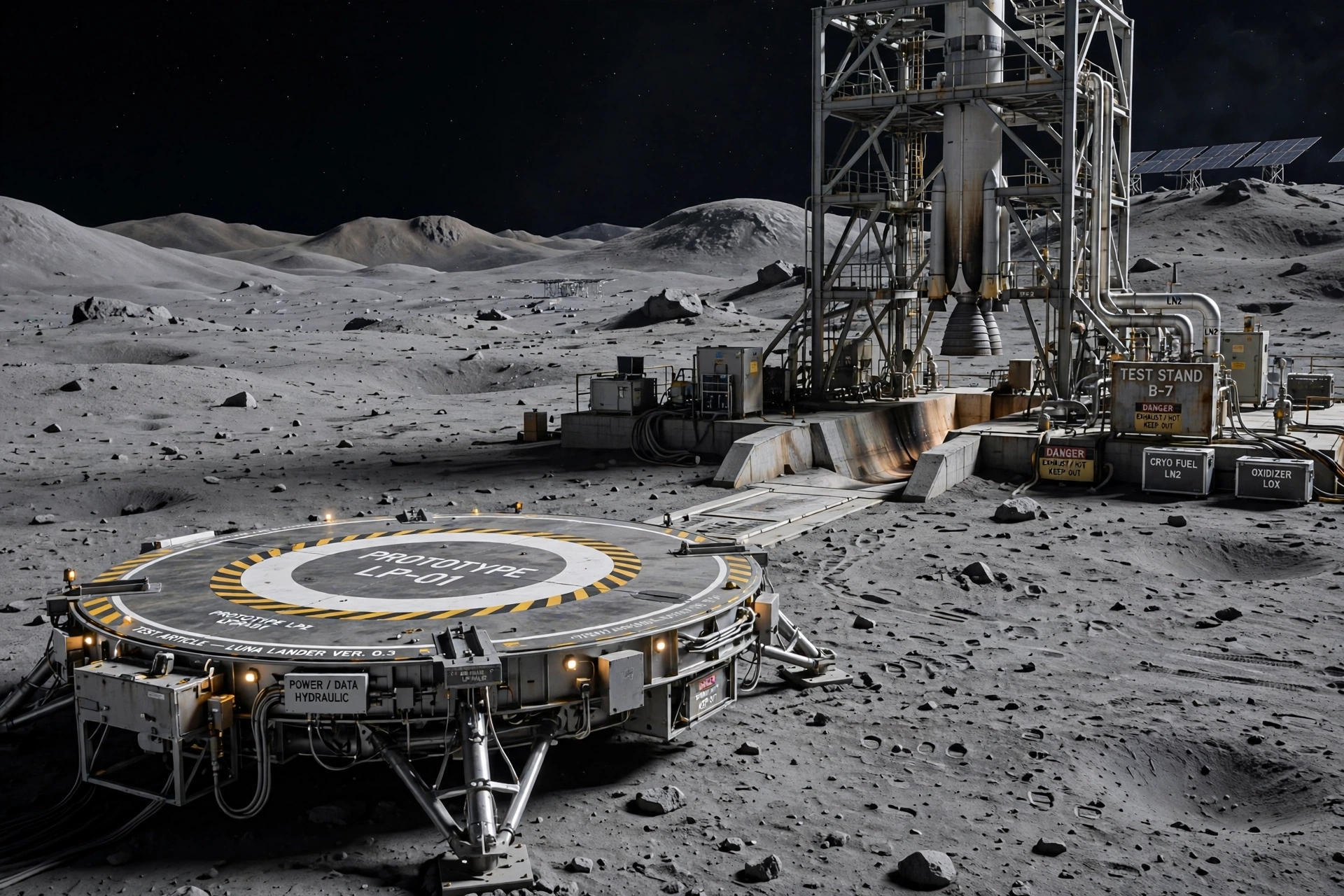
The students' prototype landing pad is engineered to provide a stable surface for landers, minimizing dust dispersion during landing. Constructed from materials that can withstand the intense heat of rocket exhaust and the abrasive nature of lunar dust, the pad is designed to be deployed prior to the lander's arrival. This could be achieved through a robotic mission or integrated into the lander itself. The students have been conducting tests using a rocket engine to simulate the exhaust plumes and measure the resulting dust dispersion.
What sets this project apart is its collaborative nature. While the students are leading the design and testing phases, they are receiving valuable guidance from NASA engineers. This partnership not only enhances the students' learning experience but also fosters a sense of ownership and creativity in addressing real-world challenges in space exploration.
Initial results from the tests have been encouraging. The prototype has demonstrated a significant reduction in dust dispersion, prompting the students to refine their design based on the data collected. The next phase of testing will involve more realistic conditions, potentially including suborbital rocket flights or lunar analog sites, to further assess the pad's effectiveness before it is considered for actual lunar missions.
For the students involved, this project represents more than just an academic endeavor; it is an opportunity to contribute to a significant cause and envision themselves as part of the next generation of lunar explorers. For NASA, it serves as a reminder that innovation can arise from unexpected places, often from those who have yet to be told what is impossible.
As the Artemis program aims to return humans to the Moon, projects like this highlight the importance of engaging young minds in the challenges of space exploration. The future of lunar missions may very well depend on the creativity and ingenuity of today's students.
AI Image Disclaimer: The visuals in this article are generated by artificial intelligence and are for illustrative purposes only; they do not depict the actual students, the prototype landing pad, or the specific test site.
Published by Banx Network. This article is part of the Banx decentralized media programme, powered by the BXE token on the XRP Ledger.