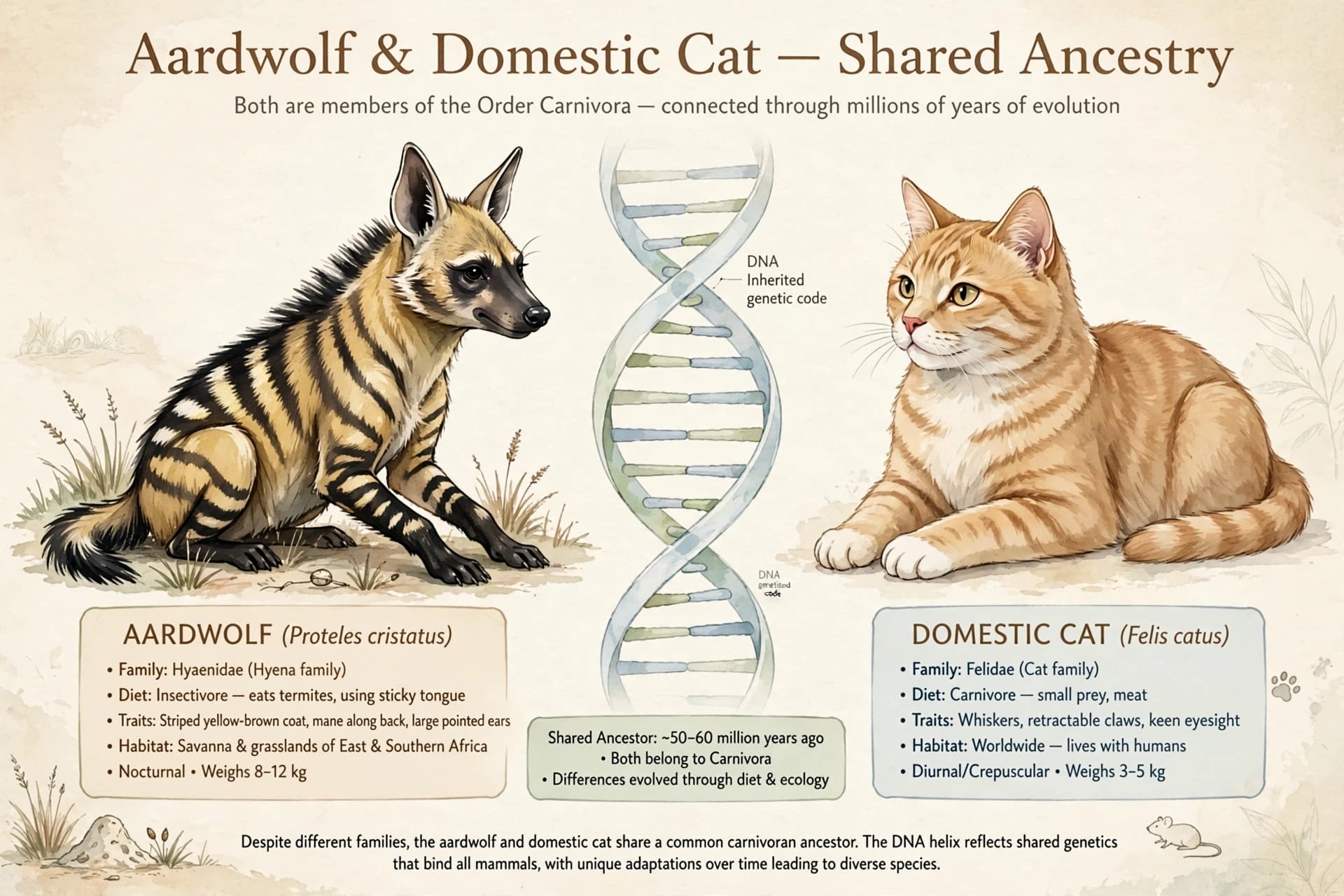
In the intricate tapestry of evolution, relationships are not always what they seem. The aardwolf, a small, striped mammal that feeds primarily on termites, appears outwardly distinct from the sleek predators of the cat family. Yet, beneath the surface, a genetic secret binds them closer than previously thought. Recent studies have revealed surprising similarities in the chromosome structures of aardwolves and cats, challenging our assumptions about their evolutionary divergence. This discovery invites us to look beyond appearance and appreciate the deep genetic connections that unite diverse forms of life.
The aardwolf (Proteles cristatus) belongs to the hyena family, Hyaenidae, which is part of the suborder Feliformia, or "cat-like" carnivores. While hyenas are more closely related to cats than to dogs, the aardwolf’s specialized diet and nocturnal habits set it apart. However, chromosomal analysis shows that its genome retains structural features remarkably similar to those of domestic cats and other felids. This conservation suggests a slow rate of chromosomal evolution in this lineage.
Chromosomes are the carriers of genetic information, and their structure can change over millions of years through fusions, fissions, and rearrangements. The fact that aardwolves and cats share similar chromosomal arrangements indicates that their common ancestor possessed a stable genomic architecture. This stability has persisted despite the divergent paths taken by these species, one becoming a termite-eating specialist and the other a versatile predator.
For geneticists, this finding provides valuable insights into the mechanics of evolution. It suggests that certain chromosomal configurations may be more resilient to change, preserving essential genetic functions. By comparing these structures, researchers can trace the evolutionary history of carnivores with greater precision, identifying key moments of divergence and adaptation. It is a map of life’s history written in DNA.
The study also highlights the importance of comparative genomics. By looking at a wide range of species, scientists can identify patterns that are invisible when studying isolated groups. The aardwolf, often overlooked due to its shy nature and niche diet, turns out to be a crucial piece in understanding the feliform radiation. It reminds us that every species has a story to tell about our shared past.
Public interest in such findings often stems from the surprise of unexpected connections. We tend to categorize animals by their behavior or appearance, but genetics reveals a deeper unity. The aardwolf’s similarity to cats is a reminder that nature is full of hidden links, waiting to be discovered by those who look closely. It fosters a sense of wonder and respect for the complexity of life.
Conservation efforts also benefit from this knowledge. Understanding the genetic diversity and evolutionary history of species like the aardwolf helps inform strategies for their protection. It ensures that we preserve not just individual animals, but the unique genetic heritage they represent. This holistic approach is essential for maintaining biodiversity in a changing world.
The discovery of chromosomal similarities between aardwolves and cats enriches our understanding of carnivore evolution. It highlights the stability of certain genetic structures and the deep connections between seemingly disparate species. As we continue to explore the genome, we uncover more threads that bind the web of life together.
AI Image Disclaimer: The images accompanying this article are AI-generated artistic interpretations of genetic structures and wildlife, not actual microscopic images of chromosomes or photographs of specific animals.
Sources: Journal of Heredity National Geographic ScienceDaily
Published by Banx Network. This article is part of the Banx decentralized media programme, powered by the BXE token on the XRP Ledger.