In the vast cathedral of the night sky, where stars hang like soft lanterns against a velvet canopy, couples are as old as time itself. Some move in graceful arcs, whispering secrets in light years. Others, bound by gravity’s gentle grip, trace a slow dance that can last billions of years. Among these cosmic pairs, ancient stars have much to teach us about the rhythms of creation and decay, and the European Southern Observatory’s Very Large Telescope (VLT) has offered a particularly intimate glimpse into one such duet, revealing details that read like a cosmic love letter inscribed in gas and dust.
At the heart of this celestial vignette lies a stellar couple catalogued as AFGL 4106, two massive, evolved stars that have shared their long journey through space. Like seasoned travelers whose path has wound through time, these stars are nearing the end of their lives. The VLT’s SPHERE instrument — designed to peer through blinding stellar glare and capture the faintest surrounding glow — has mapped the complex nebula of gas and dust they have shed over millennia. This shroud of material, like the lingering sweep of a dance partner’s gown, subtly traces the history of their interaction.
Light from stars can be overwhelming, akin to a great lighthouse beaconing across oceans of darkness, but SPHERE gracefully tames this radiance. It reveals not just the brilliance of the stars themselves but the delicate architecture of the nebula formed from their expelled matter. Rather than a perfect sphere — a shape one might imagine for simplicity — the nebula is sculpted and pulled into asymmetry, a testament to the ways in which these two ancient stars influence each other. In this interplay, the companion star does more than orbit; it shapes the very winds and outflows of its partner, like a second voice modulating the first.
Astronomers gently unpicked this narrative from light patterns, deducing physical properties and evolutionary stages from the interplay of gas and dust. Their analysis invites us to think about stellar life not as a solitary story, but as a duet — where forces intertwine, and endings are shaped by mutual presence. In the quiet vastness of space, even in endings, there is a kind of poetry.
And now, with precise measurements added to decades of study, the story of AFGL 4106 enriches our understanding of how massive stars live and how they depart, shedding their substance back into the cosmos. In this graceful act of stellar evolution, there is both closure and continuity — the nebula’s gas destined to seed future generations of stars and planets, a whisper of rebirth carried in the interstellar winds.
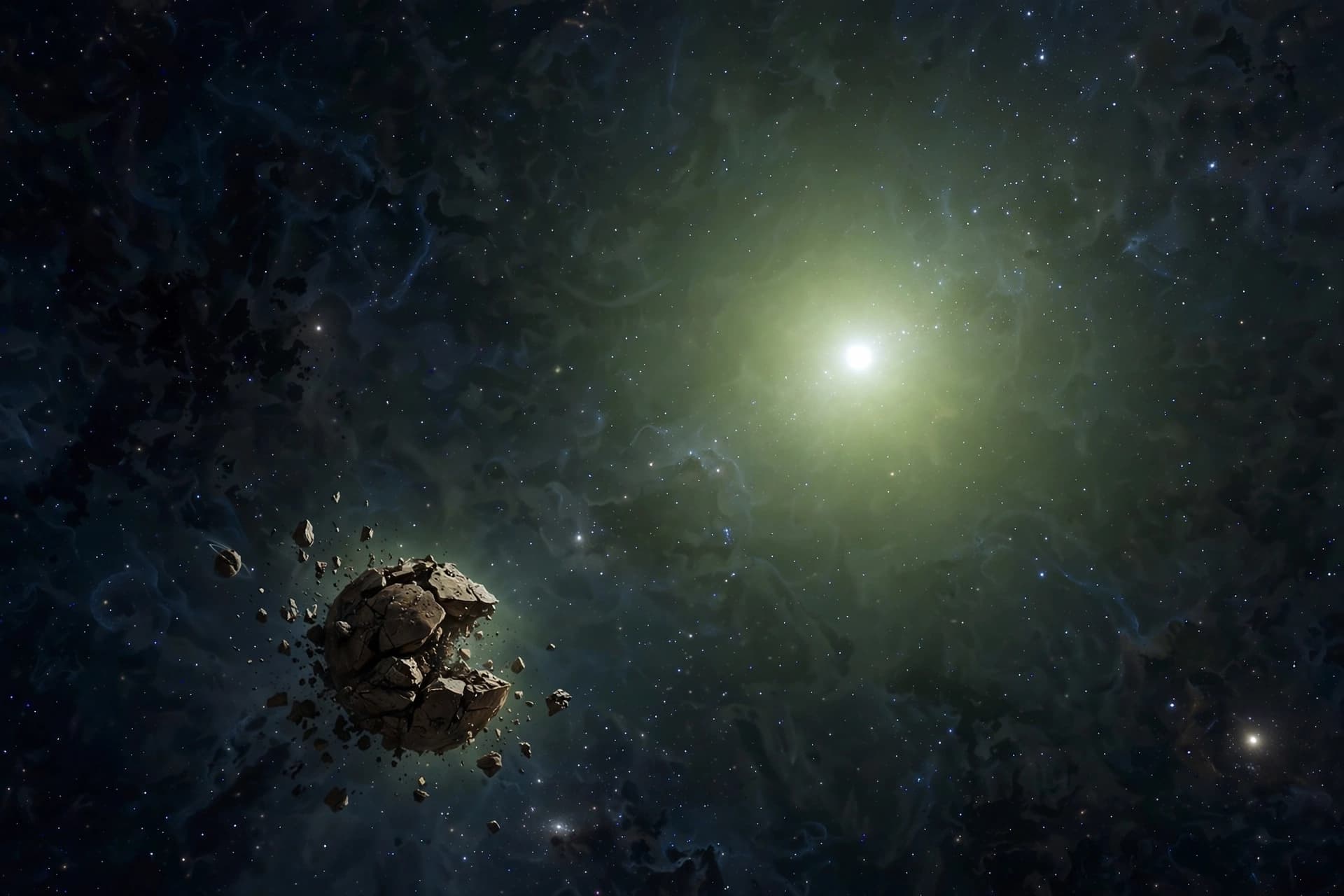
AI Image Disclaimer (rotated wording) Illustrations were produced with AI and serve as conceptual depictions.
Sources Sci.News ESO / Very Large Telescope Astronomy & Astrophysics Journal European Southern Observatory dissemination outlets Space & Astronomy News Outlets
Published by Banx Network. This article is part of the Banx decentralized media programme, powered by the BXE token on the XRP Ledger.