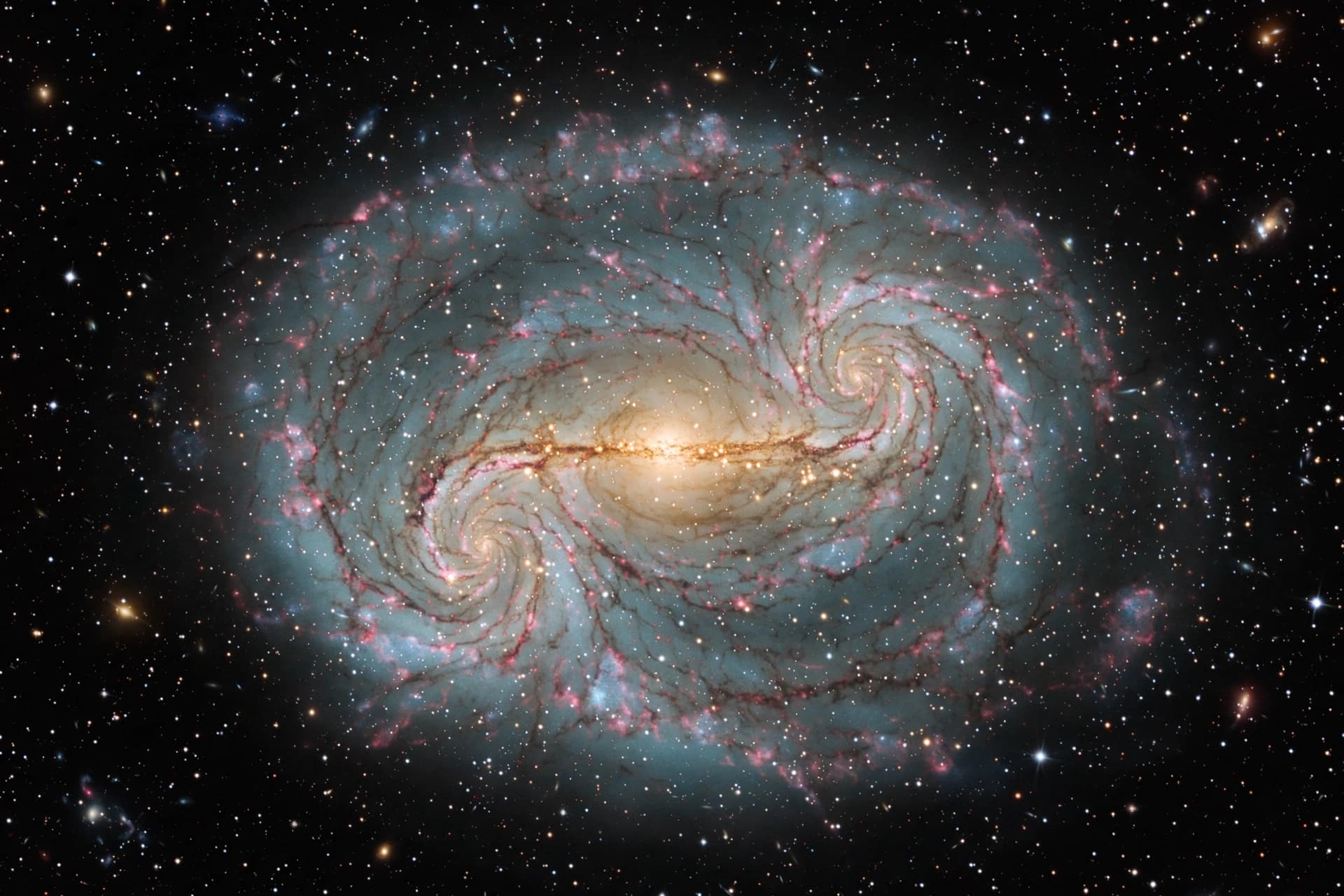
In the vast, velvet canvas of the night sky, the most profound secrets are often hidden in the faintest glimmers. For centuries, astronomers have scanned the heavens, drawn to the brilliant blaze of massive stars and the swirling grandeur of galaxies. Yet, it is the humble red dot—small, dim, and often overlooked—that may hold the key to understanding the universe’s most elusive mysteries. These tiny specks of light, scattered across the cosmic dark, are not merely background noise; they are potential gateways to discovering what lies beyond our current comprehension.
These "little red dots" refer to a class of celestial objects that have recently captured the attention of scientists using advanced telescopes like the James Webb Space Telescope (JWST). Initially dismissed as distant, ordinary galaxies or faint stars, closer inspection reveals anomalies in their brightness and spectral signatures. They appear disproportionately bright for their size, suggesting that something intense and energetic is happening within their compact cores.
One leading theory is that these objects harbor growing supermassive black holes. In the early universe, black holes may have formed and grown much faster than previously thought, feeding on surrounding gas and dust with voracious appetite. The radiation emitted from this accretion process could outshine the host galaxy itself, creating the appearance of a small, bright red dot. If true, this would rewrite our understanding of how black holes and galaxies co-evolve.
Another possibility is that these dots are the remnants of the first generation of stars, known as Population III stars. These ancient giants, composed almost entirely of hydrogen and helium, burned hot and fast before collapsing into black holes. Detecting their faint afterglows or the structures they left behind would provide a direct window into the cosmic dawn, the period shortly after the Big Bang when the first lights ignited.
The color red is significant, indicating that the light has been stretched by the expansion of the universe, a phenomenon known as redshift. This means these objects are incredibly distant, dating back billions of years. Studying them allows astronomers to peer back in time, observing the universe in its infancy. Each dot is a time capsule, preserving information about the conditions of the early cosmos.
Technological advancements have made this discovery possible. The sensitivity of modern infrared instruments allows scientists to detect faint signals that were previously invisible. By analyzing the spectrum of light from these dots, researchers can determine their composition, temperature, and distance. It is a meticulous process of deduction, piecing together clues from photons that have traveled across eons.
The implications are profound. If these red dots are indeed nascent supermassive black holes, it suggests that the seeds of today’s giant galaxies were planted much earlier than models predicted. It challenges the timeline of cosmic structure formation and invites new theories about the dynamics of the early universe. Science thrives on such surprises, where the unexpected leads to deeper understanding.
As surveys continue, more of these enigmatic objects are likely to be found. Each discovery adds a piece to the puzzle, helping to map the hidden architecture of the cosmos. The little red dots, once ignored, are now at the forefront of astronomical inquiry, promising to reveal the big stories written in the smallest details.
The little red dots of our cosmos serve as a reminder that greatness often comes in small packages. As we refine our tools and sharpen our gaze, these faint glimmers may illuminate the darkest corners of our universal history, revealing the monumental forces that shaped everything we see today.
AI Image Disclaimer: Please note that any accompanying visuals for this report are AI-generated representations intended to illustrate the context of the event.
Sources: NASA James Webb Space Telescope Team Nature Astronomy Space.com
Published by Banx Network. This article is part of the Banx decentralized media programme, powered by the BXE token on the XRP Ledger.