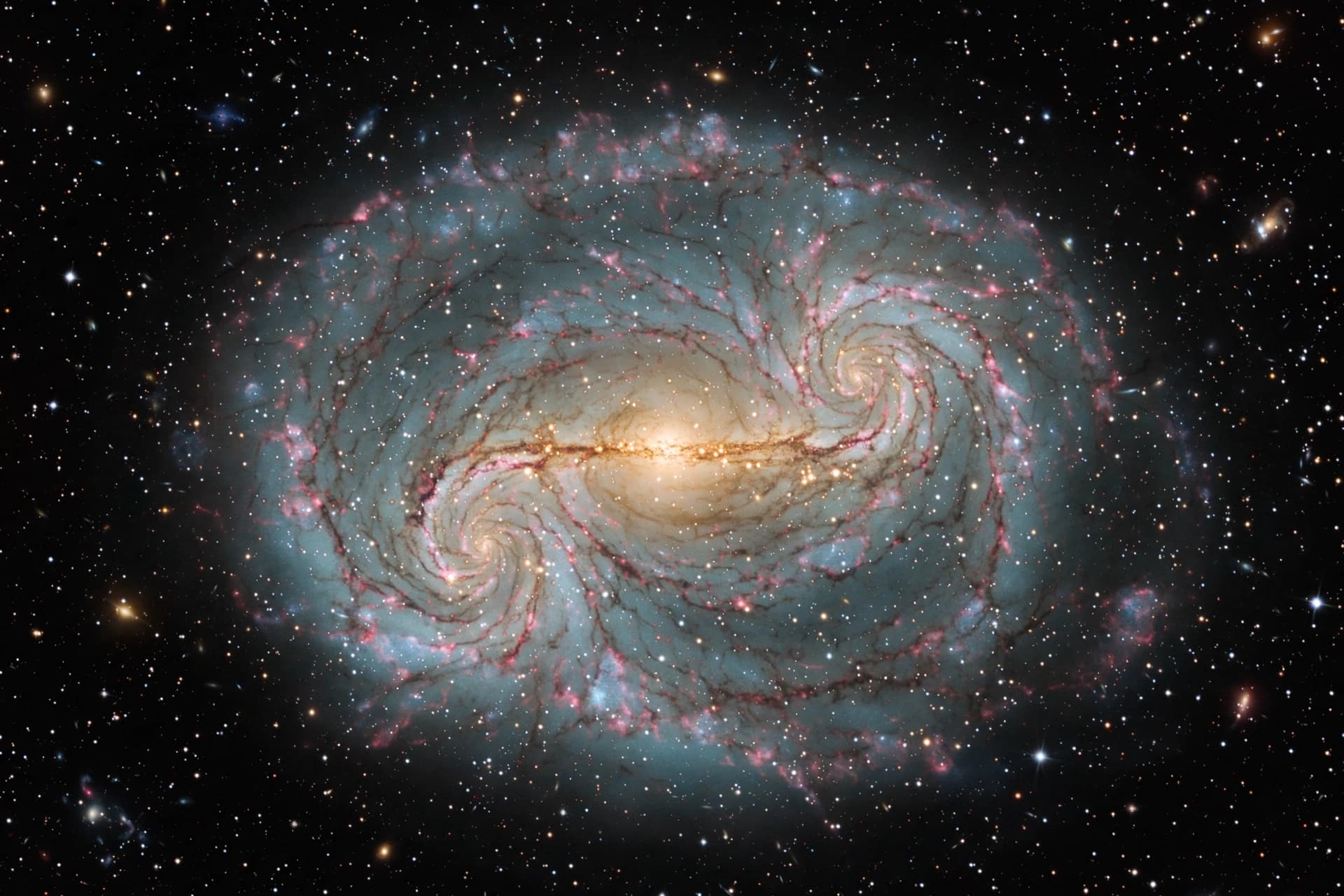
In the constellation of Orion, a red giant pulses with the rhythm of a dying heart. Betelgeuse, one of the most recognizable stars in the night sky, has long fascinated astronomers with its erratic brightness and immense size. Now, new observations have peeled back the layers of its atmosphere, revealing a surface that boils and churns like a pot of cosmic soup. These unprecedented images show giant bubbles of hot gas rising and collapsing, offering a intimate glimpse into the final stages of a superstar’s life. It is a view that is both beautiful and humbling.
Using the Atacama Large Millimeter/submillimeter Array (ALMA), scientists have captured the most detailed images yet of Betelgeuse’s surface. Unlike previous views that showed a relatively smooth disk, these images reveal a chaotic landscape of bright hotspots and dark cool regions. The "bubbles" are convective cells, similar to those seen on the Sun but vastly larger. Each cell can be bigger than the distance between the Earth and the Sun, demonstrating the sheer scale of this red supergiant.
The bubbling activity is driven by the transport of energy from the star’s core to its outer layers. As hot gas rises, it cools and sinks, creating a constant cycle of motion. This process is crucial for understanding how massive stars lose mass before they explode as supernovae. Betelgeuse is shedding material at a rapid rate, creating a complex envelope of dust and gas around it. The new images help explain how this mass loss occurs.
For decades, Betelgeuse has been a subject of intense study, especially after its "Great Dimming" in 2019-2020. At that time, astronomers debated whether the star was about to explode or if the dimming was caused by a dust cloud. The new data supports the dust theory, showing that surface activity can eject material that cools and obscures the light. It resolves a mystery while opening new questions about stellar evolution.
The resolution of ALMA allows astronomers to see features as small as 30 milliarcseconds, a level of detail that was previously impossible. This technological leap enables a deeper understanding of stellar physics. By studying Betelgeuse, scientists can refine models that apply to other red supergiants across the galaxy. It is a benchmark for understanding the end stages of massive stars.
The visual beauty of the images is striking. The orange and yellow hues represent different temperatures, with brighter areas being hotter. The irregular shape of the star, deviating from a perfect sphere, highlights the dynamic forces at play. It is a portrait of a star in turmoil, alive with energy even as it approaches its end.
Public interest in Betelgeuse remains high, fueled by its visibility and dramatic history. These new images provide fresh material for education and outreach, helping people connect with the processes that shape the universe. They remind us that the stars are not static points of light but dynamic, evolving worlds.
As Betelgeuse continues to age, it will eventually undergo a supernova explosion, lighting up the sky for weeks. While this event could happen tomorrow or in 100,000 years, the current observations give us a front-row seat to the prelude. We are witnessing the final acts of a cosmic drama.
The new images of Betelgeuse’s bubbling surface offer a profound look at the life cycle of stars. They remind us of the power and beauty of the universe, inviting us to appreciate the fleeting nature of even the most enduring lights in the sky.
AI Image Disclaimer: Please be aware that images used in this context are AI-generated and are intended for illustrative purposes only.
Sources: Space.com ESO (European Southern Observatory) ALMA Observatory Science News
Published by Banx Network. This article is part of the Banx decentralized media programme, powered by the BXE token on the XRP Ledger.