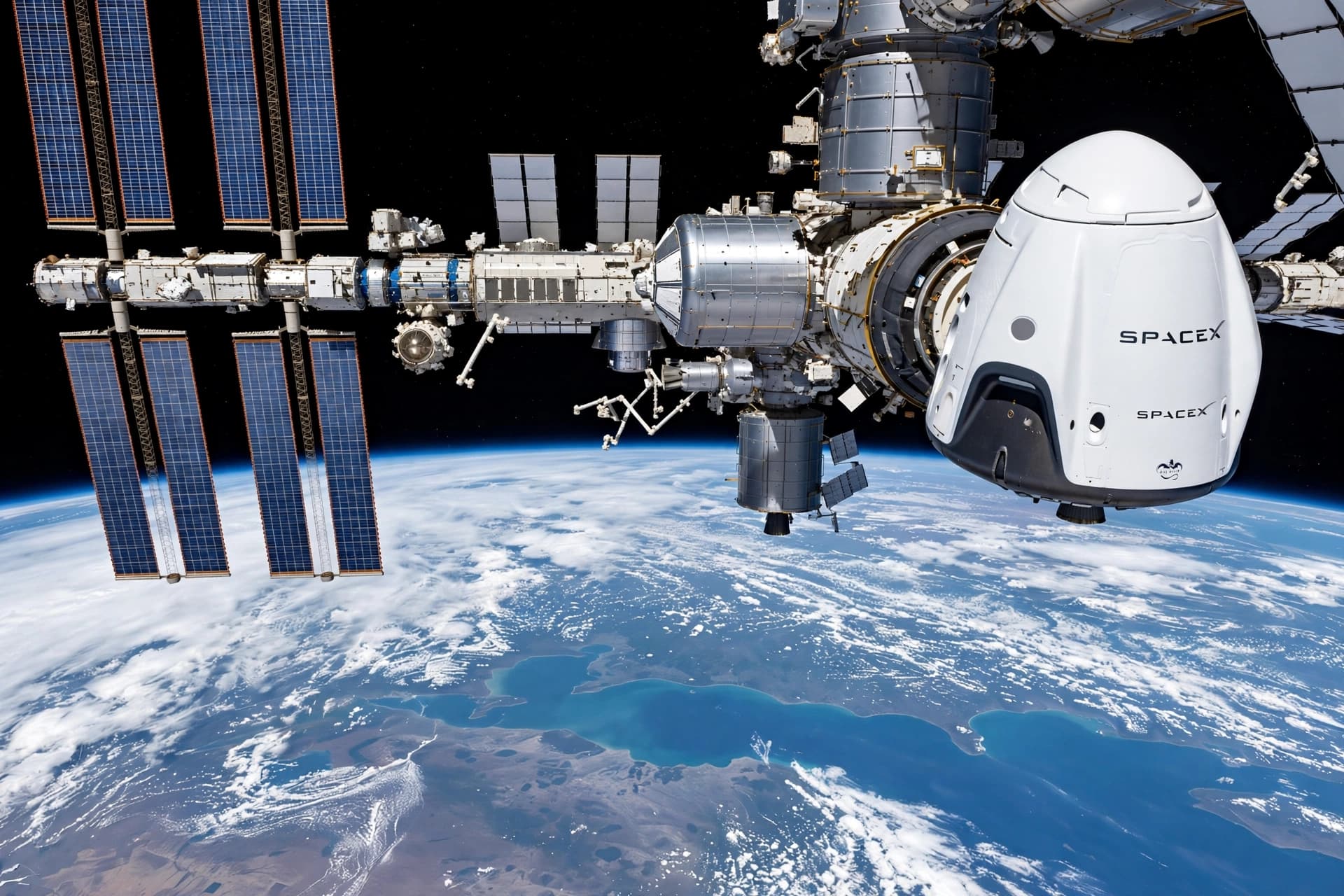
In the rapidly evolving landscape of the commercial space industry, few names carry as much weight as SpaceX. The company’s recent award of a 950 million contract from NASA for three additional crewed missions through 2030 serves as a powerful endorsement of its reliability and technological prowess. For investors, this deal is more than just a revenue boost; it is a signal of SpaceX’s entrenched position as the primary partner for American human spaceflight, reinforcing the case for its long-term economic viability.
The contract, part of NASA’s Commercial Crew Program, ensures that SpaceX will continue to ferry astronauts to and from the International Space Station using its Dragon spacecraft and Falcon 9 rockets. This continuity is crucial for both agencies, providing stability in planning and execution. For SpaceX, it represents a steady stream of income that supports ongoing operations and funds the development of next-generation vehicles like Starship. The 950 million figure, while substantial, is just one piece of a much larger financial puzzle.
SpaceX’s valuation has soared in recent years, reaching estimates of 1.8 trillion following its historic initial public offering in 2026. This growth is driven not only by government contracts but also by the success of its Starlink satellite internet service, which now accounts for the majority of the company’s revenue. The synergy between launch services and satellite communications creates a diversified business model that is resilient to market fluctuations and competitive pressures.
The NASA contract also highlights the strategic importance of public-private partnerships in space exploration. By relying on commercial providers, NASA can focus on deep-space missions and scientific research, while companies like SpaceX handle the routine logistics of low-Earth orbit. This division of labor has proven efficient and cost-effective, setting a precedent for future collaborations in lunar and Martian exploration.
For investors, the stability of government contracts provides a floor for revenue, reducing the risk associated with high-tech ventures. However, the real growth potential lies in SpaceX’s ability to expand its market share in global satellite launches and broadband services. The company’s reusable rocket technology has dramatically lowered the cost of access to space, making it a dominant player in an increasingly competitive industry.
The 950 million deal is a testament to SpaceX’s track record of success and its ability to meet stringent safety and performance standards. It reinforces confidence among stakeholders that the company can deliver on its ambitious promises, from colonizing Mars to providing global internet coverage. This confidence is reflected in the company’s stock performance, which has remained strong despite broader market volatility.
As SpaceX continues to innovate and expand, the rationale for investment becomes increasingly compelling. The combination of proven technology, diverse revenue streams, and strategic partnerships positions the company for sustained growth. The NASA contract is a clear indicator that the government sees SpaceX as an indispensable partner in the future of space exploration.
The award of a 950 million contract to SpaceX is a significant milestone that underscores the company’s critical role in the space industry. For investors, it offers a concrete reason to believe in the company’s long-term prospects. As SpaceX continues to push the boundaries of what is possible, its economic foundation remains solid, built on a legacy of innovation and reliable service.
AI Image Disclaimer: The visuals accompanying this article are AI-generated illustrations designed to represent the themes of space commerce and investment, not actual photographs of SpaceX facilities or financial charts.
Sources: Yahoo Finance, Sacra, Morningstar, Intellectia AI
Published by Banx Network. This article is part of the Banx decentralized media programme, powered by the BXE token on the XRP Ledger.