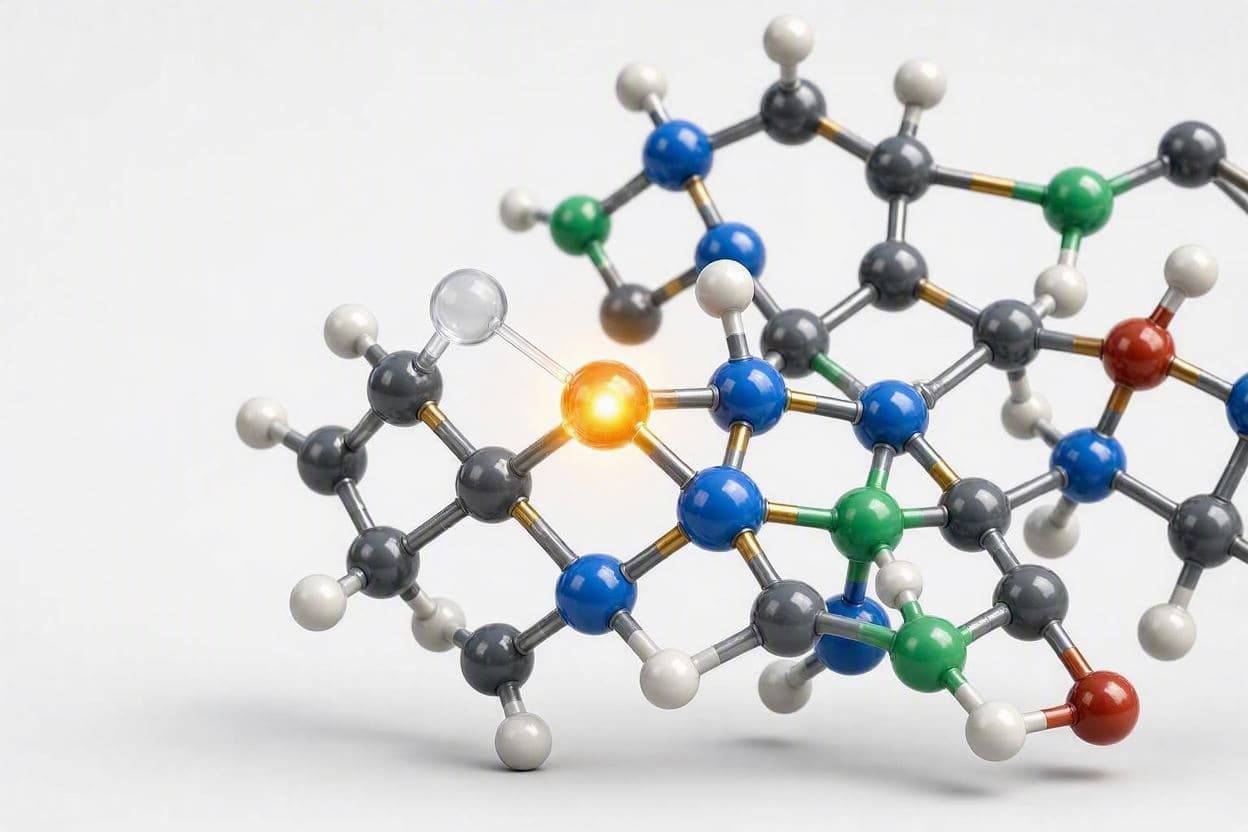
In the intricate world of molecular chemistry, structure is often destiny. For decades, scientists have sought to tweak the architecture of complex molecules to enhance their medicinal properties, a process akin to renovating a historic building without collapsing its walls. Recently, a revolutionary technique known as skeletal editing has emerged, allowing researchers to insert, delete, or swap individual atoms within a molecule’s core framework. This precision tool is not merely refining existing drugs but is fundamentally transforming how we understand and manipulate biological activity at the atomic level.
Skeletal editing differs from traditional synthetic methods, which often require building a molecule from scratch or making superficial changes to its outer edges. Instead, this approach targets the very skeleton of the compound, altering its ring structures or backbone while preserving its overall shape. By changing a carbon atom to a nitrogen or removing a single bridge in a cyclic structure, chemists can dramatically shift how a molecule interacts with biological targets. These subtle changes can enhance potency, reduce toxicity, or improve solubility, offering new life to compounds that were previously considered ineffective.
The implications for drug discovery are profound. Many natural products, such as morphine or quinine, have served as the foundation for modern medicines, but their complex structures have often been difficult to modify. Skeletal editing allows scientists to explore "chemical space" more efficiently, creating diverse libraries of analogs from a single starting material. This accelerates the search for optimal drug candidates, reducing the time and cost associated with bringing new therapies to market. It is a shift from brute-force synthesis to elegant, strategic modification.
Recent studies have demonstrated the power of this technique in addressing challenging medical conditions. For instance, researchers have used skeletal editing to modify antibiotics, enhancing their ability to penetrate bacterial cell walls. In other cases, the method has been applied to cancer treatments, where slight alterations in molecular geometry have led to improved binding with tumor-specific receptors. These successes highlight the versatility of skeletal editing across various therapeutic areas, from infectious diseases to oncology.
Beyond medicine, this technology is reshaping our understanding of structure-activity relationships. By systematically altering the core of a molecule, scientists can observe how each change affects its biological function. This data provides valuable insights into the mechanisms of drug action, helping to refine computational models and predictive algorithms. It is a feedback loop of discovery, where experimental results inform theoretical understanding, which in turn guides further synthetic efforts.
The development of new catalysts and reagents has been crucial to the success of skeletal editing. Iron-catalyzed carbene insertion and photochemical methods have enabled reactions that were once thought impossible, allowing for precise modifications under mild conditions. These advancements have expanded the scope of the technique, making it accessible to a wider range of chemical scaffolds. As the toolkit grows, so too does the potential for innovation in molecular design.
However, the complexity of these reactions requires careful control and expertise. The risk of unintended side reactions or structural collapse remains a challenge, necessitating rigorous optimization and analysis. Despite these hurdles, the field is advancing rapidly, with new methods being published regularly. The collaborative effort between organic chemists, computational scientists, and biologists is driving this progress, ensuring that skeletal editing becomes a standard tool in the laboratory.
As we look to the future, skeletal editing promises to unlock new possibilities in chemical biology. It offers a way to tailor molecules with unprecedented precision, aligning their properties with specific biological needs. In a world where personalized medicine is becoming increasingly important, the ability to customize molecular structures at the atomic level may well be the key to next-generation therapies.
AI Image Disclaimer: The visual representations included here are AI-generated illustrations designed to conceptualize molecular structures and are not actual scientific diagrams.
Sources: Journal of the American Chemical Society Science Nature Chemistry
Published by Banx Network. This article is part of the Banx decentralized media programme, powered by the BXE token on the XRP Ledger.