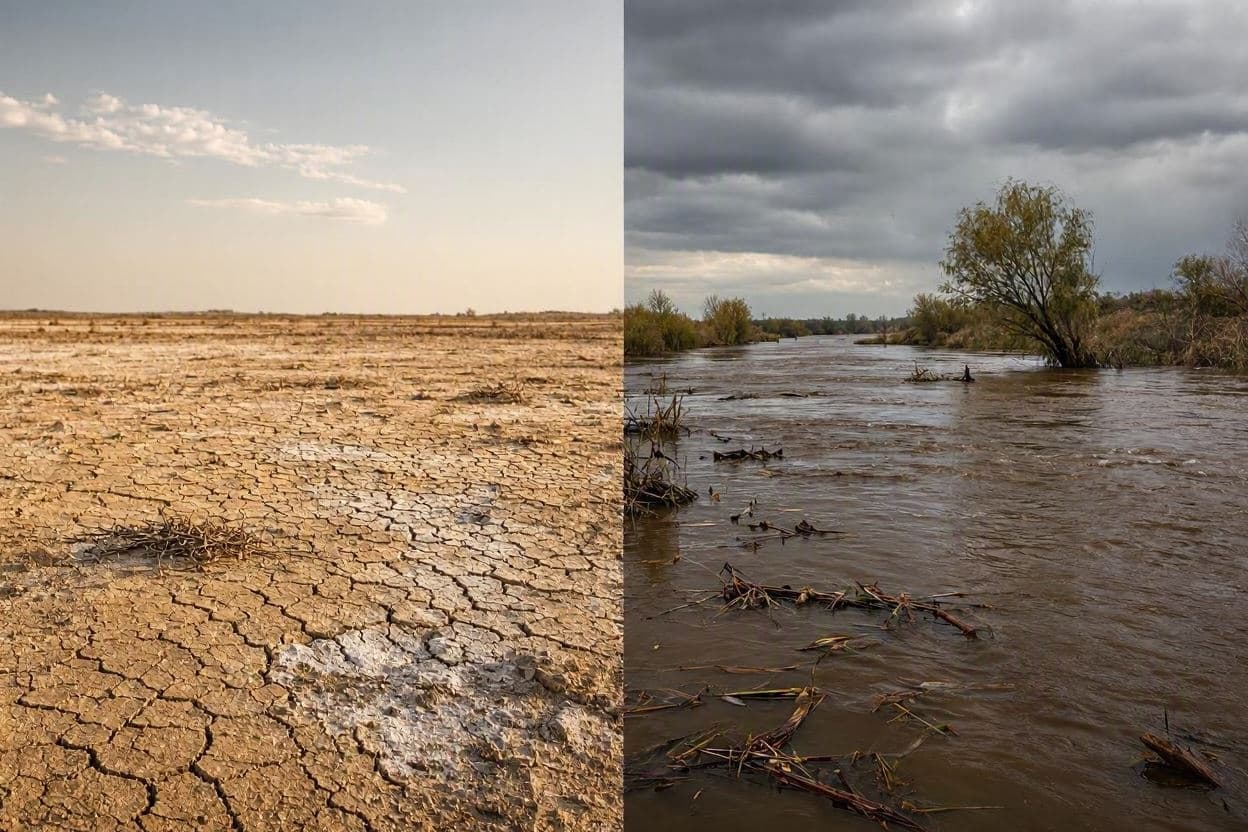
The ocean breathes, and when it exhales warmth into the atmosphere, the world feels the shift. El Niño, the warm phase of the Pacific’s natural climate cycle, has now reached "super" status, a designation that signals not just a weather pattern but a global reordering of atmospheric forces. As sea surface temperatures climb to historic highs, the ripple effects extend far beyond the tropics, promising a season of extremes that will touch lives from the rice paddies of Asia to the wheat fields of North America. It is a reminder of our planet’s interconnectedness, where a change in one corner reshapes the reality of another.
For regions like Southeast Asia and Australia, this intensification often brings a dry, stifling silence. The usual monsoon rains may falter, raising the specter of drought and wildfire. Farmers watch the skies with anxious eyes, knowing that water is the lifeblood of their harvests. In these places, the super El Niño is not an abstract concept but a tangible threat to food security and economic stability. The heat lingers, pressing down on communities already vulnerable to climate variability, demanding resilience and adaptation.
Conversely, across the Pacific, the Americas brace for a deluge. In parts of South America, particularly Peru and Ecuador, heavy rains can lead to flooding and landslides, disrupting infrastructure and displacing families. Further north, the southern United States may see increased precipitation, offering relief to drought-stricken areas but also bringing the risk of severe storms. This duality—dryness here, wetness there—illustrates the complex mechanics of El Niño, which redistributes moisture and heat in unpredictable ways.
The term "super" is not used lightly. It denotes an event of significant magnitude, comparable to the powerful episodes of 1997-98 and 2015-16. These past events left lasting impressions on global temperatures and weather patterns, and this current cycle promises to be equally influential. Scientists monitor the developments closely, using advanced models to predict regional impacts, though uncertainty remains a constant companion in climate forecasting.
For Canada, the effects are often subtle but meaningful. Winters may turn milder in the west, while the east could experience colder, snowier conditions. These shifts affect everything from heating bills to agricultural planning. Understanding these patterns helps communities prepare, whether by reinforcing flood defenses or adjusting planting schedules. Knowledge becomes a tool for mitigation, allowing society to navigate the changes with greater confidence.
The human cost of such climate phenomena is profound. Beyond the economic metrics, there are stories of struggle and survival. Fishermen in the Pacific find their catches diminished as warm waters drive fish deeper or elsewhere. Families in drought-prone regions face water rationing and crop failure. These personal narratives underscore the urgency of addressing climate vulnerability, not just through immediate response but through long-term sustainable practices.
As the world grapples with this super El Niño, international cooperation becomes essential. Sharing data, resources, and strategies can help mitigate the worst impacts. Global institutions play a key role in coordinating responses, ensuring that aid reaches those most in need. It is a test of our collective ability to care for one another in the face of natural forces that respect no borders.
In the end, the super El Niño is a powerful reminder of nature’s dominance. It invites humility and respect for the systems that sustain us. As we navigate the coming months of heat, rain, and drought, let us do so with awareness and compassion. May we learn from this cycle, strengthening our resolve to build a more resilient and harmonious relationship with our planet.
Note: The visual elements accompanying this article are AI-generated interpretations designed to reflect the global impact of climate patterns.
Sources: World Meteorological Organization (WMO), NOAA, CNN, Carbon Brief
Published by Banx Network. This article is part of the Banx decentralized media programme, powered by the BXE token on the XRP Ledger.