The night sky has always inspired curiosity, but modern astronomy increasingly transforms that curiosity into vast collections of measurable data. Recent developments from the DREAMS astronomical survey have demonstrated the scale of contemporary scientific exploration, with researchers releasing information on nearly 60 million stars for study by the global scientific community.
The DREAMS project was established to investigate dynamic and rapidly changing events throughout the universe. By observing enormous numbers of stars over extended periods, astronomers can identify patterns, variations, and unusual phenomena that might otherwise remain unnoticed.
The newly released catalog contains detailed observations of approximately 60 million stellar objects. This massive dataset provides researchers with opportunities to examine stellar behavior, galactic structure, and transient cosmic events in unprecedented detail.
Astronomical surveys have become increasingly important because modern telescopes generate enormous quantities of information. Individual researchers often cannot manually analyze every observation, making large-scale databases essential tools for scientific collaboration and discovery.
Scientists believe the DREAMS dataset may assist in identifying rare cosmic phenomena, including variable stars, gravitational events, and previously unknown astronomical objects. Such discoveries often emerge when researchers compare vast quantities of observational data over time.
The release also reflects a growing commitment to open scientific collaboration. By making information accessible to researchers worldwide, large astronomy projects encourage broader participation and accelerate the pace of discovery across institutions and countries.
Beyond professional astronomy, datasets of this scale contribute to public understanding of the universe. Educational institutions, citizen scientists, and independent researchers frequently benefit from access to information gathered through major observational programs.
The project demonstrates how advances in computing power have transformed astronomy. Sophisticated algorithms now help process and organize data volumes that would have been unimaginable only a generation ago, allowing researchers to focus on interpretation and analysis.
As astronomers continue exploring the catalog, the release of nearly 60 million stellar observations represents another milestone in humanity's effort to understand the cosmos. Each entry in the database may contain clues about the history, structure, and future evolution of the universe.
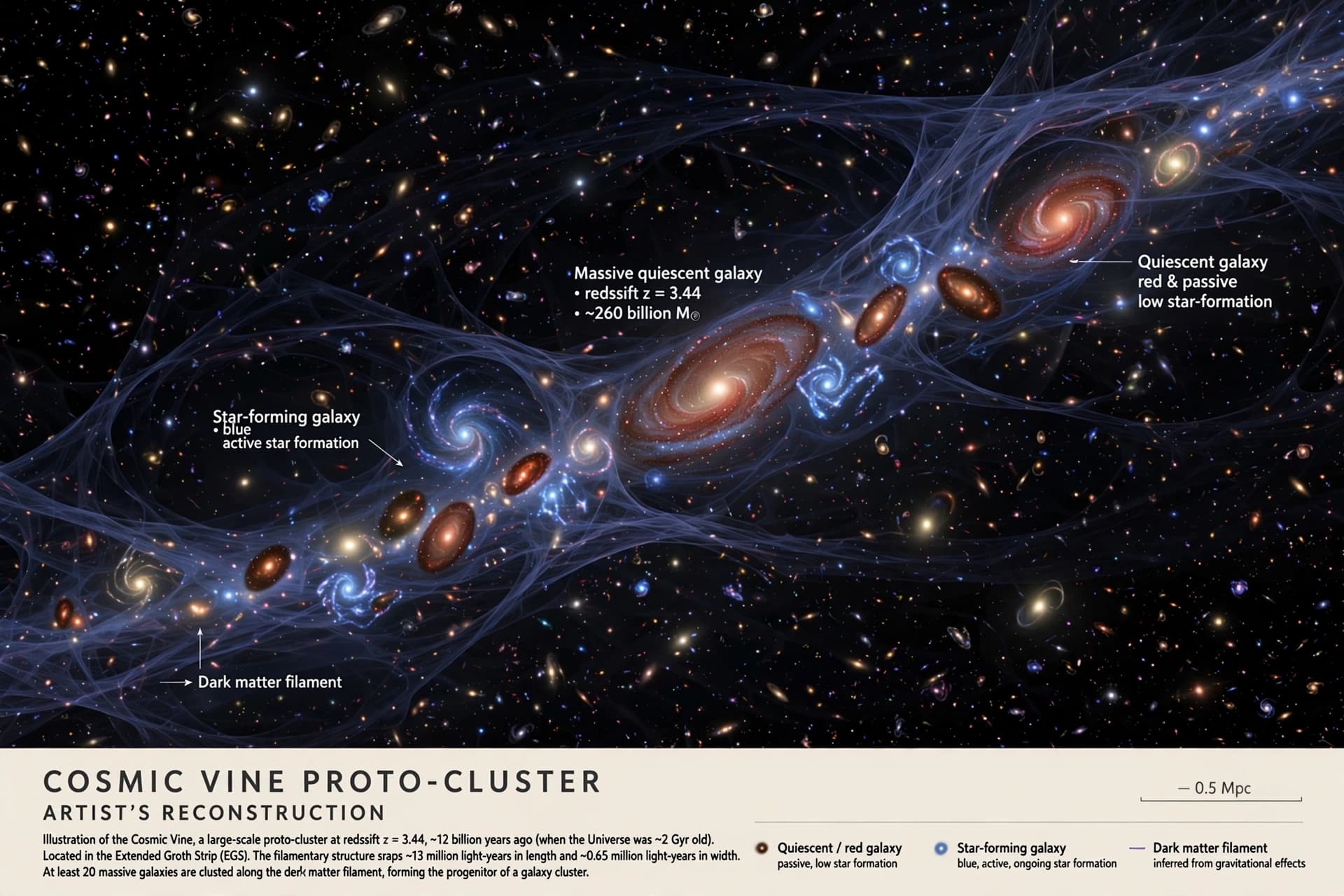
AI Image Disclaimer: Any accompanying image is AI-generated and intended solely as a visual representation of the scientific topic discussed.
Source Verification Check: arXiv, European Southern Observatory, Nature Astronomy, Sky & Telescope
Published by Banx Network. This article is part of the Banx decentralized media programme, powered by the BXE token on the XRP Ledger.