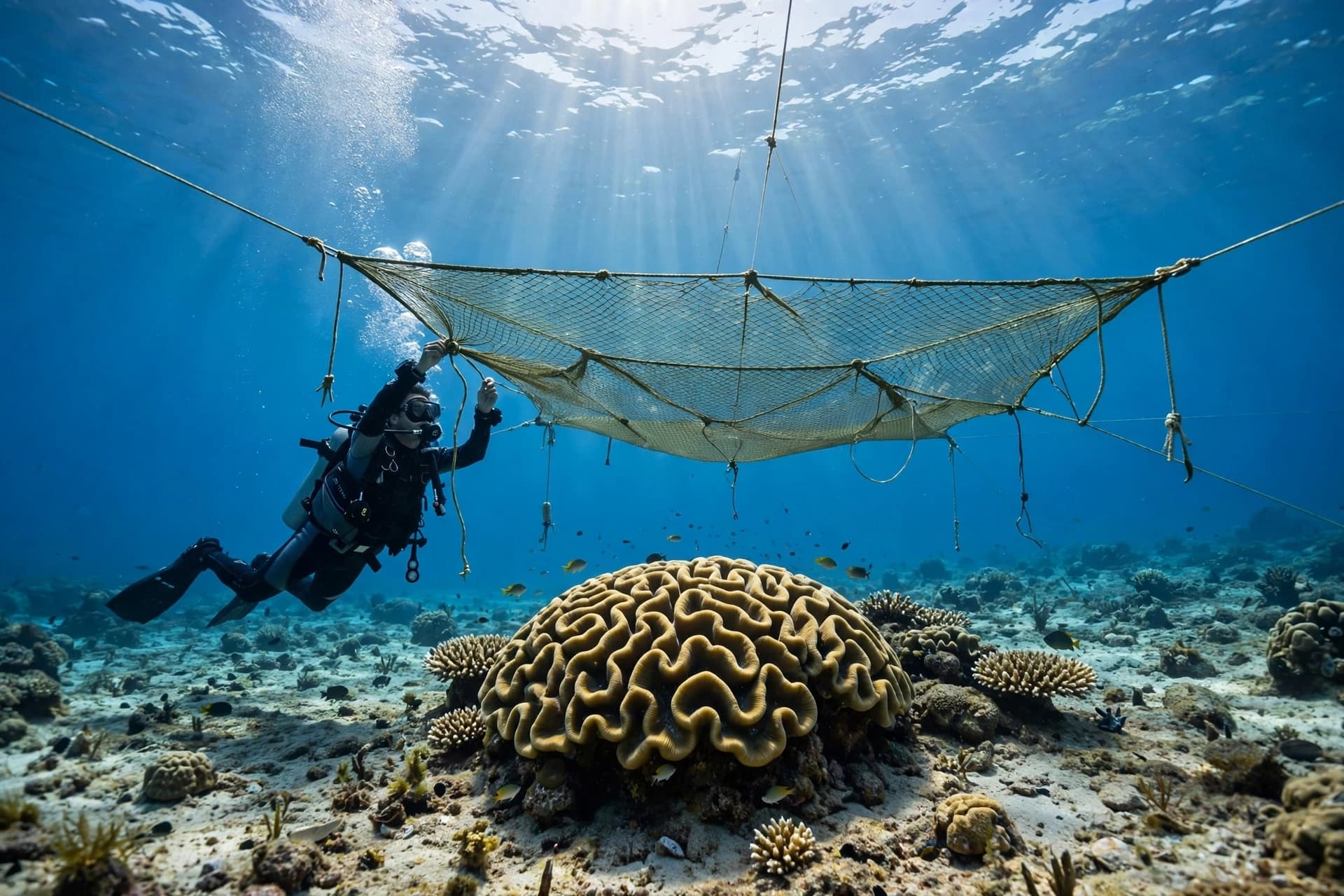
In the warm, shallow waters off the Florida Keys, a quiet experiment unfolded last summer. Divers descended with pipes, nylon cloth, and cord, assembling small structures above patches of brain coral. From the surface, they might have looked like ordinary umbrellas, the kind one might carry on a beach. But beneath the waves, they became something more—a temporary shield against the intensifying heat of a changing ocean .
The urgency behind this work is difficult to overstate. Coral reefs around the world are in crisis. When water temperatures rise too high for too long, corals expel the algae that live inside their tissues and provide them with most of their nutrition. Without those algae, the corals turn ghostly white and, if the stress persists, they starve and die . The summer of 2023 brought a marine heatwave to Florida that devastated branching corals and dealt a severe blow to brain corals at some inshore sites . The following year, researchers led by Dr. Karen Neely of Nova Southeastern University returned to the water with a question: could shade make a difference ?
They set up twenty custom-made shades over ten colonies of two brain coral species, Pseudodiploria clivosa and Colpophyllia natans, at Newfound Harbor. Another twenty corals served as controls . The shades floated about thirty centimeters above the seabed and reduced light by roughly sixty percent. Every two weeks, divers visited to track color changes and take tissue samples, monitoring the algae living within the corals .
The summer of 2024 brought the second-highest heat stress on record for that area. And yet, the shaded corals lost less color than expected. More remarkably, some of them regained color after the shades were installed—an indication that even corals already showing signs of bleaching could recover when the light stress was eased .
The results come with important caveats. The unshaded corals also fared better than anticipated, and none of the corals in either group died. Researchers believe this may be because the previous year's extreme heat had left surviving corals dominated by a particularly heat-tolerant species of algae called Durusdinium . The study was also limited in scale, and the scientists could not install the shades until after water temperatures had already risen .
Dr. Neely has been candid about these limitations. Shading, she notes, is not a cure for coral reefs. It offers temporary protection on small scales, and its use would require difficult decisions about which corals are worth saving . There may also be a threshold of thermal stress beyond which no amount of shade can help .
Yet the experiment offers something valuable: proof that a simple idea, carefully applied, can make a measurable difference. As the oceans continue to warm, such small interventions may buy time for the most vulnerable species while the larger work of addressing climate change continues.
Note: The visual content accompanying this article is AI-generated.
Sources: EurekAlert!, Gizmodo, BBC Wildlife Magazine, Eos, Scimex, Gazeta.Ru
Published by Banx Network. This article is part of the Banx decentralized media programme, powered by the BXE token on the XRP Ledger.