For an economy built around the movement of energy, changes in production can travel quietly through almost every part of the national landscape. A decline that begins at industrial facilities can eventually appear in trade figures, output measurements and broader economic statistics. Qatar’s first-quarter figures have now captured that effect, with the economy contracting 7% from a year earlier as energy production fell sharply amid regional disruptions.
The contraction marks a significant change for one of the world’s leading liquefied natural gas exporters. Qatar’s energy sector has long provided the foundation for its international economic position, making developments in production and exports particularly important to the country’s overall performance. The latest figures show how closely national growth remains connected to the physical movement of energy.
According to Reuters, the first-quarter contraction was primarily driven by a significant decline in energy production. The weakness came as disruptions associated with the wider Middle East conflict affected the country’s energy industry. For Qatar, where LNG production is central to economic activity and export revenues, interruptions in that sector can have consequences extending far beyond individual facilities.
The timing is important because Qatar has spent years developing itself not only as an energy exporter but also as a broader regional business and investment center. New infrastructure, services and international projects have gradually added layers to the economy. Yet the first-quarter data demonstrates that energy remains a powerful current underneath that diversification.
The impact is particularly meaningful in the context of Qatar’s role in global LNG markets. Before the latest disruptions, the country accounted for roughly one-fifth of global LNG supply, according to The National. That position means changes in Qatari production can be felt not only domestically but also among energy buyers and trading partners abroad.
Regional transportation conditions have added another dimension. LNG exports from Qatar depend heavily on maritime routes through the Gulf, including the Strait of Hormuz. Disruptions to shipping through that strategic waterway have complicated the movement of energy cargoes and added uncertainty to an already pressured supply chain.
For businesses inside Qatar, the economic contraction creates a different kind of signal. A 7% decline in quarterly GDP does not mean every company or industry experienced the same level of weakness, but it does illustrate how a major energy shock can influence the wider economy. Services, logistics, construction and other sectors operate within an environment shaped by the availability of energy revenues and international trade.
The figures also arrive at a time when global energy markets remain sensitive to supply disruptions. Buyers in Europe and Asia have been watching Qatar’s production and shipping situation closely, while alternative suppliers and routes have become increasingly important. The resulting adjustments illustrate how a disruption in one major exporting country can gradually reshape decisions across international markets.
Qatar’s first-quarter contraction therefore offers more than a single economic statistic. It provides a snapshot of an energy-producing nation navigating an unusually difficult period, where production capacity, maritime access and global demand intersect. The coming quarters will show how quickly output can recover and how much the broader economy can absorb the effects of the disruption.
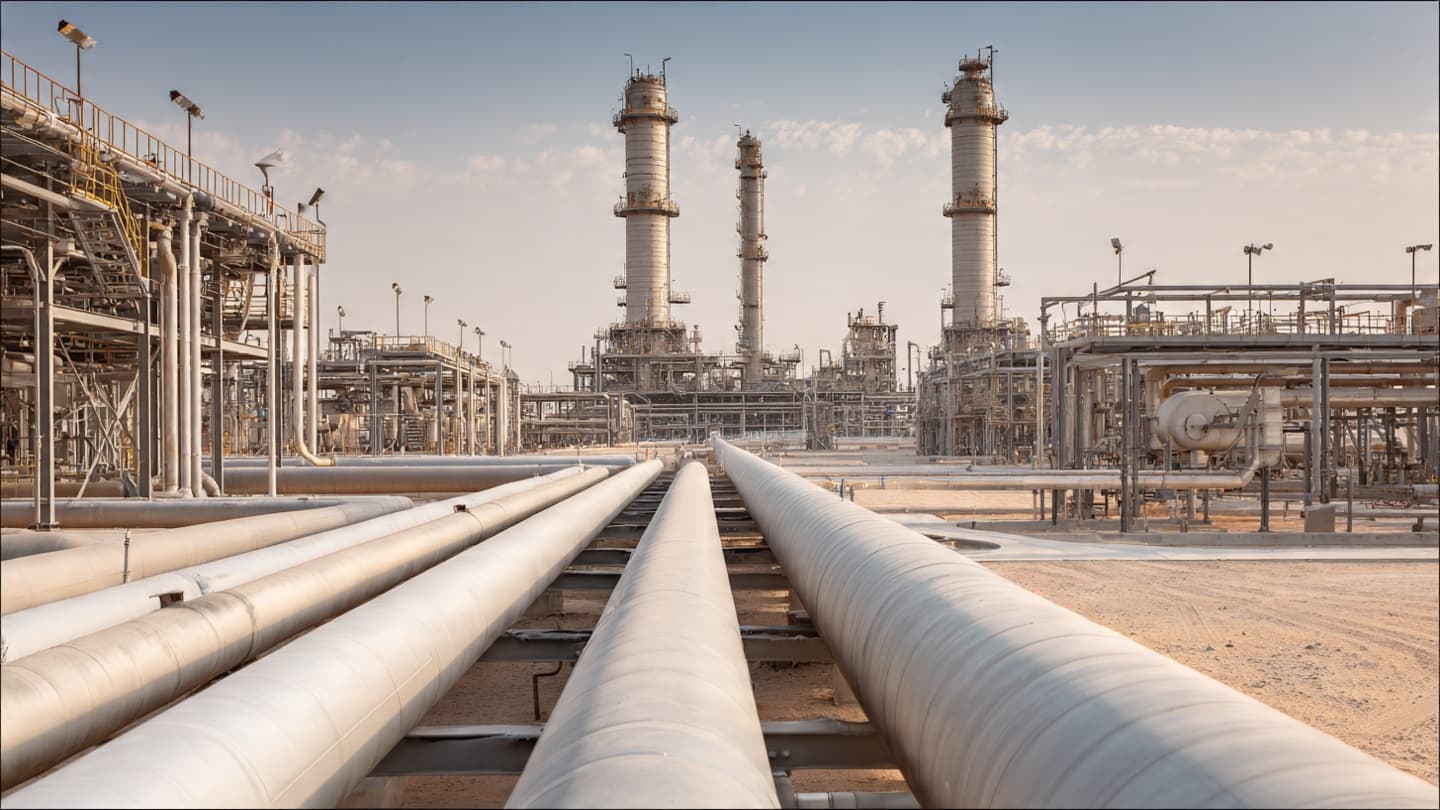
AI Image Disclaimer The illustrations accompanying this article are AI-generated visual representations. They are intended to depict the general economic and energy context and do not represent actual photographs of events described.
Published by Banx Network. This article is part of the Banx decentralized media programme, powered by the BXE token on the XRP Ledger.