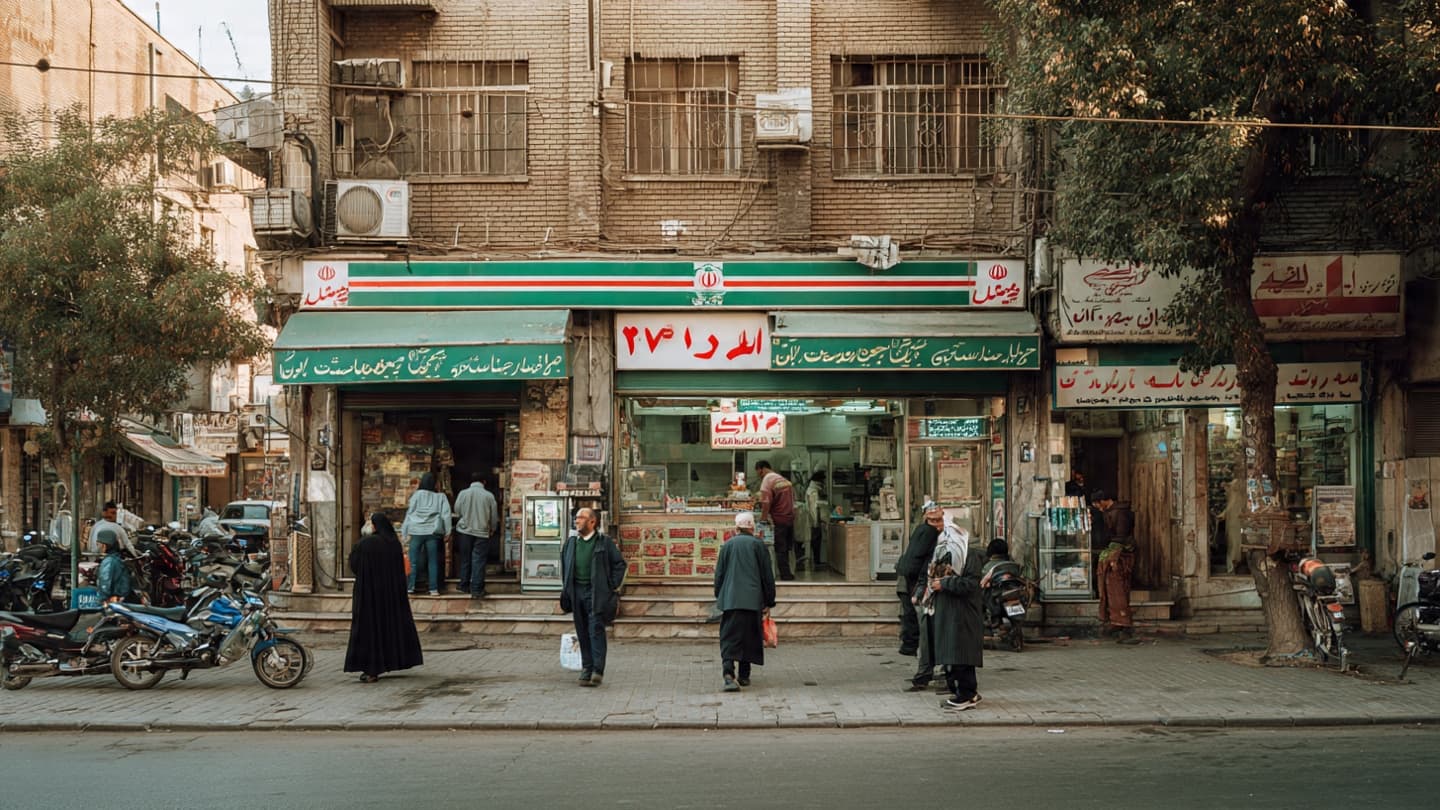
In Tehran, the value of a currency can sometimes feel more immediate than the numbers displayed on an economic report. It appears in shop windows, import invoices and conversations about the price of everyday goods. When the rial moves sharply, the change travels quickly through the economy.
The Iranian rial recently fell beyond 2.2 million per U.S. dollar on unofficial markets, according to Reuters, marking another record low for the currency. The decline has occurred alongside intensifying financial and trade pressures facing the country.
The weakness of the rial has coincided with extremely high inflation. Reuters reported that Iran’s 12-month average inflation rate had reached 69.9 percent, while inflation for food, beverages and tobacco was running at substantially higher levels.
For businesses, a falling currency complicates almost every decision involving imported products or materials. Companies must account for exchange-rate changes when purchasing goods from abroad, while distributors face uncertainty over whether the next shipment will cost significantly more than the previous one.
The effect is particularly visible in imported consumer products and industrial inputs. As foreign currency becomes more expensive in rial terms, businesses may either absorb higher costs, raise prices or reduce purchases. None of those choices offers an easy path when customers are themselves dealing with rapidly changing household expenses.
The pressure is also connected to Iran’s reduced access to foreign currency. Reuters reported that falling oil exports have weakened one of Tehran’s major sources of external revenue, while restrictions on financial transactions have made it more difficult to access international payment channels.
Iran’s central bank has sought to reassure domestic markets. Governor Abdolnaser Hemmati said the country still had sufficient foreign-currency reserves and that the central bank was prepared to inject as much as $2 billion into the foreign-exchange market to manage volatility. He also acknowledged that sanctions and the maritime blockade had created economic difficulties.
The contrast between official assurances and market behavior illustrates the complexity of currency management during a period of severe external pressure. Central-bank intervention can provide liquidity and temporarily moderate volatility, but sustained currency weakness also depends on factors such as export revenues, import demand, inflation expectations and confidence in the financial system.
The broader economy is therefore facing several pressures at the same time. Oil exports have fallen, access to foreign finance has narrowed and the cost of imported goods has risen. Reuters also reported that employment conditions had weakened, adding another dimension to the strain on household purchasing power.
The rial’s latest decline is consequently more than a currency-market statistic. It is part of a larger economic adjustment in which energy revenues, trade routes, foreign exchange and household prices have become tightly connected. For Iran, stabilizing the currency will depend not only on interventions inside the financial system, but also on whether the channels that bring foreign currency into the economy can regain some room to operate.
AI Image Disclaimer The images described below are AI-generated representations intended to illustrate the economic context. They are not authentic photographs of Iranian currency markets, businesses or individual consumers.
Sources Reuters Central Bank of Iran Kpler Iranian official statistics cited by Reuters
Published by Banx Network. This article is part of the Banx decentralized media programme, powered by the BXE token on the XRP Ledger.