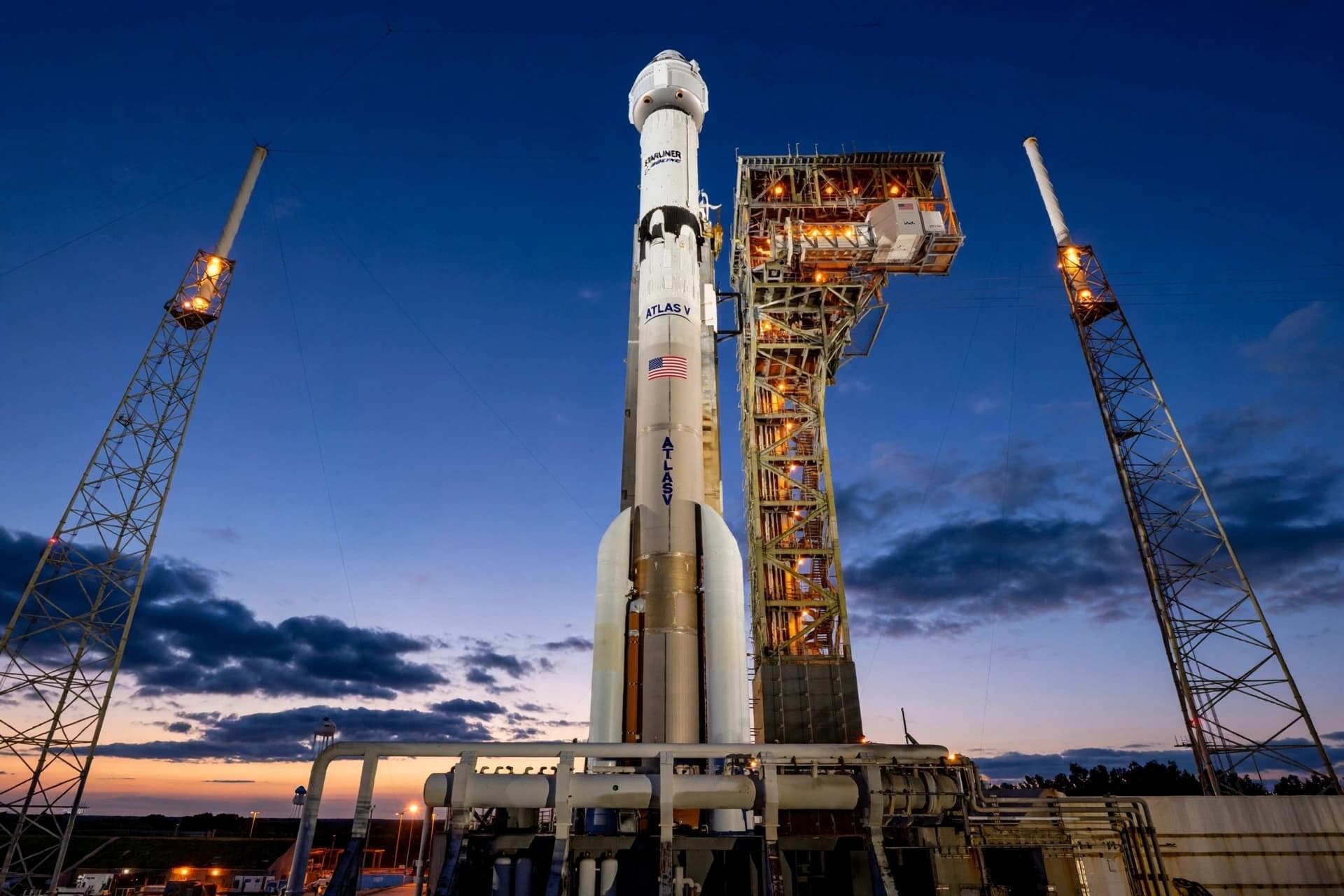
There is a particular kind of tension that comes when a second chance is also a last chance, when the margin for error has narrowed to almost nothing and the only way forward is through. Boeing’s Starliner spacecraft has been grounded since its 2024 crewed test flight ended not with a triumphant return but with two astronauts stranded at the International Space Station for nine months. Now, NASA has laid out a path to bring Starliner back—and the agency has little choice but to hope it works.
NASA Administrator Jared Isaacman announced Monday that Starliner’s next flight will be uncrewed and will launch no earlier than December, with a crewed mission potentially following in mid-2028 . The uncrewed mission, designated Starliner-1, will serve as an engineering evaluation to test fixes to the spacecraft’s propulsion system before astronauts are allowed back aboard . The stakes are difficult to overstate.
The path to this point has been long and painful. In June 2024, Starliner launched NASA astronauts Butch Wilmore and Suni Williams to the ISS on what was expected to be a week-long mission. Instead, five of the spacecraft’s thrusters failed, helium leaks developed, and NASA ultimately determined the capsule was too risky to bring the crew home . Wilmore and Williams returned on a SpaceX Dragon capsule nine months later, and NASA later classified the mission as a Type A mishap—its most severe category .
The investigation that followed identified the root causes: valve poppets inside the service module thrusters had extruded under thermal and mechanical stress, and crew module thrusters had corroded from residual hydrazine interacting with atmospheric carbon dioxide . Boeing has implemented thermal protections and adjusted seal materials, but a full redesign of the poppet valve will not be ready until the crewed vehicle . Starliner-1 will test the interim fixes; Starliner-2 will carry astronauts once the permanent redesign is complete.
What makes this moment particularly urgent is that NASA is running out of alternatives. SpaceX’s Crew Dragon is currently the only operational American vehicle capable of carrying astronauts to and from the ISS, but SpaceX has made clear it intends to retire Dragon as it shifts focus to Starship . NASA purchased three additional Dragon missions earlier this month for $946 million, but that only extends the timeline, it does not replace the capability . The agency’s goal has always been to have two independent crew transport systems. Right now, it has one.
NASA is also preparing for a transition beyond the ISS, which is slated for decommissioning in the early 2030s. Commercial space stations being developed by private companies will need reliable taxi service, and Starliner is part of that future planning . The agency has committed an additional $359 million to Starliner upgrades and certification of United Launch Alliance’s Vulcan rocket, which will replace the retiring Atlas V as Starliner’s launch vehicle .
Astronaut Woody Hoburg, who will command the first crewed Starliner mission, acknowledged the weight of the moment. He praised Wilmore and Williams as “American heroes” and said he was “deeply humbled to follow in their footsteps” . The road back to crewed flight is not short, and the technical work is not finished. But for now, NASA and Boeing have a plan, a timeline, and a spacecraft waiting in a hangar for its chance to prove it can fly safely.
AI Image Disclaimer: The visuals in this article were generated by artificial intelligence and are for illustrative purposes only.
Sources: Gizmodo, CNN, Space Policy Online, Aerospace Global News, AP News
Published by Banx Network. This article is part of the Banx decentralized media programme, powered by the BXE token on the XRP Ledger.