There is something quietly generous about the night sky in autumn—the way it asks nothing of us but a moment of looking up, and in return offers streaks of light that have traveled for centuries to reach our eyes. This October, that generosity arrives twice.
The Draconid meteor shower peaks on the night of October 8, followed by the Orionids on October 21. The Draconids, named for the constellation Draco, are the debris of Comet 21P/Giacobini-Zinner, a space rock just over a mile in diameter. The Orionids, radiating from Orion, are fragments of Halley’s Comet—the same comet that has been observed by humans for more than two millennia .
The Draconids are the smaller of the two, producing only a few meteors per hour under most conditions. But they offer an unusual convenience: they begin soon after darkness falls, rather than in the early morning hours. This year, the timing is particularly favorable. A new moon on October 10 means the skies around the peak will be dark, with little moonlight to obscure even faint meteors .
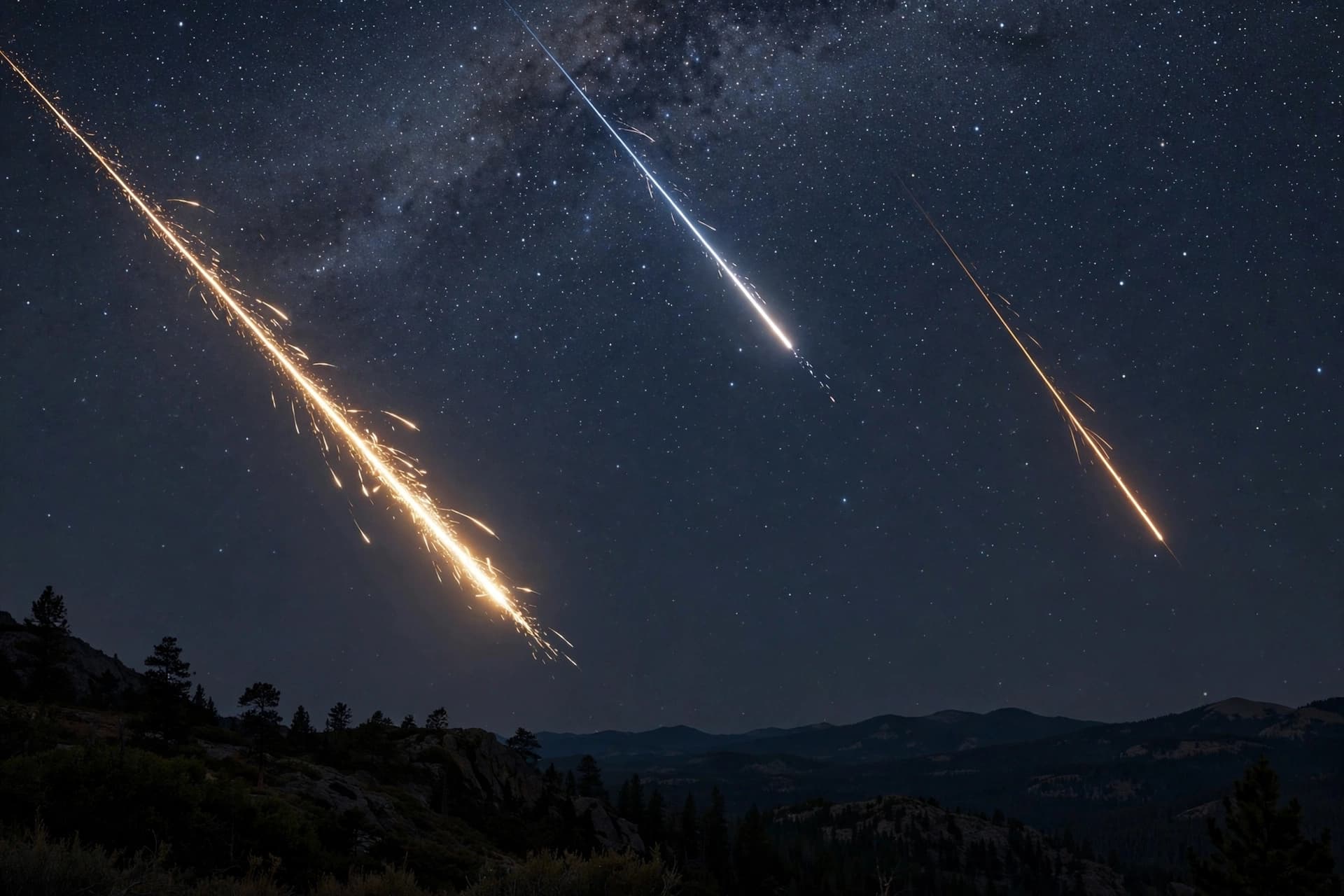
The Orionids are the more active shower, generally offering a better chance of spotting shooting stars. NASA describes them as one of the most beautiful showers of the year, known for their speed—41 miles per second—and for the long trains of light they leave behind, lasting anywhere from a few seconds to minutes. But this year, a bright waxing gibbous moon will wash out some of the fainter meteors. The best chance to see them will come in the hours before dawn, after the moon has set .
For both showers, the advice is the same: find the darkest location you can, give your eyes about thirty minutes to adjust, and look across a wide area of the sky. You don’t need to look directly at the radiant—the meteors can streak anywhere .
If you miss these two showers, October offers more. The Southern Taurids, known for their exceptional brightness and nicknamed “Halloween fireballs,” are active through the month, with a first peak on October 14 . And on the dark night of October 10, the Milky Way’s glittering core will be visible after nightfall—one of the last chances this year to see it before it disappears behind the sun until February .
For now, the sky has offered its invitation. All that remains is to step outside and wait.
AI Image Disclaimer: Visuals in this article are AI-generated and do not depict actual sky events.
Sources: Scientific American, NASA Science, Time and Date, Discover Magazine, RRI.co.id, Fresno Bee
Published by Banx Network. This article is part of the Banx decentralized media programme, powered by the BXE token on the XRP Ledger.