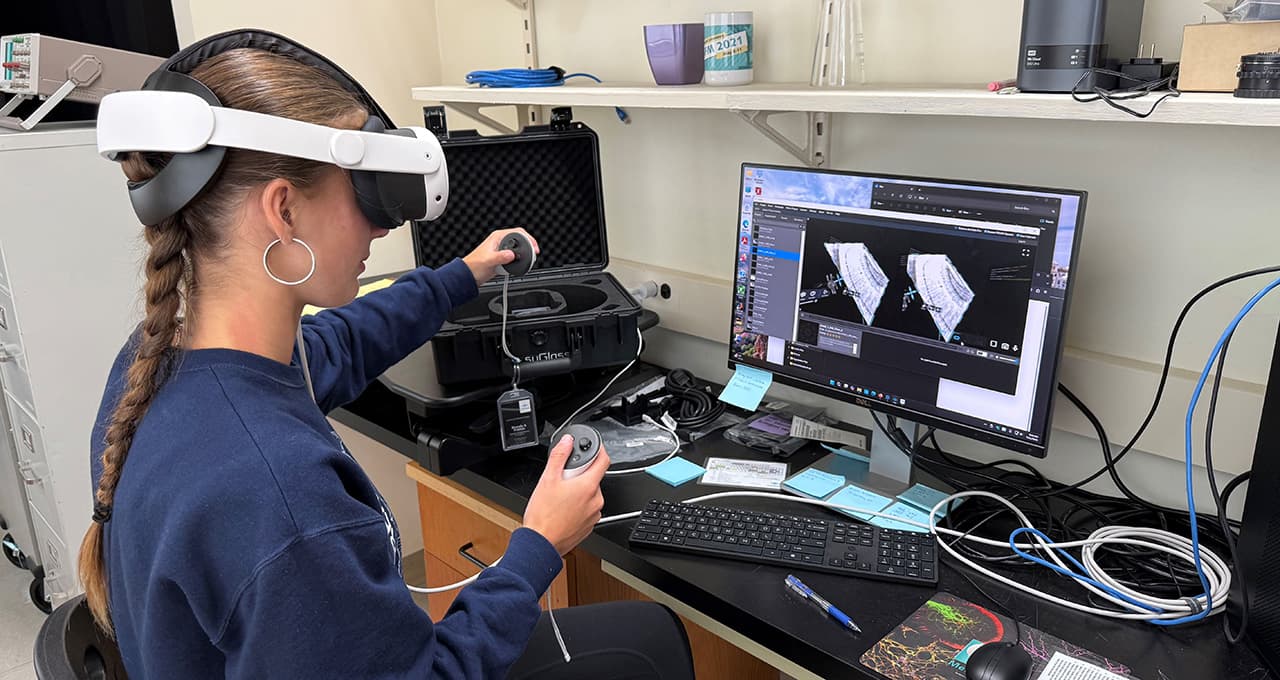
NVIDIA is pushing the boundaries of neuroscience by applying its RTX GPU technology and Virtual Reality (VR) tools to one of the most complex challenges in biology: understanding how human memory forms, functions, and fails. According to NVIDIA, their technology is now helping Marine Biological Laboratory (MBL) research teams analyze terabytes of hippocampus imagerydata volumes once considered too large and complex to explore efficiently. The hippocampus is a critical brain structure responsible for learning and memory. Studying it produces enormous datasets, often consisting of ultra-high-resolution images captured over time. Traditional analysis methods struggle with this scale, slowing discoveries and limiting insight. NVIDIA’s RTX-powered visualization changes that equation. How the Technology Works Using RTX GPUs, researchers can render massive 3D brain datasets in real time. Combined with VR headsets, scientists can literally step inside the data—rotating, zooming, and exploring neural structures with precision that flat screens cannot offer. This immersive approach turns overwhelming datasets into interactive environments. Why This Matters Enables rapid navigation of terabytes of biological data Speeds up identification of neural patterns linked to memory Improves understanding of how memories deteriorate in disease Reduces analysis time from weeks to hours Real-World Impact By accelerating how researchers interpret hippocampal imagery, NVIDIA’s technology supports faster progress in studying Alzheimer’s disease, dementia, PTSD, and other memory-related conditions. Insights that once took years to uncover can now emerge far more quickly. Beyond Gaming and Graphics This development highlights NVIDIA’s expanding role beyond gaming and AI hype. RTX and VR are becoming essential tools in medical research, neuroscience, and education, proving that advanced graphics technology can directly contribute to human health and scientific discovery. The Bigger Picture As biological data continues to grow exponentially, tools that allow humans to intuitively interact with massive datasets will define the next era of research. NVIDIA’s work with MBL shows how computing power, visualization, and immersive technology together can unlock knowledge hidden deep within the brain.
Published by Banx Network. This article is part of the Banx decentralized media programme, powered by the BXE token on the XRP Ledger.