Key Highlights
- Nearly 1 billion celestial objects cataloged by Euclid telescope.
- Over 900 million galaxies and 15,000 strong gravitational lens candidates identified.
- Data release marks the largest space-based image dataset in astronomy.
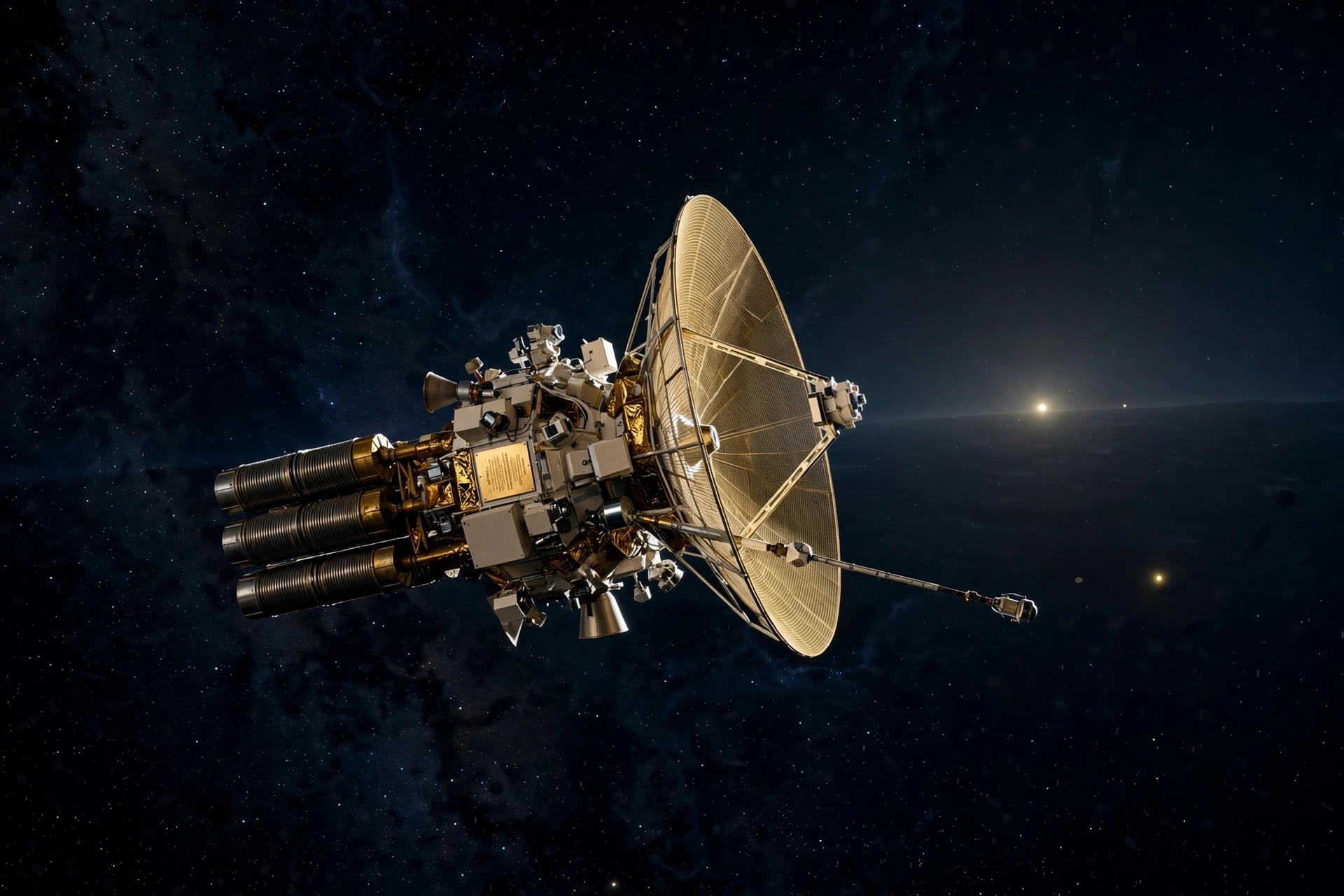
The ambition of mapping the cosmos is a profound endeavor, rooted in the belief that the universe can be understood through meticulous observation. The European Space Agency's Euclid space telescope, launched in 2023, embodies this ambition, designed to survey the sky in expansive, panoramic views rather than fragmented snapshots. This week, Euclid achieved a significant milestone with its first major data release, known as DR1-Foundation, which catalogs nearly a billion celestial objects across an area of sky equivalent to 9,500 full moons.
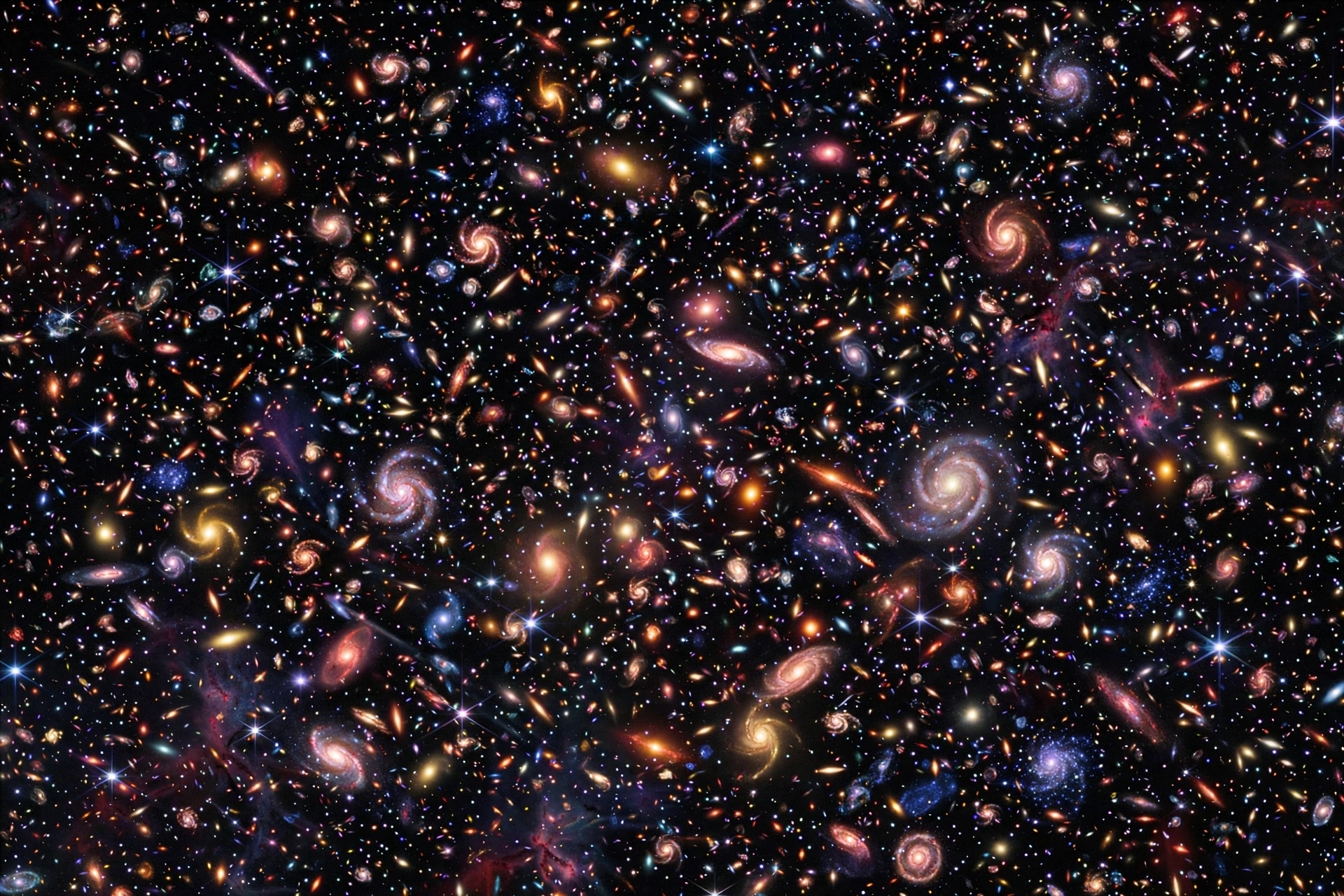
The scale of the findings is staggering. Euclid's data includes over 900 million galaxies, approximately 15,000 candidates for strong gravitational lenses—where a foreground galaxy bends and magnifies the light from a background object—and more than 60 million quasar candidates. Additionally, the telescope has captured spectra for over 160 million sources, providing vital information about their distance and composition. This data, collected over thirteen months, represents the largest space-based image dataset ever released for astronomical research.
What sets Euclid apart from previous telescopes is not only its sensitivity but also its expansive field of view. Unlike ground-based telescopes and earlier space missions that focused on narrow patches of the sky, Euclid's VIS and NISP instruments capture visible and near-infrared light across an area thirty times larger than prior data releases. This approach lays the groundwork for creating the largest three-dimensional map of the cosmos, aiming to reveal the arrangement of galaxies and clusters that outline the elusive structures of dark matter and dark energy.
Among the most valuable discoveries in the DR1 catalogue are the strong gravitational lenses. These cosmic phenomena occur when the gravity of a foreground galaxy acts as a lens, creating multiple images or arcs of light from distant objects. The current data release contains more strong lens candidates than all previous catalogues combined, providing astronomers with unprecedented opportunities to study these systems. Miguel Zumalacárregui from the Max Planck Institute for Gravitational Physics remarked, "We are moving from studying a handful of remarkable objects to studying entire populations of these systems."
However, the DR1-Foundation release is just the beginning. It covers only about 14 percent of the sky that Euclid is set to survey during its six-year mission. The full first data release is anticipated in mid-2027, which will include weak lensing observations and more detailed distance measurements, essential for placing galaxies within the cosmic web. This initial release serves as a foundational sketch, paving the way for a more detailed understanding of the universe's structure.
The universe that Euclid is mapping is predominantly invisible, with dark matter and dark energy constituting roughly 95 percent of its composition. These components do not emit light and can only be inferred through their gravitational effects, such as galaxy clustering and light bending. Euclid is designed to measure these effects with unprecedented precision, transforming the visible catalog of a billion objects into a comprehensive map of the invisible.
For the scientists who have dedicated years to developing the necessary algorithms, calibrating instruments, and anticipating this data, this week marks a significant achievement. For the broader public, it presents an invitation to explore the newly available images and catalogues. These resources showcase galaxies that existed billions of years ago, quasars at the edge of the observable universe, and the faint arcs of light that hint at the presence of unseen forces. While the map is still in progress, it has begun to take shape, offering a glimpse into the vastness of the cosmos.
The images in this article are AI-generated illustrations and are not actual Euclid telescope data.
Published by Banx Network. This article is part of the Banx decentralized media programme, powered by the BXE token on the XRP Ledger.