Key Highlights
- Earthquakes can strike without warning, posing significant risks to urban areas.
- Scientists cannot predict earthquakes but can assess probabilities based on historical data.
- Japan's Nankai Trough is a major focus for earthquake research due to its seismic activity.
The Earthquake Threat Beneath Our Feet
Earthquakes are among the most destructive natural disasters because they can strike with little or no meaningful advance warning. Unlike hurricanes, which can often be tracked for several days, major earthquakes generally provide no reliable indication of exactly when they will occur. The Earth's outer shell consists of enormous tectonic plates that constantly move, although usually at speeds of only a few centimeters per year. Where these plates interact, enormous forces can build up along geological faults. Eventually, the accumulated stress may overcome the friction holding sections of the Earth's crust together, causing a sudden release of energy. That energy travels through the ground as seismic waves, producing the shaking associated with earthquakes.
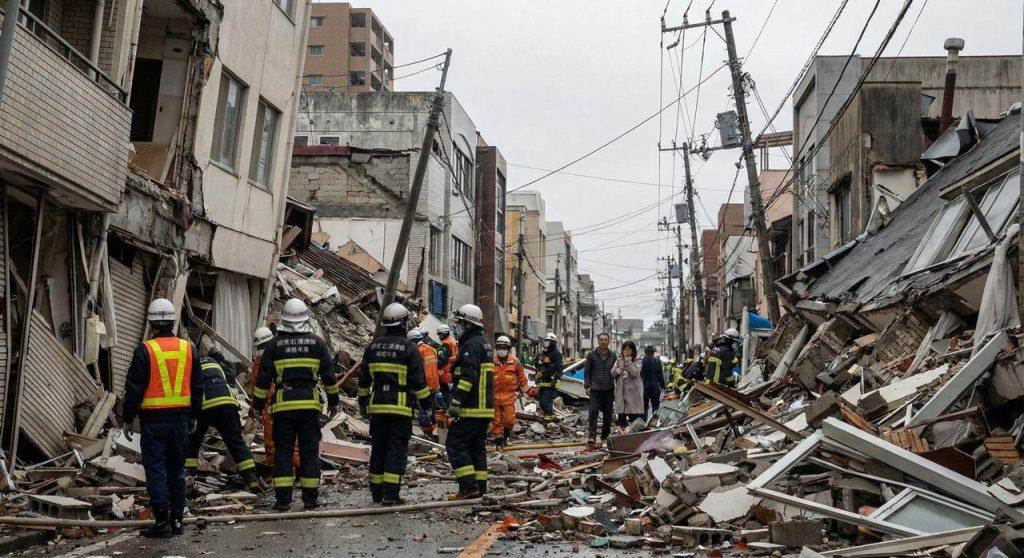
Some earthquakes are relatively minor, while others can devastate entire regions. The most powerful events often occur at subduction zones, where one tectonic plate is forced beneath another. These areas can generate magnitude 8 and 9 earthquakes, commonly known as megathrust earthquakes. The consequences extend far beyond the initial shaking. Buildings can collapse, bridges can become unusable, electricity networks can fail, and underground infrastructure can be severely damaged. In coastal regions, earthquakes beneath the ocean can also displace enormous quantities of water, generating tsunamis. The danger is particularly serious when a major earthquake strikes a densely populated urban region with extensive infrastructure and limited evacuation options.
Why Scientists Cannot Predict the Next Major Earthquake
One of the biggest misconceptions about earthquake science is that researchers can identify exactly when a major earthquake will occur. Despite advances in seismology, satellite monitoring, and geological research, scientists cannot reliably predict the precise date, location, and magnitude of a future earthquake. According to the United States Geological Survey (USGS), no organization has successfully predicted a major earthquake using a scientifically reliable method. Researchers can instead calculate probabilities based on historical earthquakes, geological evidence, and the behavior of known fault systems. These assessments help governments understand the potential danger facing particular regions over periods such as 30 or 50 years.
Scientists also monitor ground deformation, seismic activity, and changes in the movement of tectonic plates. Satellite positioning systems and specialized instruments can detect extremely small movements in the Earth's surface, providing valuable information about geological processes. However, these measurements cannot establish that a major earthquake is about to happen. The distinction matters because probability assessments are frequently misunderstood. A fault with a high estimated probability of producing an earthquake within 30 years does not necessarily mean that an earthquake is imminent. The USGS explains these limitations in its official guidance on earthquake prediction.
For governments, the challenge is therefore not predicting the exact moment of disaster. It is preparing for an event that could happen without warning.
Japan's Nankai Trough: One of the World's Most Closely Watched Fault Zones
Japan sits along the Pacific Ring of Fire, one of the world's most seismically active regions. Its geographical position exposes the country to earthquakes, volcanic activity, and tsunamis. Among its most significant geological threats is the Nankai Trough, an underwater subduction zone extending along Japan's southern Pacific coastline. Here, the Philippine Sea Plate moves beneath the plate carrying much of southwestern Japan. Stress accumulating along this boundary can eventually produce extremely powerful earthquakes. Historical records show that major earthquakes have repeatedly occurred along the Nankai Trough, sometimes in separate sections of the fault system over relatively short periods.
The Japanese government has been assessing the possibility of another major event, with updated research published in September 2025. The country's Earthquake Research Committee revised its long-term assessment using updated scientific methods. Rather than presenting one apparently precise probability, the committee identified two different estimates for the chance of a major Nankai Trough earthquake occurring within 30 years: Approximately 70% for a magnitude 8 or greater event, and a 30% chance for a magnitude 9 or greater event. This information is crucial for urban planners and emergency services as they prepare for potential disasters.
In conclusion, while the exact timing of the next mega-earthquake remains uncertain, the need for preparedness is clear. Cities must invest in infrastructure resilience, emergency response training, and public awareness campaigns to mitigate the impact of such catastrophic events.
Published by Banx Network. This article is part of the Banx decentralized media programme, powered by the BXE token on the XRP Ledger.