Key Highlights
- New Map:A high-resolution map of Kīlauea's magma reservoirs has been created.
- Research Team:The study was led by the U.S. Geological Survey's Hawaiian Volcano Observatory.
- Eruption Insights:Findings may improve understanding of eruption triggers and monitoring.
Recent advancements in volcanic research have unveiled a remarkable new high-resolution map of Kīlauea, one of the most active volcanoes on Earth. This groundbreaking study, spearheaded by scientists from the U.S. Geological Survey's Hawaiian Volcano Observatory, utilizes seismic tomography to provide an unprecedented view of the magma reservoirs that fuel the volcano's eruptions. By employing advanced imaging techniques, researchers have created a detailed three-dimensional representation of the magma system beneath Kīlauea, revealing critical insights into its structure and behavior.
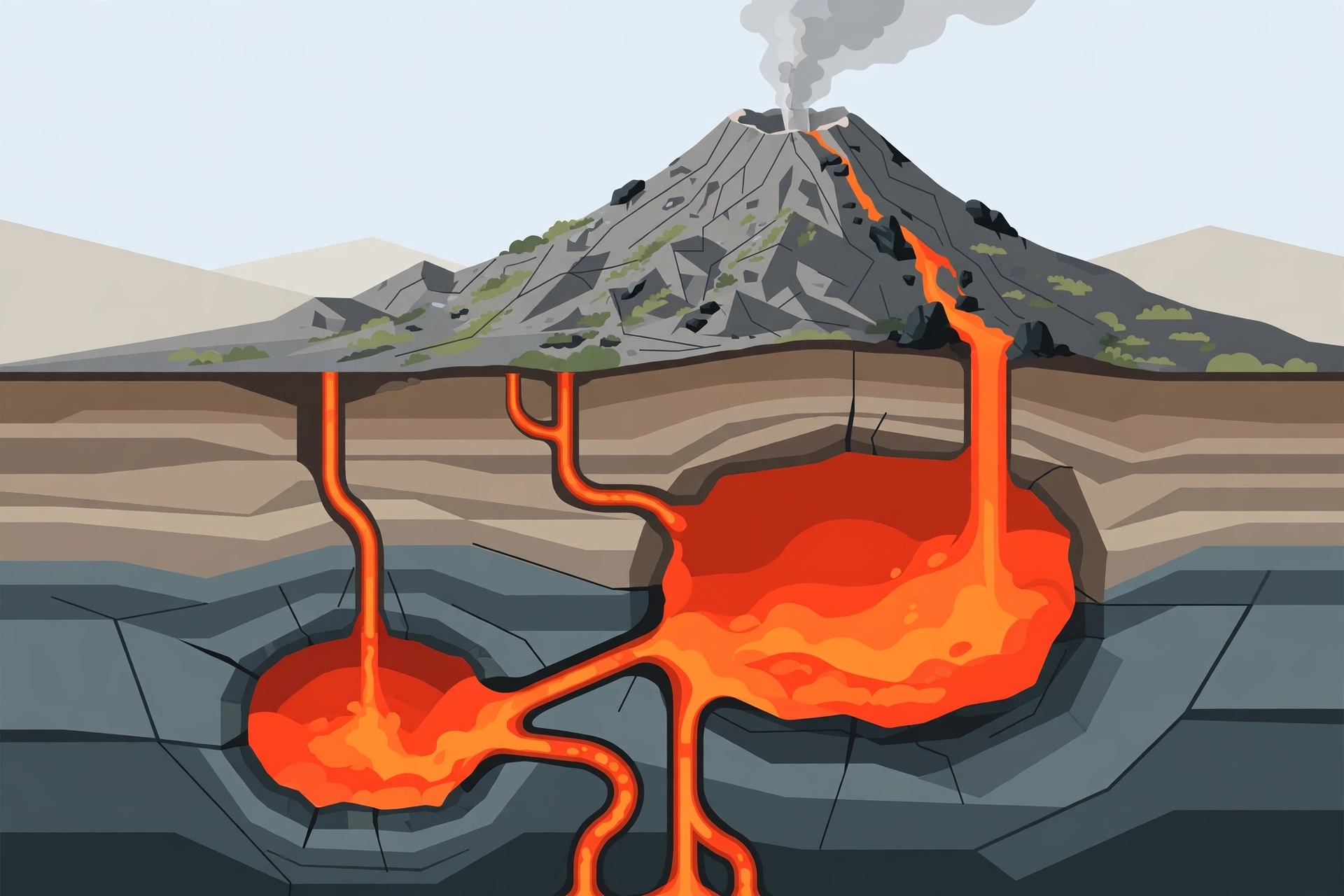
The innovative mapping technique, akin to a medical CT scan, employs seismic waves to visualize the underground magma reservoirs. By analyzing the speed at which these waves travel through the Earth's crust, scientists have been able to construct a clearer image of where magma is stored and how it interconnects within the volcanic system. The resulting map illustrates a complex network of reservoirs, including a shallow chamber located beneath the summit and a deeper system extending several kilometers into the Earth's crust.
One of the most significant aspects of this new map is its enhanced resolution. Previous studies had only provided a vague outline of the magma reservoirs, but this latest research has resolved features as small as a few hundred meters across. The detailed imagery reveals that the shallow reservoir is not merely a simple sphere; rather, it exhibits a more intricate structure with lobes and extensions that penetrate the surrounding rock. Additionally, the deeper magma system appears to be more extensive than previously understood, featuring multiple chambers potentially linked by narrow conduits.
These findings have profound implications for understanding the mechanisms that trigger eruptions at Kīlauea. The research suggests that the shallow reservoir is continuously replenished from deeper sources, and the movement of magma between these chambers may play a crucial role in initiating volcanic activity. This new knowledge not only enhances scientific understanding but also establishes a baseline for ongoing monitoring of the volcano, enabling scientists to track changes in the magma reservoirs over time and improve predictions of future eruptions.
For the residents living on the slopes of Kīlauea, this research serves as a vital reminder that the volcano is a dynamic entity, constantly evolving and changing. The detailed map acts as a critical tool for scientists, helping them to comprehend these changes and provide timely warnings when an eruption is imminent. The collaborative effort behind this research exemplifies the power of modern seismic imaging technology in uncovering the hidden structures of our planet.
In conclusion, the advancements in mapping Kīlauea's magma reservoirs represent a significant leap forward in volcanic research. As scientists continue to refine their understanding of the processes that govern volcanic activity, the implications for public safety and scientific inquiry remain profound. The ongoing study of Kīlauea not only enhances our knowledge of this specific volcano but also contributes to the broader field of earth science, offering insights that may apply to other volcanic systems worldwide.
AI Image Disclaimer: The images in this article are generated by artificial intelligence and are for illustrative purposes only; they do not depict the actual Kīlauea volcano, the magma reservoirs, or the researchers involved.
Published by Banx Network. This article is part of the Banx decentralized media programme, powered by the BXE token on the XRP Ledger.