Key Highlights
- Swift Observatory:Launched in November 2004, it has spent 22 years observing cosmic phenomena.
- Re-Entry Date:NASA predicts the telescope will re-enter Earth's atmosphere on November 4, 2026.
- Risk Assessment:The chance of debris harming anyone on Earth is approximately 1 in 2,100.
NASA's Swift Observatory, a remarkable instrument that has spent over two decades observing the universe, is on a collision course with Earth. Launched in November 2004, the observatory was designed to rapidly detect and analyze gamma-ray bursts and supernovae, providing invaluable data to astronomers. However, after a failed rescue mission, the observatory is set to re-enter Earth's atmosphere on Wednesday, November 4, 2026, at approximately 3:30 a.m. EST, with an uncertainty window of about eleven hours.
The Swift Observatory weighs around 3,200 pounds, and while most of it is expected to burn up upon re-entry, some components, particularly those made of tungsten and certain mirror parts, may survive the descent. The re-entry zone includes vast areas of the ocean, as well as parts of Africa, Australia, India, Southeast Asia, and Central and South America. NASA has assessed the risk to individuals on the ground as low, estimating the likelihood of injury from falling debris at roughly 1 in 2,100.
The story of Swift's impending re-entry is not just about orbital decay; it reflects a broader narrative of technological ambition and the challenges of space exploration. In recent years, increased solar activity has accelerated the observatory's descent, thickening the upper atmosphere and creating additional drag. In response, NASA contracted Katalyst Space to execute a rescue mission, deploying a robot named Link to boost Swift into a higher orbit. Unfortunately, Link encountered difficulties and was unable to reach its target, leading to the mission's cancellation.
Despite these setbacks, Swift continued to operate and made significant discoveries, including more than 2,000 gamma-ray bursts and 1,400 exploding stars. Its ability to quickly redirect toward cosmic events allowed it to alert other observatories, such as Hubble and Webb, to follow up with deeper investigations. This agility earned Swift the title of a 'first responder' in the field of astronomy, and its loss will leave a notable gap in ongoing research.
John Nousek, an astronomer from Pennsylvania State University who led the control team for Swift, expressed the bittersweet nature of the observatory's end. "We've known this day would come since before Swift was launched," he stated. "At least in low-Earth orbit, what goes up must come down. And that end is catastrophic." His words encapsulate the reality of space missions, where the excitement of discovery is often intertwined with the inevitability of loss.
As the Swift Observatory prepares for its final descent, the scientific community reflects on its legacy. The data collected over its operational life has significantly advanced our understanding of the universe, and while its physical presence will soon be gone, the impact of its discoveries will endure.
The Swift Observatory's journey is a poignant reminder of the transient nature of technology and exploration, highlighting both the achievements and challenges faced in the quest to understand the cosmos. As it returns to Earth, the observatory leaves behind a wealth of knowledge and a legacy that will inspire future generations of astronomers.
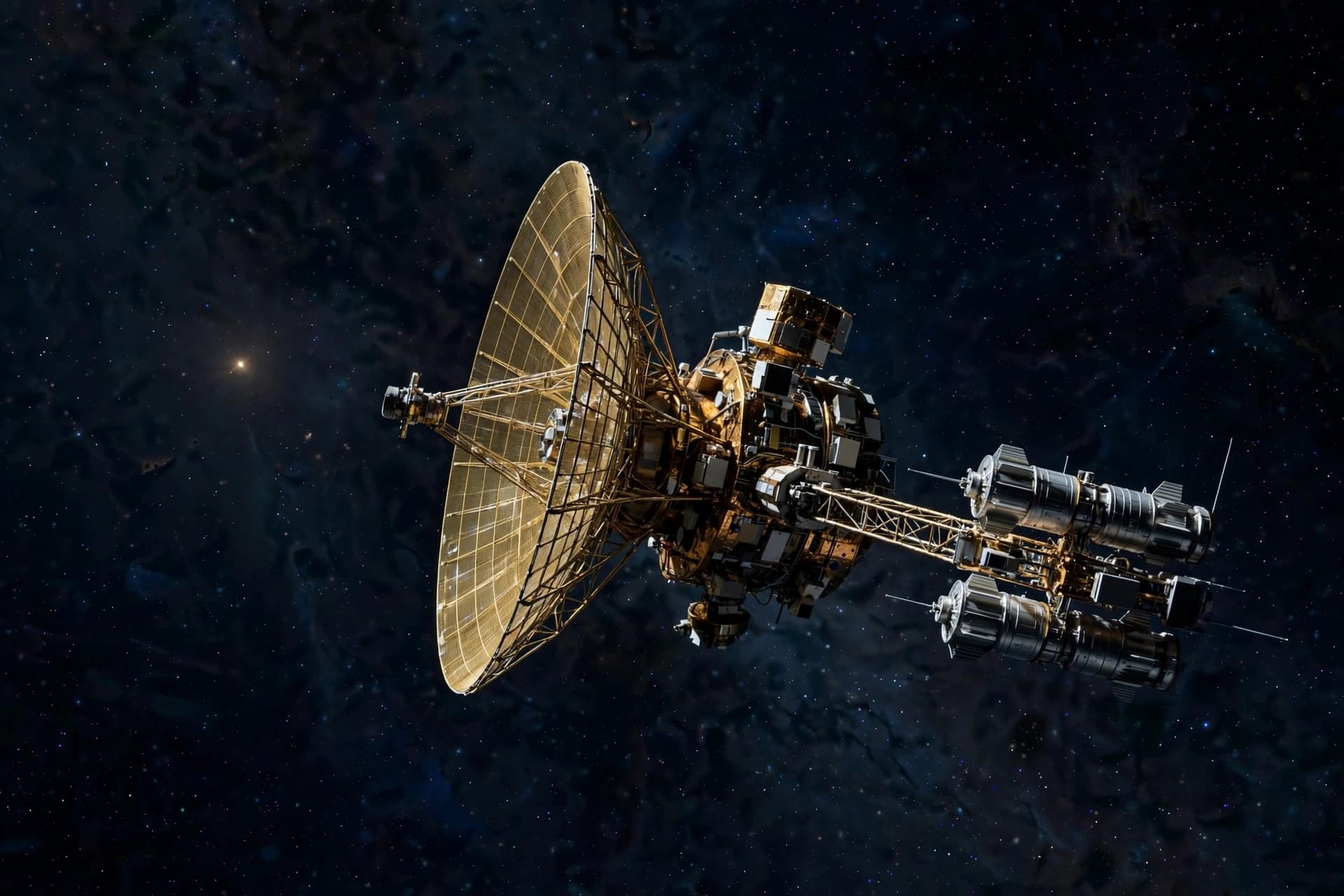
AI Image Disclaimer: The visuals accompanying this article are generated by artificial intelligence and are for illustrative purposes only; they do not depict the actual Swift Observatory or the predicted re-entry path.
Published by Banx Network. This article is part of the Banx decentralized media programme, powered by the BXE token on the XRP Ledger.